
 Need help?
Do you have a question about the Parker J Series and is the answer not in the manual?
Caused by excessive air flow, housing size mismatch, or filter media being too fine.
Resulting from lubricant issues, excessive inlet particulate, or high inlet aerosol levels.
Indicates bowl drainage issues, improper element sealing, or upstream contamination.
Kit for safely removing condensate from high-pressure gas systems, includes valves and reservoir.
This document describes the J-Series filters, including coalescers, particulate filters, adsorbers, and water separators, as well as desiccant cartridges. These devices are designed to purify compressed air and gas systems by removing various contaminants such as oil, water, and particulates.
The J-Series filters operate on the principle of air coalescing, a continuous, balanced, steady-state process. The primary function of these filters is to remove liquid and solid contaminants from a gas stream. Coalescers, specifically, are designed to capture oil and water aerosols, causing them to coalesce into larger droplets that can then be drained from the filter bowl. Particulate filters are used to remove solid particles, while adsorbers are employed to remove oil vapors and other gaseous contaminants. Water separators are designed to remove bulk liquid water from the gas stream. Desiccant cartridges, containing activated alumina or molecular sieve, are used for drying the air by adsorbing moisture.
For optimal performance, the filter bowl must be kept free of waste liquid build-up. The element within the filter is crucial for its function and must be replaced when its differential pressure reaches a specified maximum, typically 6-10 PSID (pounds per square inch differential), with a maximum of 12 PSID. This differential pressure can be monitored using two gauges at the inlet and outlet ports or by observing system characteristics.
The installation of these filters is critical for their effective operation. They should be installed in a level pipeline, mounted vertically with the bowl downward, ensuring sufficient clearance for element removal. Filters should be placed at the highest available pressure, as close as possible to the equipment being protected, and should have a drip leg immediately upstream. Visibility and easy access for periodic draining and maintenance are also important.
The piping configuration depends on the type of filter. Coalescers and water separators are designed for flow from inside-to-outside through the filter tube, while particulate and adsorber filters are plumbed for flow from outside-to-inside. Specific placement guidelines include: the coalescer is placed before the dryer; the particulate or water separator precedes the coalescer when prefiltration is required; the particulate filter is installed downstream of desiccant dryers to prevent desiccant migration; and the adsorber and desiccant cartridge are always preceded by a coalescer.
The J-Series filters are designed for nominal operation with a specific range of oil viscosity. Any increase in oil viscosity beyond this range may require oversizing the filter element, and consultation with a representative is recommended.
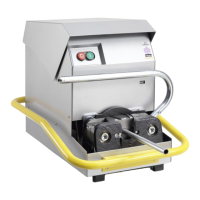
Bowl draining is a key operational feature. Manual drain valves should be opened slowly at least once every 8 hours, depending on the liquid load, to remove accumulated condensate. High-pressure drain kits are available as optional accessories to safely drain condensate from high-pressure air/gas systems. These kits are constructed of 316 Stainless Steel and include two needle valves, fittings, and a pipe reservoir, available in both horizontal and vertical configurations.
To extend the life of the coalescing element, a particulate or water separator element can be employed ahead of the coalescer. Additionally, a precoalescer (Grade 10) can be used to further extend the life of the high-efficiency coalescer (Grade 4).
A critical safety feature is the requirement to depressurize filter housings before performing any maintenance activities. Depressurization must be verified by a pressure gauge known to be in working order to prevent accidents.
Regular maintenance is essential for the longevity and performance of the J-Series filters. The primary maintenance task is the replacement of the filter element when the differential pressure reaches the clogged condition (6-10 PSID). It is explicitly stated that filter tubes should not be cleaned or reseated, as this can lead to system contamination or leakage due to the formation of new serrated indentations. Bypassing the coalescer is only permissible if the bypass line is also filtered.
Troubleshooting guidance is provided for common issues:
These maintenance guidelines ensure the continuous and efficient operation of the J-Series filters, protecting downstream equipment from contamination and extending system life.
 General
| Material | Steel |
|---|---|
| Series | J Series |
| Fluid Type | Hydraulic Oil |
| Pressure Rating | 3000 PSI |
| Mounting Options | Flange |



 To Next Page