13
Pre-Installation Requirements
PLEASE CHECK THE FOLLOWING:
Any existing chimney/flue system must be confirmed as suitable for this appliance as defined in Building Regulations
Document J. It must be swept and inspected, by a competent person (see notes), to confirm that is structurally
sound and free from cracks and obstructions.
The diameter of the Flue should not be less than Ø125mm and not more than Ø200mm – Derwent/Consort
4/Consort 5 and 5 Compact/5 Slimline/9 Slimline. For the Consort 7/Consort 9 and Consort 15 the Flue should
not be less than Ø150 and note more than Ø230mm. Do not connect to systems that have large voids or spaces. If
any of these requirements are not met, the chimney should be lined by a suitable method.
If the chimney is suspected of previously serving an open fire it must be swept again, within a month of regular use,
to clear any soot that may have been dislodged due to the variation in combustion levels and higher flue gas
temperature levels. The chimney/flue system exit must comply with Building Regulations Document J. The minimum
height and should terminate in accordance with Table 1.
Connection to the Chimney
An existing fireplace opening can be bricked up or sealed with a register plate. A short length of flue pipe of
minimum 125mm (Derwent, Consort 4, Consort 5, Compact 5, 5 Slimline, 9 Slimline) internal diameter may then be
used to connect the stove to the chimney. This increases to 152mm for Consort 7, Consort 9 and Consort 15. This
flue pipe should be made of 316 grade stainless steel or vitreous enamelled steel, nominal thickness 1.2mm. Ensure
that the pipe end is no closer than 76mm to the chimney walls. The length of any horizontal run of flue pipe must
not exceed 125mm (Derwent, Consort 4, Consort 5, Compact 5, 5 Slimline and 9 Slimline) and 152mm (Consort 7,
Consort 9, Consort 15). It is essential that all connections between the stove and chimney-flue are sealed and made
airtight.
Make provision to access the chimney/flue system for cleaning and the removal of debris. If there is no existing
chimney then either a prefabricated block chimney in accordance with Building Regulations Approved Document J,
or a twin-walled insulated stainless-steel flue to BS4543 can be used. These chimneys must be fitted in accordance
with the manufacturer’s instructions and Building Regulations. New masonry and flue block chimneys must meet the
requirements of Building Regulations Document J. Any connecting flue pipe systems must also meet these
regulations.
Please check the suitability of the fireplace and/or surround for use with this appliance before installing it. If you
have any doubts about the suitability of your chimney, consult your local Dealer/Stockist or Installation Engineer.
Both the chimney and flue pipe must be accessible for cleaning and if ANY part of the chimney cannot be reached
through the stove (with baffle removed), a soot door must be fitted in a suitable position.
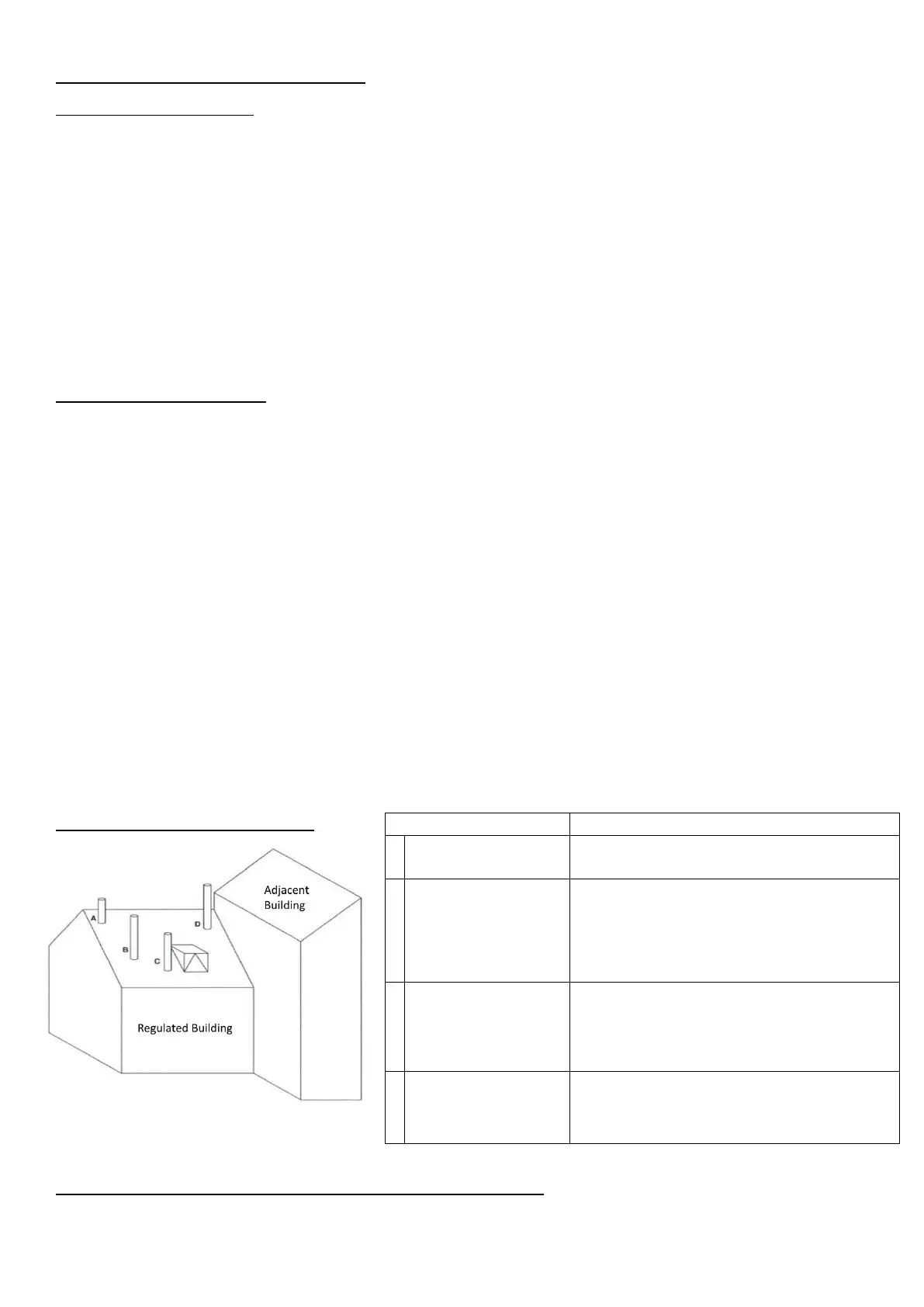
FLUE OUTLET POSITIONS (DOCUMENT J):
A full copy of Document J can be found here: Table 1
http://www.planningportal.gov.uk/uploads/br/BR_PDF_ADJ_2010.pdf


 To Next Page
 Loading...