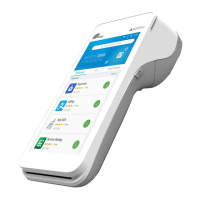
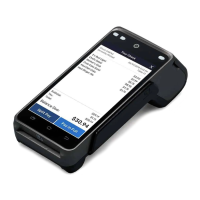
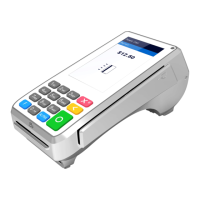
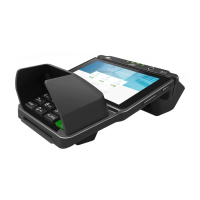
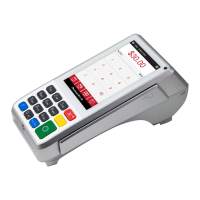
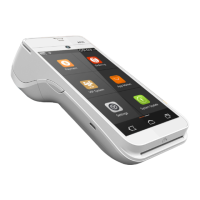
The SecureTablePay PAX A920 w/ Pay Anywhere is a portable payment terminal designed to streamline the payment process in various service environments, particularly those where transactions occur at the table or away from a fixed point-of-sale (POS) system. This device integrates seamlessly with existing POS systems, allowing servers to manage checks, process payments, and handle refunds efficiently.
Function Description
The primary function of the SecureTablePay PAX A920 is to facilitate secure and convenient payment processing. It acts as an extension of the POS system, enabling servers to pull up open checks, calculate tips, split bills, and accept various forms of payment directly from customers. This "Pay Anywhere" capability enhances customer experience by reducing wait times and increasing operational efficiency.
The device supports a comprehensive payment workflow, starting from logging in with a server number, retrieving specific tables or checks, and proceeding through tip calculation and payment acceptance. It is designed to handle both full payments and split payments, offering flexibility for customers. For instance, customers can choose to pay the full amount, split the bill equally among multiple parties, or pay a custom, unequal amount.
Beyond basic payment processing, the SecureTablePay PAX A920 also includes features for managing transactions and processing refunds. This ensures that the device can handle the full lifecycle of a payment, from initial charge to potential reversal. The integration with a "Payanywhere" app suggests broader functionality for managing transactions, potentially including sales tracking and reporting, though the manual focuses on the payment and refund aspects.
Usage Features
The SecureTablePay PAX A920 is designed for intuitive use, with a clear, touch-screen interface that guides the user through each step of the payment process.
- Logging In: To begin, users locate and open the SecureTablePay app on the PAX A920 home screen. They then enter their server number, which should match their POS system ID. Alternatively, they can swipe a server card if supported.
- Accessing Checks: After logging in, servers can either enter a specific table or check number to retrieve it, or press "OK" to fetch a list of all open tables and checks. This allows for quick access to active transactions. If a table has multiple checks, the device prompts the server to select the specific check to close out. The manual notes that for Maitre'D POS systems, entering a specific table number is required, as the "fetch table" feature may not work.
- Split Calculator: Once a check is selected, the device displays a split calculator screen. Here, servers can verify the check number, table number, and total balance.
- Pay Full: The simplest option is "Pay Full," which proceeds directly to the tip calculator.
- Equal Split: For equal splitting, the server selects "Equal Split" and can then choose the number of splits (up to 10) by swiping left or right. The device automatically calculates the "Per Split Amount."
- Unequal Split: For unequal splitting, the server selects "Unequal Split" and manually types in the custom dollar amount the guest wishes to pay.
- Tip Calculator: After the split calculation (or if "Pay Full" was chosen), the device moves to the tip calculator screen. At this point, the device is handed to the guest. Guests can enter a custom tip amount, select from preset tip percentages (5%, 10%, 15%, 20%), choose "No Tip," or select "Other" to type in a specific percentage or dollar amount.
- Payment Confirmation: After entering the tip, guests confirm the total amount, including the tip, before proceeding to payment.
- Payment Acceptance: The device then prompts the guest to insert or swipe their card. It also supports contactless payments (NFC) such as Apple Pay or Google Wallet, accessed by touching "contactless." Manual card entry is another option. If required, the screen will prompt for an electronic signature.
- Receipt Options: Once payment is complete, the guest is offered options for a receipt: printed, emailed, or text. The device allows for entering customer name, email address, and mobile number for digital receipts. An optional invoice number and receipt note can also be added.
- Transaction Completion: Upon successful payment, the device returns to the SecureTablePay home screen. If multiple checks were open on a table, it returns to the check selection screen, allowing the server to continue closing out remaining checks or return to the home screen if no further checks are to be processed.
- Refunds: The refund process is initiated from the PAX home screen by opening the "Payanywhere" app. Manager access may be required for this function. Users log into the Payanywhere app (username and password provided by the EPX dealer). From the app's menu (accessed via three lines icon), "Transactions" is selected to view a list of all transactions, typically listed from newest to oldest, with a search feature available. The user selects the transaction to be refunded, verifies the details on the "Transaction Details" screen, and then touches the three dots in the top right corner to access options, including "Refund." After confirming the refund, the device notifies the user that the transaction has been processed as a Void. The transaction list in the Payanywhere app will reflect the refund, and the user can email or print a refund receipt. A critical note is provided: refunding from the A920 does not automatically update the POS system; manual reconciliation within the POS is required.
Maintenance Features
While the manual does not explicitly detail "maintenance features" in the traditional sense (e.g., cleaning schedules or hardware diagnostics), it implies certain operational maintenance aspects:
- Software Updates: As a smart device running applications, it is understood that the SecureTablePay app and the underlying operating system will require periodic updates to ensure optimal performance, security, and compatibility with POS systems and payment networks.
- Configuration Management: The mention of configuring the point-of-sale system to accept partial payments (for the "leave check open with remaining balance" feature) highlights the need for proper system setup and configuration. This suggests that the device's functionality is dependent on correct backend settings.
- Troubleshooting Payment Failures: The manual addresses payment process failures by instructing the user to return to the tip calculator screen and retry with another form of payment. This indicates a built-in recovery mechanism for common transaction issues.
- Account Management: The "Payanywhere" app, used for refunds, includes features like "Manage Accounts," "New Sale," "New Pre-Auth," "Edit Mode," "Adjust Tips," and "Offline Transactions." These features suggest tools for managing the device's operational state, user permissions, and transaction data, which are essential for maintaining the integrity and functionality of the payment system.
- User Credentials: The instruction to refer to the EPX dealer for username and password for the Payanywhere app underscores the importance of secure credential management and the role of the dealer in supporting the device.
In summary, the SecureTablePay PAX A920 is a robust, user-friendly mobile payment terminal designed to enhance efficiency and customer satisfaction in service industries by bringing the payment process directly to the customer. Its features cover the entire transaction flow, from check management and splitting to secure payment acceptance and refund processing, all while maintaining a clear and guided user experience.



 Need help?
 General

 To Next Page