EasyManua.ls Logo

Pepwave MAX BR1 Pro 5G - User Manual

Pepwave MAX BR1 Pro 5G
2 pages
Print Icon
To Next Page IconTo Next Page
Loading...
RENTAL EQUIPMENT SETUP GUIDE
Setup Video Guide:
Scan this QR code
with your phone
camera for video.
Contact our Support Team:
www.choose2rent.com/help
+1 (800) 622-6484 Ext. 3 (USA)
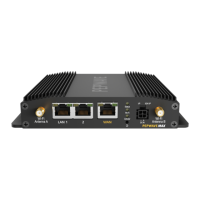
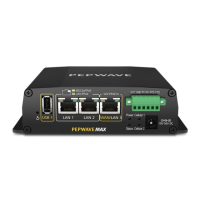
PepWave MAX BR1 Pro 5G
Box Content:
1 x Protective Case
1 x 5G LTE Router
1 x Power Adapter
2 x Wi-Fi Antennas
4 x Cellular Antennas
1 x GPS Antenna
2 x Ethernet Cable
Extensions
Quick Setup:
1. Open router case.
Always keep the
case open during operation.
2. The antenna and ethernet
connections to the router are
already in place.
Take out the power
adapter and LAN Ethernet extensions
from router case.
3. Plug in the power adapter.
Please allow 5-10 minutes for the router
to establish a cellular connection.
4. Please refer to this legend for
router status:
-Status LED Off, system initializing
-Cellular LED Blinking Slowly, connecting to
network(s).
-Status LED Green, Ready
-Cellular LED Green, connected to
network(s).
-Status LED Red, booting up or busy
-Status LED Blinking Red, boot up error
-Cellular LED Off, no cellular connection.
Wait up to 10 minutes, if it doesn’t turn solid
green call for support.
5. Connect your wired devices (e.g.,
printer or laptop) Connect an
Ethernet cable to one of the female
ends of the ethernet extensions to
the rental equipment.
If you have
more than 2 devices on your order,
please an Ethernet switch to one of the
Ethernet extensions. (Ethernet switches
are rented separately!)
6. Connect your wireless devices
(e.g., iPad / Surface Go / Laptop)
Search on your wireless device for
the Routers Wi-Fi Network Name
PEPWAVE#. The Wi-Fi password can
be found on the routers Quick Start
Guide, in the mesh pocket of the
case.
Question and Answer IconNeed help?

Do you have a question about the Pepwave MAX BR1 Pro 5G and is the answer not in the manual?

Summary

PepWave MAX BR1 Pro 5 G Setup Guide

Quick Setup Steps

Follow sequential steps to open the case, connect antennas and power adapter for initial router setup.

Router Status Indicators

Legend for router status LEDs: Off (initializing), Blinking Slowly (connecting), Green (ready/connected), Red (busy/error).

Connecting Wired Devices

Connect wired devices like printers or laptops using Ethernet cables to the router's extensions.

Connecting Wireless Devices

Connect wireless devices by searching for the Wi-Fi network name 'PEPWAVE#' and using the provided password.

PepWave MAX BR1 Pro 5 G Troubleshooting

Router Power and Password Issues

Troubleshoot power problems by checking connections and verify password entry, ensuring Caps Lock is off.

Cellular Data Usage and Limitations

Review contract for data limits; avoid connecting devices that consume high data volumes due to updates.

Hardline Internet Connectivity Problems

Diagnose issues when connected via hardline but no internet, checking hardline status, DHCP, MAC whitelisting, and port connections.

Summary

PepWave MAX BR1 Pro 5 G Setup Guide

Quick Setup Steps

Follow sequential steps to open the case, connect antennas and power adapter for initial router setup.

Router Status Indicators

Legend for router status LEDs: Off (initializing), Blinking Slowly (connecting), Green (ready/connected), Red (busy/error).

Connecting Wired Devices

Connect wired devices like printers or laptops using Ethernet cables to the router's extensions.

Connecting Wireless Devices

Connect wireless devices by searching for the Wi-Fi network name 'PEPWAVE#' and using the provided password.

PepWave MAX BR1 Pro 5 G Troubleshooting

Router Power and Password Issues

Troubleshoot power problems by checking connections and verify password entry, ensuring Caps Lock is off.

Cellular Data Usage and Limitations

Review contract for data limits; avoid connecting devices that consume high data volumes due to updates.

Hardline Internet Connectivity Problems

Diagnose issues when connected via hardline but no internet, checking hardline status, DHCP, MAC whitelisting, and port connections.

Overview

This document serves as a setup and troubleshooting guide for the PepWave MAX BR1 Pro 5G router, a rental equipment item designed to provide internet connectivity.

Function Description:

The PepWave MAX BR1 Pro 5G is a high-performance 5G LTE router primarily intended for rental use, offering robust internet connectivity through both cellular and wired (Ethernet) connections. Its core function is to act as a central hub for multiple devices, enabling them to access the internet wirelessly (Wi-Fi) or via wired connections. The device is designed for ease of use in temporary setups, such as events, pop-up shops, or remote work locations, where reliable internet is crucial. It supports 5G LTE cellular connectivity, allowing it to leverage high-speed mobile networks for primary or backup internet access. Additionally, it features WAN (Wide Area Network) and LAN (Local Area Network) Ethernet ports, facilitating connections to existing hardline internet sources and wired client devices, respectively. The router is housed within a protective case, which is integral to its operation and transport, ensuring the device's safety and readiness for deployment. The inclusion of various antennas (Wi-Fi, Cellular, GPS) indicates its capability to provide comprehensive wireless coverage and potentially location-based services.

Important Technical Specifications:

While specific detailed technical specifications like processor speed, RAM, or exact throughput figures are not explicitly listed in the provided text, several key aspects can be inferred:

  • Connectivity: Supports 5G LTE cellular connectivity, Wi-Fi (wireless local area network), and wired Ethernet (WAN/LAN). The presence of multiple cellular antennas (4x) suggests advanced MIMO (Multiple-Input, Multiple-Output) capabilities for improved cellular signal reception and data speeds. Two Wi-Fi antennas indicate dual-band or enhanced Wi-Fi coverage.
  • Ports: Features Ethernet ports for both WAN (connecting to an internet hardline) and LAN (connecting wired client devices). The guide mentions "Ethernet cable extensions," implying the router itself has standard Ethernet ports that are then extended for user convenience.
  • Power: Requires a power adapter, indicating it operates on external power, likely AC, converted to DC for the router.
  • Antennas: Includes 1x GPS Antenna, 2x Wi-Fi Antennas, and 4x Cellular Antennas, highlighting its multi-functional wireless capabilities.
  • Indicators: Equipped with LED status indicators for "Status," "Wi-Fi," "Cellular," and "WAN," providing visual feedback on the device's operational state and connectivity. These LEDs are crucial for quick diagnostics.
  • Data Usage: The troubleshooting section mentions typical cellular data allowances, indicating that the device is designed to handle significant data traffic, though usage is often contract-limited.
  • Network Protocols: Supports DHCP (Dynamic Host Configuration Protocol) for automatic IP address assignment, which is standard for most network setups. It is explicitly stated that the routers are not set up for STATIC IP internet hardline, which is an important consideration for network administrators.

Usage Features:

  • Quick Setup Process: The guide outlines a straightforward 6-step quick setup, emphasizing user-friendliness. This includes opening the protective case, ensuring antennas and Ethernet connections are in place, plugging in the power adapter, monitoring LED status, connecting wired devices, and connecting wireless devices.
  • Protective Case: The router comes in a protective case, which must be kept open during operation for ventilation and access. This case also stores accessories like the power adapter and Ethernet extensions.
  • LED Status Indicators: A detailed legend for LED status lights (Off, Blinking Slowly, Green, Red, Blinking Red) provides clear visual cues for the router's operational state, cellular connection status, and potential errors. This is a critical feature for quick troubleshooting without needing to access a web interface.
  • Wired Device Connectivity: Allows connection of wired devices (printers, laptops) via Ethernet extensions. For more than two wired devices, an Ethernet switch (rented separately) can be used, demonstrating scalability for multiple wired clients.
  • Wireless Device Connectivity: Supports Wi-Fi connectivity for devices like iPads, Surface Gos, and laptops. The Wi-Fi network name ("PEPWAVE#") and password are conveniently located in the router's Quick Start Guide within the case's mesh pocket.
  • Cellular and Hardline WAN: The router can utilize both cellular networks (5G LTE) and existing internet hardlines (via WAN Ethernet port) for internet access, offering flexibility and potential redundancy.
  • MAC Address Access: The MAC address, important for hardline whitelisting or bypassing "splash pages," is located on the bottom of the router, making it accessible for network configuration.
  • Support Resources: Provides a QR code for a setup video guide and contact information for a support team (website, phone number), enhancing user support.

Maintenance Features:

  • Case Management: The primary "maintenance" instruction is to keep the protective case open during operation. This is crucial for proper ventilation and to prevent overheating, ensuring the longevity and stable performance of the device.
  • Power Cycling: The troubleshooting guide suggests power cycling the router as a common step to resolve connectivity issues, particularly after connecting to a hardline. This is a simple yet effective maintenance action.
  • Antenna Management: While the antennas are pre-connected, the guide implies they should remain in place. Proper handling of the antennas (not bending or damaging them) is an implicit maintenance consideration to ensure optimal signal reception.
  • Cable Management: The guide emphasizes ensuring power plugs are tightly connected and that Ethernet cables are correctly inserted into the appropriate ports (WAN vs. LAN), which are basic but essential maintenance checks for connectivity.
  • Software Updates (Implicit): Although not explicitly stated as a user-performable maintenance task, the mention that "these devices typically run a lot of updates" (referring to connected personal laptops/phones) suggests that the router itself might receive firmware updates, likely managed by the rental provider, to maintain security and performance.
  • Troubleshooting Guide: The comprehensive troubleshooting section serves as a self-maintenance tool, empowering users to diagnose and resolve common issues such like power-up failures, incorrect passwords, data usage concerns, and hardline connectivity problems, reducing the need for direct support intervention for minor issues. This guide covers checks for power sources, Caps Lock status, data contract review, Ethernet hardline status (live, DHCP, whitelisting), correct port usage, and potential firewalls/security measures.

Pepwave MAX BR1 Pro 5G Specifications

General IconGeneral
BrandPepwave
ModelMAX BR1 Pro 5G
CategoryNetwork Router
LanguageEnglish

Related product manuals