water, have the crew hold jib clew out as far
forward as necessary to fill jib with air and
keep boat moving backwards. Keeping the
transoms out of the water will keep the boat
moving straight out. When you are far out
enough (usually about 100 feet) let the jib
go, move to the proper sailing positions,
drop rudders down, sheet in both sails and
go.
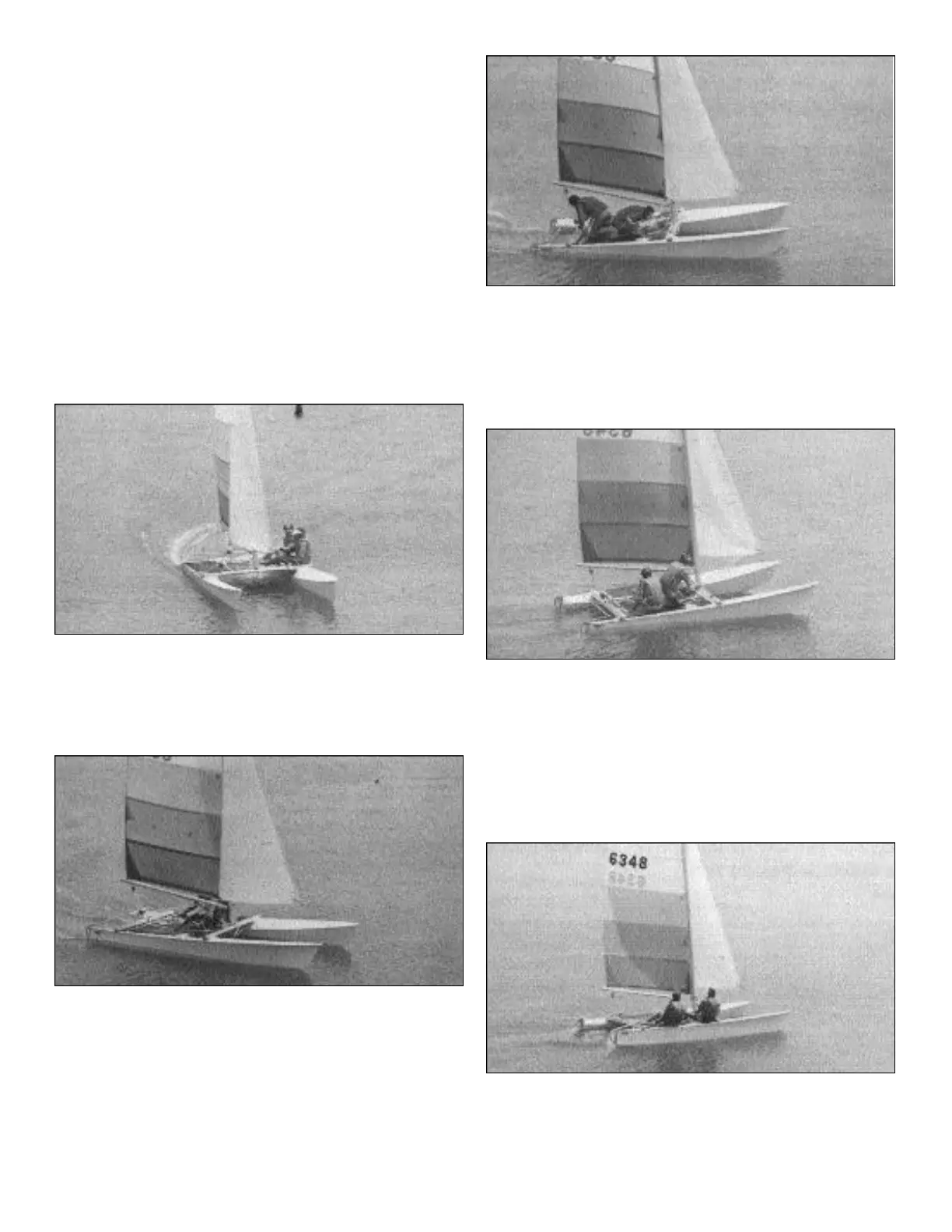
TACKING
Before starting your tack, be sure you are
sailing to weather with good speed (sheeted
in and traveler centered). Do not attempt to
tack while sailing on a reach.
Make a smooth turn to windward using about
one half the amount of rudder throw.
Turning the rudders too sharply will stall the
boat and bring it to an abrupt stop.
When the bows are pointing into the wind,
release the main sheet 1 or 2 feet. Leave
the jib cleated.
The skipper should now move aft, into the
center, and swing the hiking stick to the new
side. Do not straighten the rudders out. If
you do, you will find yourself into “irons”
(boat pointing directly into wind making no
headway).
Leave the jib cleated until the boat is on its
new heading. When the main “pops” to the
new side, release the jib, bring it across
quickly and sheet in. Keeping the jib on the
windward side is called “backwinding”. It
helps pull the bows around until your tack is
completed.
While the crew is sheeting in the jib, the
skipper should be sheeting in the main and
moving to the proper position on the wind-
27



 To Next Page