Gemini 105Mc Owner’s Manual
35Copyright © 2004 Performance Cruising Inc.
with a lose luff and permanent curve. This sail
works well on a reach and close to the wind. The
base of the sail is mounted on a curved track travel-
ing between both hulls. For downwind use, the
base of the sail can be moved to windward, lessen-
ing the main sail’s wind shadow and increasing
power. For upwind work in light air, the base of
the sail can be positioned amidships.
The screacher lines connect through two snatch
blocks on either side (at the base of the stanchions)
and then to the pad eye on the back of the comb-
ing. The snatch blocks enable fine tuning the sail’s
roach for upwind or downwind performance.
To correctly tension the screacher halyard, first
loosen the backstay with the backstay adjuster (if
not already loose). Hand-tighten the screacher
halyard, then re-tighten the backstay. Keep in
mind, the screacher sail has a permanent curve
built in and is not intended to be completely
straightened. Do not attempt to tighten the
screacher halyard using the winch.
The sail is protected from the sun with tedlar film
which is light-weight and offers good UV protection.
However, the tedlar film lacks durability so it is
advisable to lower and stow the screecher if you
don’t plan on using it for a long stretch of time
(more than 2 weeks). The sail furls on its own luff
wire and it must be furled in the direction that
tightens the lay of the luff wire. Furling the sail in
the wrong direction will unlay the wire and possibly
kink and break the wire. To be sure the sail is
furled correctly, check to see that the clear tedlar
film is on the outside of the furled sail.
To lower the sail, center the furling, un-cleat the
halyard at the base of the mast and free the hal-
yard stopper located about 5’ up from the base of
the mast. Slack the sail enough so that you can
easily pull the quick-release pin from the base of
the sail – being careful not to loose the pin over-
board. Place the base of the sail into the sail
locker and continue lowering the sail using the hal-
yard.
Reefing
The roller genoa in the full out position has the
genoa sheet going down at approximately 45º to the
slider which is near the back of the track. As the
sail is rolled in, it is necessary to move the slider
forward. The approximate slider position, when the
tack of the genoa is in line with the shroud, is with
the slider level with the checkstay eye. The reason
for the correct position of the slider is to put
roughly equal tension on the leach and the foot of
the sail. This position will change in different wind
strengths. In lighter winds the slider is further aft
putting less tension on the leach, allowing the leach
to fall away and not rub on the shrouds or close up
the slot. In stronger winds the slider is forward to
put more tension on the leach which is being blown
out with the stronger winds.
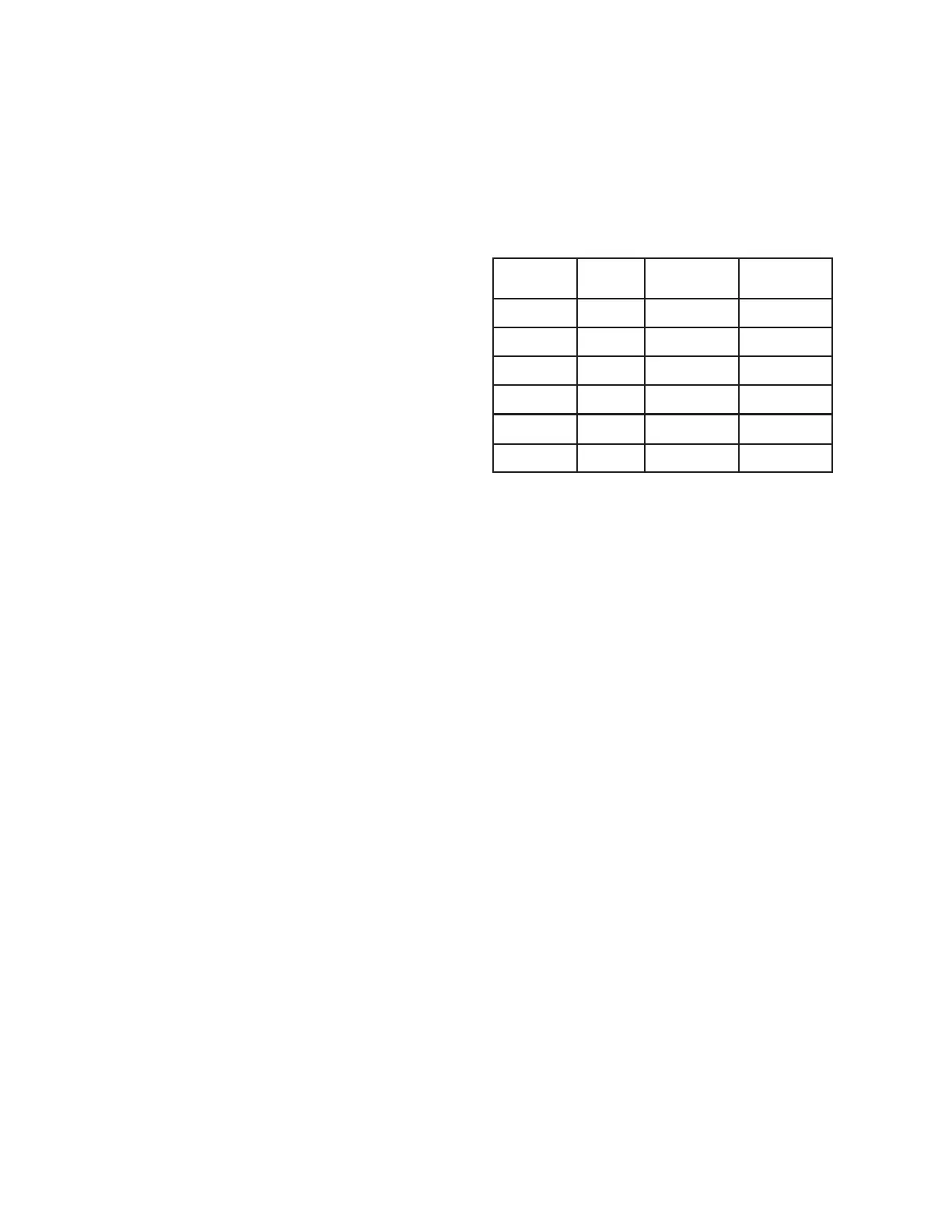
Suggested wind strength before reefing:
To use the above guide, when the boat has a roller
genoa, simply reduce the sail as indicated above.
The roller genoa is reduced to a jib when the tack is
level with the shrouds and then can be further re-
duced to storm jib when in line with the baby stay
on the front deck.
As a rule of thumb, consider reefing whenever the
boat heels to 7º or more. An inclinometer will assist
in determining the degree of heel.
Heavy Weather
For offshore use, the catamaran is the safest choice
of boat. The trimaran is the worst followed by the
monohull. To understand what happens in rough con-
ditions and large waves it is necessary to understand
the motion of water in a wave.
In the crest of a wave, water particles are moving in
the direction of the wave with say a speed of 12
knots. In the trough, the water particles are moving
backwards at 12 knots. The water particles move in
a circular motion. Although these waves appear to
be moving, in fact nothing moves, there is just this
circular motion of water. Otherwise the whole of the
Atlantic would end up in Europe in a Gale.
All boats will lay beam to the waves and wind with
no sails up.
In heavy weather, a monohull’s keel can by its own
worst enemy. In the trough of a wave when laying
beam to, the deep keel is in static water, while the
hull is on the surface where the water particles are
moving towards the wave. This starts a pendulum
motion with the boat rocking towards the wave. As
the pulsation of the wave moves on the hull, it is
Main Headsail Roller Genoa
Wind
Strength—
Apparent
Full Main Drifter Full 15 knots
Full Main Genoa Full 18 knots
Full Main Jib First Reef 22 knots
Main – 1
st
Reef
Jib First Reef 25 knots
Main – 1
st
Reef
Storm Jib Second Reef 30 knots
Main – 2
nd
Reef
Storm Jib Second Reef Gale
Sails and Sailing



 To Next Page