12
4. Turn the petMAP ON. If there is a “Nominal Session
BP” (NSV) from the previous BP measurement session, it
will be displayed until the cuff pressure is raised over 30
mmHg. At that time that NSBP will be erased and
“forgotten forever” so make sure it has been recorded
before starting a new BP session.
In addition, the user may view the previous session’s
values on both the graphic display screen and the tabular
display screen.
5. Press and release the Multi-Function button to select the
proper species and site. If the user does not desire
optimized readings, use “none”. (See Species & Cuff Site
Settings, in the Controls and Indicators section).
6. Attach the cuff hose to the petMAP securely, and verify
that the deflate trigger is in the closed (up) position.
7. Cuff Inflation: One steady firm (but gentle) squeeze of the
inflation bulb will inflate most cuffs (be careful not to open
the deflate trigger while inflating). As you increase cuff
size more than one bulb inflation may be required. Inflate
the cuff 35 – 40 mmHg higher than the expected systolic
pressure. (Typically for older cats, utilize an initial
inflation pressure of 200-220 mmHg and slightly lower for
young cats and most dogs.) DO NOT OVER-INFLATE.
Over-inflation (pressures beyond 260 mmHg) may cause
damage to the petMAP and harm the animal.
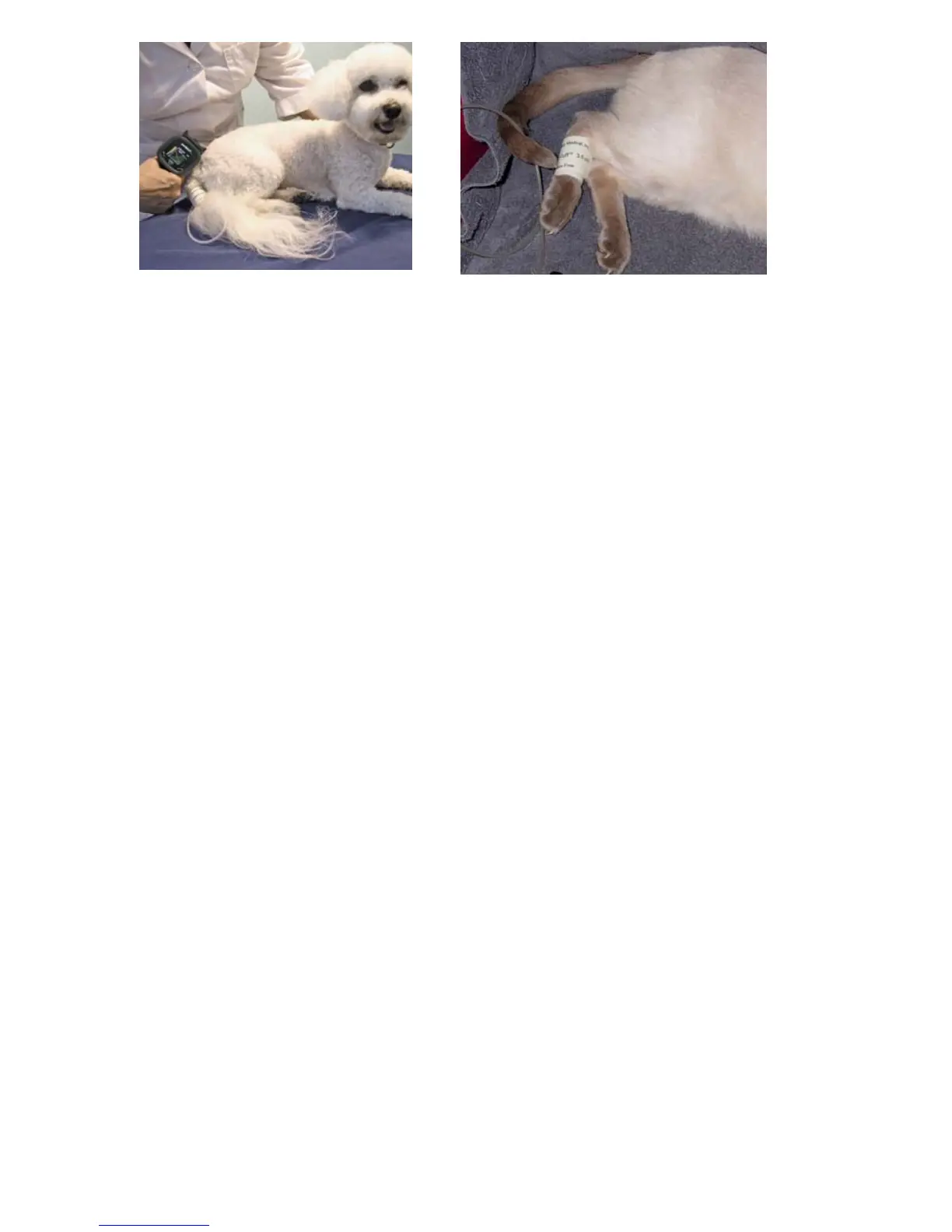
Tail cuff site
(Approximately 1/2”
from base of tail)
Hind foot cuff site
(Between dewclaw and heel)



 To Next Page