11
OPERATING INSTRUCTIONS:
1. The animal should be in a comfortable position; noise and
stress should be minimized. Having the owner present and
holding the pet is often the best way. There should be no
weight bearing or pressure on the limb on which the cuff is
being used. Do not attach cuff to petMAP yet.
2. Refer to “CritterCuff™ Information” section to explain
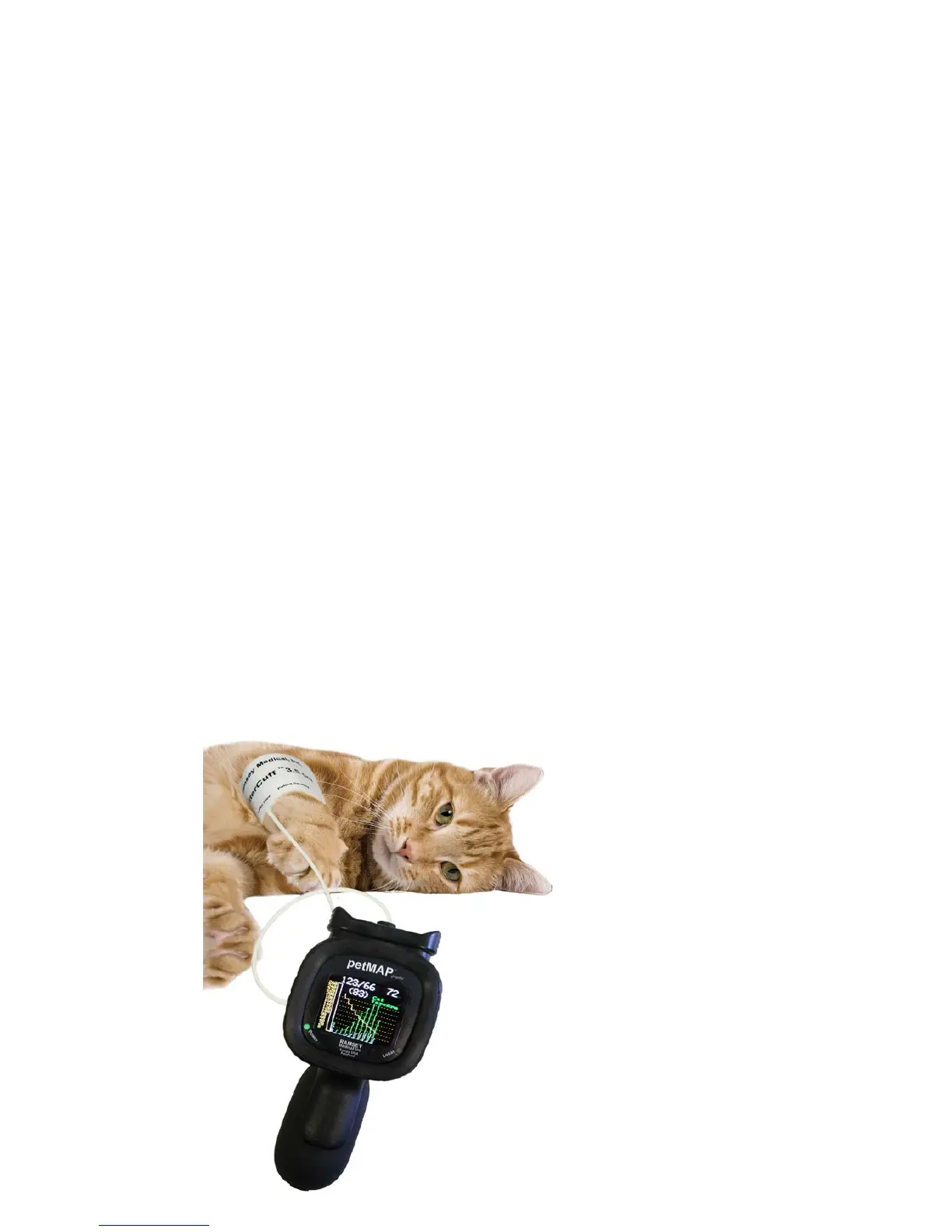
selection of proper Cuff Size and Cuff Fit. Place the
appropriate size cuff on the animal at one of these sites:
1. forearm 2. tail or 3. hind foot. To achieve the most
accurate and consistent readings, it is recommended that
the forearm or the base of the tail be used on cats (either
works well). For dogs, the base of the tail is the preferred
site, followed by the forearm. The hind foot is the least
accurate and should only be used if the forearm and/or tail
cannot be used.
3. The cuff should fit “snug tight”, tight enough to get all of the
air out of the cuff and tight enough so that it will not fall off,
but it should not be so tight that it hurts the animal or is so
tight it functions as a tourniquet when not inflated. The
proper size cuff for the limb chosen, and its “snug tight”
application are absolutely essential if good results are to be
achieved.
Forearm cuff site
(Below elbow joint)



 To Next Page