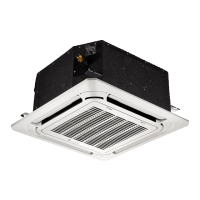
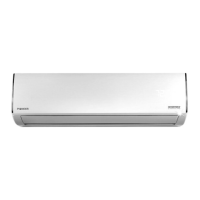
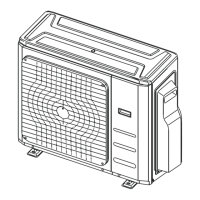
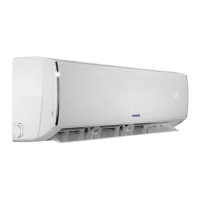
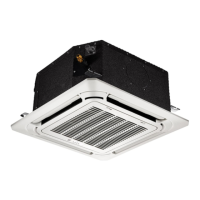
This document serves as an Owner's Manual for Cassette-Type Air Conditioners, specifically Compact Four-Way Cassette Ceiling Ductless Split Systems. It covers models CB009, CB012, CB018 for compact indoor units, and CYB009, CYB012, CYB018 for system sets. The manual emphasizes the importance of reading it carefully before installation or operation and saving it for future reference.
Function Description
The air conditioner is designed to provide cooling, heating, and dehumidification for indoor spaces. It operates within specific temperature ranges for safe and effective performance. In COOL mode, the indoor temperature range is 17°C to 32°C (62°F to 90°F), and the outdoor temperature range is 0°C to 43°C (32°F to 109°F). For low ambient cooling models, the outdoor range extends from -7°C to 43°C (20°F to 109°F). In HEAT mode, the indoor temperature range is 0°C to 30°C (32°F to 86°F), and the outdoor temperature range is -15°C to 24°C (5°F to 76°F). Inverter++ models have an extended outdoor heating range of -25°C to 24°C (-12°F to 76°F). DRY mode operates with an indoor temperature range of 17°C to 32°C (62°F to 90°F) and an outdoor temperature range of 18°C to 43°C (64°F to 109°F).
The unit features a display panel on the indoor unit, which can be used for manual operation if the remote control is misplaced or out of batteries. This panel includes an Infrared Receiver, a Manual Button, an Operation Indicator, a Timer Indicator, an Alarm Indicator, and a PRE-DEF (pre-heating/defrost) Indicator. An LED Display is also present.
Usage Features
The manual button allows users to select modes in a specific order: AUTO, FORCED COOL, and OFF. In FORCED COOL mode, the Operation Light flashes, and the system cools with a high wind speed for 30 minutes before switching to AUTO. During this time, the remote control is disabled. When the panel is turned OFF, the unit powers down, and the remote control is re-enabled.
The unit has a default setting that activates after a power failure, reverting to AUTO mode, AUTO fan, and 24°C (76°F). Users can update these settings using the remote control. Some models include an Auto-Restart function, which allows the unit to restart with the same settings after a power interruption.
An optional Louver Angle Memory Function is available on some models, where the horizontal louver angle returns to its previous position after a power failure. However, the manual advises against setting the louver angle too small to prevent condensation. The louver can be reset by pressing the manual button.
Some models are equipped with a Refrigerant Leak Detection System. In the event of a leak, the LCD screen will display "EC," and the LED indicator light will flash, alerting the user to a potential issue.
Energy-saving tips are provided to optimize unit efficiency. These include avoiding excessive temperature settings, closing curtains to block direct sunlight during cooling, keeping doors and windows closed to retain conditioned air, and not placing objects near the air inlet or outlet. Using the timer and built-in SLEEP/ECONOMY modes, removing batteries from the remote control during long periods of non-use, and regularly cleaning the air filter are also recommended. Proper adjustment of louvers to avoid direct airflow is also suggested.
Maintenance Features
Regular maintenance is crucial for the unit's longevity and efficient operation. The manual stresses the importance of contacting an authorized service technician for any repairs or maintenance, as improper handling can lead to water leakage, electric shock, fire, and void the warranty. It also warns against substituting fuses with incorrect amperage ratings.
Before any cleaning or maintenance, the air conditioning system must be turned off, and its power supply disconnected. The manual explicitly prohibits the use of chemicals, chemically treated cloths, benzene, paint thinner, polishing powder, or other solvents for cleaning, as these can damage the plastic surfaces. Washing the unit under running water or using water hotter than 40°C (104°F) is also forbidden. Instead, the unit should be cleaned with a damp, lint-free cloth and neutral detergent, then dried with a dry, lint-free cloth.
A key maintenance task is cleaning the air filter, which prevents dust and particles from entering the indoor unit. A dirty filter can reduce efficiency, so it should be cleaned every two weeks, or more frequently in dusty environments. If heavily clogged and un-cleanable, the filter should be replaced. The manual provides detailed instructions for cleaning the air filter:
- Unlock the grille by pushing two tabs towards the middle.
- Unplug the display panel cable from the control box.
- Detach the grille by holding it at a 45° angle, lifting it slightly, and pulling it forward.
- Remove the air filter.
- Clean the filter by vacuuming the inlet side or washing it in warm water with mild detergent, ensuring the inlet side faces down and away from the water stream.
- Rinse with clean water and air-dry, avoiding direct sunlight.
- Reinstall the filter.
- Reinstall the front grille and reconnect the display panel cable.
For households with animals, the grille should be wiped down periodically to prevent airflow blockage from animal hair.
The manual also outlines procedures for repairing refrigerant leaks, emphasizing that if a leak occurs, the air conditioner and any combustible heating devices must be turned off, the room ventilated, and a dealer called immediately. The unit should not be used until the leak is repaired due to the toxicity and flammability of refrigerant. In small rooms, measures must be taken to prevent refrigerant concentration from exceeding safety limits.
Preparation for periods of non-use includes running the appliance on FAN mode for 12 hours in a warm room to dry it and prevent mold, then turning it off and unplugging it. The air filter should be cleaned and reinstalled, and batteries removed from the remote control. Before operating the unit after an extended period of non-use, any obstacles blocking the vents of both indoor and outdoor units should be removed, the air filter and front grille cleaned, and the main power switch turned on at least 12 hours prior to operation.
Troubleshooting tips are provided for common problems, such as the unit not turning on, changes in operating mode, white mist emission, noises, and poor cooling or heating performance. Error codes are also listed to help diagnose specific malfunctions, with corresponding indicators (Operation, Timer, Error Code, PRE-DEF, Alarm) to guide troubleshooting.
Finally, European Disposal Guidelines are included, stating that the appliance contains refrigerant and potentially hazardous materials, requiring special collection and treatment. It should not be disposed of as household waste. Options for disposal include municipal electronic waste collection facilities, retailer take-back programs, manufacturer take-back programs, or certified scrap metal dealers. The manual warns against disposing of the appliance in natural surroundings due to environmental and health risks.


 To Next Page
 General