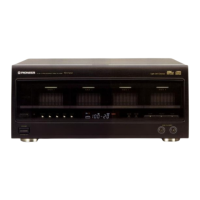
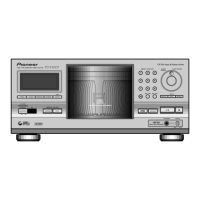
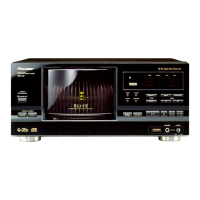
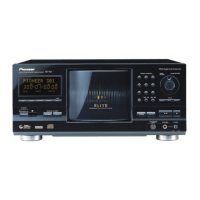
tFOR
U.S. MODELI
CAUTION
.
Use of
controls
or
adjustments or
performance
of
procedures
other than those specif ied
herein may result in hazardous radiation
exposure.
o The
use of optical
instruments with this
product
will increase eye hazard.
This equipment has been tested
and found to comply with the
ìimits for a
Class
B digital device,
pursuant
to
Part 15
of the
FCC Rules. These
limits are designed to
provide
reasonable
protection
against
harmful
interference in a residential installation.
This
equipment
generates,
uses, and can
radiate radio frequency energy and, if not installed and used
in accordance with the instructions,
may cause harmful
interference to radio communications. However,
there
is no
guarantee
that interference will not occur
in
a
particular
installation, lf
this
equipment
does cause harmful interference
to
radio or television
reception, which can be determined by turning the
equipment off and
on, the user
is
encouraged to try to correct the
interference by
one
or more of the
following measures:
-
Reorient
or
relocate
the receiving antenna.
-
lncrease the
separation between
the equipment and
receiver
-
Connect the equipment
into an outlet on
a circuit different from that to
which
the
receiver is
connected
-
Consult the
dealer or an experienced
radio/TV technician for help.
lnformation to User
Alteration
or
modifications carried out without appropriate authorization
may invalidate
the user's
right to
operate
the equipment
@
LISTE¡{I¡¡G
ffi
w
Dean
êcaroac<n:
Selecting fine audio equipment such as the unit
you've
just
purchased
is
only the start of
yourmusical
enjoyment. Now it's time
to consider how
you
can
maximize
the
fun
and excitement
your
equipment offers. This manufacturer and the Electronic
Industries
Association's
ConsumerElectronicsGroup want
you
to
getthe
most
out of
your
equipment
by
playing
it
at a
safe level.
One that lets the
sound come through loud
and clear
without
annoying blaring or
distortion-and,
most
importantly, without affecting
your
sensitive
hearing.
Sound can be deceiving.
Over time
your
hearing
"comfort
level"
adapts to
higher volumes
of sound. So what
sounds
"normal"
can
actually be
loud and harmful
to
your
hearing. Guard against this by
setting
your
equipment at a safe level BEFORE
your
hearing
adapts.
To establish a safe level:
a
Start
your
volume control at a low setting.
o
Slowly increase
the
sound until
you
can hear it comfortably
and
clearly, and without distortion.
Once
you
have established a comfortable sound level:
o
Set the dial and leave it there.
Taking
a
minute
to do this now will help to
prevent
hearing
damage or loss in the future. After
all, we
want
you
listening for
a
lifetime.
We Want
You Listening For A Lifetime
Used wisely,
your
new
sound equipment
will
provide
a
lifetime
of
fun
and
enjoyment. Since hearing
damage
from loud noise is often
undetectable until it is too late, this manufacturer and the Electronic
Industries Association's Consumer Electronics Group recommend
you
avoid
prolonged
exposure to excessive
noise. This list
of sound
levels is included for
your
protection.
Decibel
Level Example
Quiet
library,
soft
whispers
Living room, refrigerator,
bedroom away
from
traffic
Light traffic, normal conversation,
quiet
office
Air conditioner at 20 feet, sewing machine
Vacuum cleaner,
hair
dryer, noisy restaurant
Average
city traffic,
garbage
disposals, alarm clock
at two feet.
THE
FOLLOWING
NOISES CAN BE DANGEROUS
UNDER
CONSTANT EXPOSURE
90 Subway,
motorcycle, truck
traffic,
lawn mower
100
Garbage
truck, chain saw,
pneumatic
drill
120
Rock band concert in front of speakers,
thunderclap
140
Gunshot blast,jet
plane
180
Rocket launching
pad
Information
courtesy
of
the
Deafness
Research Foundation.
3
<PRB1 230>
En
30
40
50
60
70
80
@
LISTÊNINC


 To Next Page
 Loading...