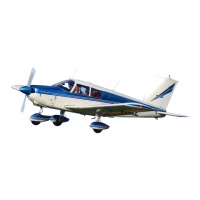
CIIEROKEE
WARRIOR
2. Control Surfaces
a. Check
for external damage and operational
interference of control
surfaces or
hinges.
b. Insure
that
wings
and
control
surfaces are
free
of
snow, ice, or frost.
3.
Wings
a.
Visually check fuel supply, secure caps.
b.
Drain fuel
sumps
(two
on each wing for
early models,
one on each
wing
for later
models).
c. Check that
fuel system vents
are open.
d. On
left
wing check that
pitot
head cover
is removed and
that holes in the
pitot*tatic
head are unobstructed.
4. Main Landing Gear
a. Check main
gear
shock
struts for
proper
inflation
(approximately
4.50 inches
showing).
b. Check tires for cuts,
wear
and
proper
inflation.
c.
Check
brake blocks and discs for
wear
and damage.
5.
Nose
Section
a.
Inspect windshield for cleanliness
b.
Check
the
propeller
and spinner
for
defects, dirt
and
cracks.
c. Check
for
obvious fuel and oil
leaks.
d. Drain
gascolator
fuel sump
(left
side of airplane).
e. Check oil
level. 8
quarts
maximum.
(Insure
that the
dipstick
is
properly
seated.)
f.
Check cowling
and
inspection
covers for security.
g.
Check
nose wheel
tire
for
damage,
wear, and
proper
inflation.
-v
h. Check
nose
gear
shock strut
for
proper
inflation
(approximately
3.25
inches
showing).
i.
Check
for foreign matter in air inlets.
6.
Fuselage
a. Stow tow bar if used.
b. Check baggage
for
proper
storage and
security.
c. Close
and
secure the baggage compartment
door.
7. Inside
Airplane
a. Upon entering the
airplane,
ascertain
that all
flight
controls
operate
properly.
b. Close and secure the cabin door.
c.
Check that
required
papers
are in the airplane.
d. Fasten seat belts and shoulder harnesses. Check
function
of
inertia
reels.
STARTING ENGINE
l. Set
parking
brake ON.
2.
Set the carburetor
heat control in the
fult OFF
position.
3. Select
the
desired
tank with the fuel
selector
valve.
OPERATING
INSTR.UCTIONS
REVISED:
JULY 14,1975
7-2


 To Next Page