14
CAUTION: Always be sure the work is rigidly clamped or otherwise
secured before making a cut.
Generally speaking, when working on a bench,use clamps to hold the
workpiece. When routing edges, hold the router firmly down and against the
work by both handles.
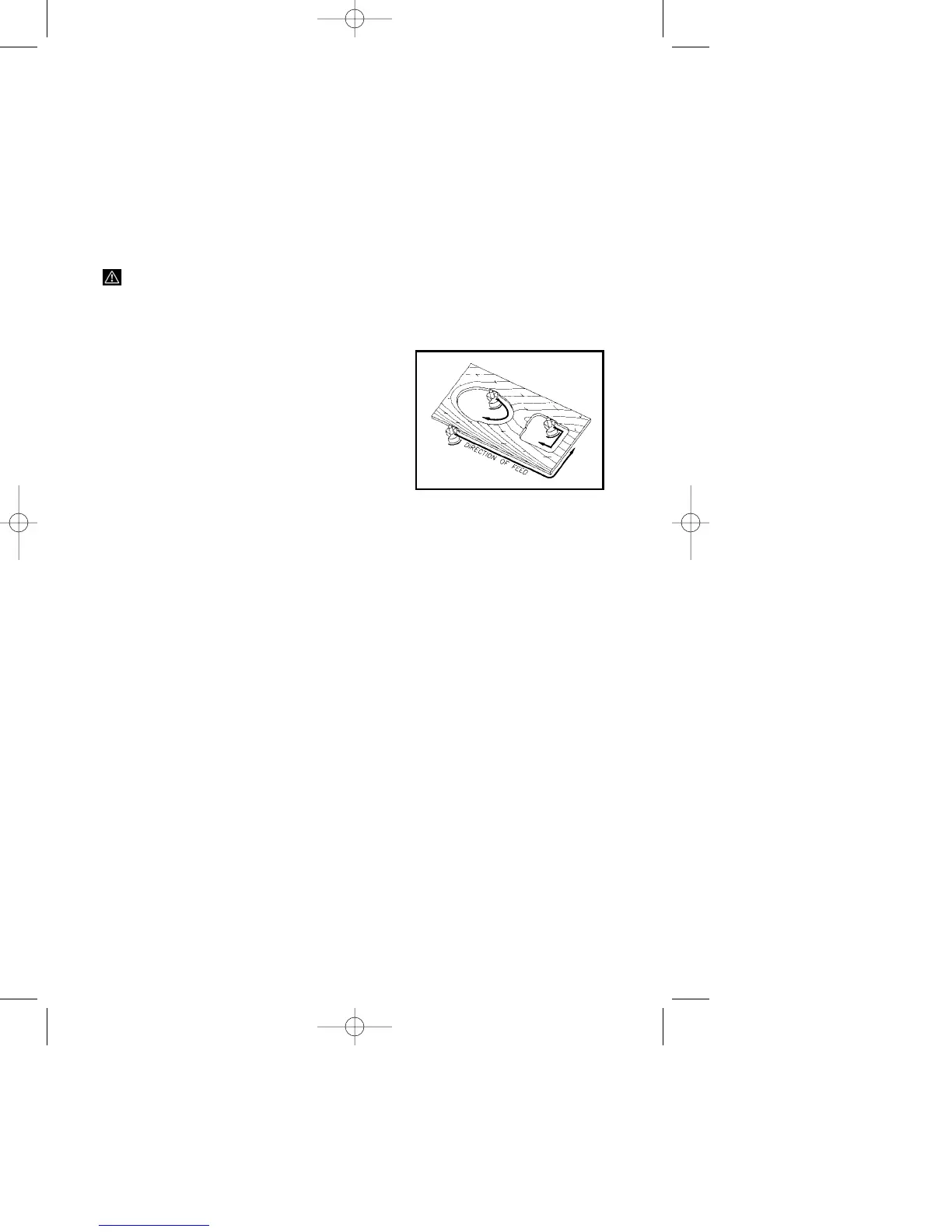
Since the cutter rotates clockwise (when viewing router from top), more
efficient cutting will be obtained if the router is moved from left to right as you
stand facing the work. When working on the inside of a templet, move router
in clockwise direction.
When working on the outside of a templet, move router in a counterclock-wise
direction.
WARNING: Avoid “Climb-Cutting” (cutting in direction opposite that
shown in Fig. 21). “Climb-Cutting increases the chance for loss of control
resulting in possible personal injury. When “Climb-Cutting” is required (backing
around a corner), exercise extreme caution to maintain control of router.
The speed and depth of cut will depend largely
on the type of workpiece. Keep the cutting
pressure constant but do not crowd the router
so the motor speed slows excessively. More
than one pass at various settings on
hardwoods or problem materials may be
necessary to get the desired depth of cut.
When making cuts on all four edges of the
workpiece, make the first cut on the end of the
piece across the grain. Thus, if chipping of
wood occurs at the end of a cut, it will be
removed when making the next cut parallel
with the grain
.
MAINTENANCE
KEEP TOOL CLEAN
Periodically blow out all air passages with dry compressed air. All plastic parts
should be cleaned with a soft damp cloth. NEVER use solvents to clean plastic
parts. They could possibly dissolve or otherwise damage the material.
CAUTION: Wear safety glasses while using compressed air.
FAILURE TO START
Should your tool fail to start, check to make sure the prongs on the cord plug
are making good contact in the outlet. Also, check for blown fuses or open
circuit breakers in the line.
LUBRICATION
This tool has been lubricated with a sufficient amount of high grade lubricant
for the life of the unit under normal operating conditions. No further lubrication
is necessary.
Fig. 21



 To Next Page