10
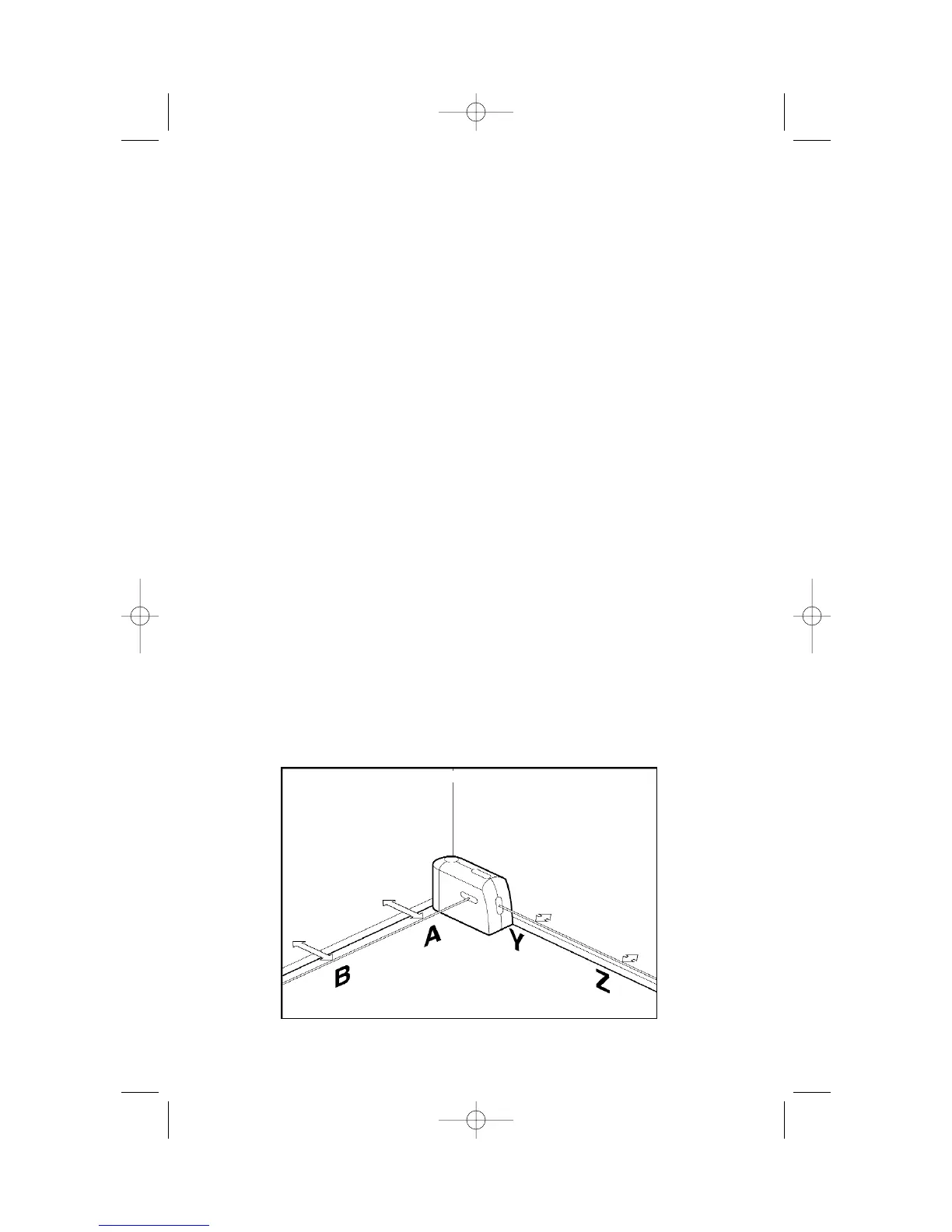
Square
NOTE: OTHER BEAMS HAVE BEEN OMITTED FROM ILLUSTRATION FOR CLARITY.
Squaring
1. Position laser square in the corner of the two surfaces to be squared (as
illustrated).
2. Turn laser square on.
3. Measure distance A at a point relatively close to laser square and make a
note of the distance.
4. Measure distance B at a point further away from laser square and make a
note of the distance.
Note: The greater the distance between the two points of measurement,
the greater the accuracy.
5. Compare distance A with distance B.
6. If distance A equals distance B, proceed to the next step. If distance
A does not equal distance B, then adjust the position of laser square until
distance A does equal distance B and proceed to the next step.
7. Measure distance Y at a point relatively close to laser square and make a
note of the distance.
8. Measure distance Z at a point further away from laser square and make a
note of the distance.
Note: The greater the distance between the two points of measurement,
the greater the accuracy.
9. Compare distance Y with distance Z.
10. If distance Y equals distance Z, then the two surfaces are square. If
distance Y does not equal distance Z, then adjust the position of the
surface which these distances relate to until distance Y does equal
distance Z.
Note: The plumb beams can also be used in operations such as
squaring window frames.


 To Next Page