8
CAUTION: RISK OF PERSONAL
INJURY AND PROPERTY DAMAGE.
Ensure the shoe is locked into position
before using tool.
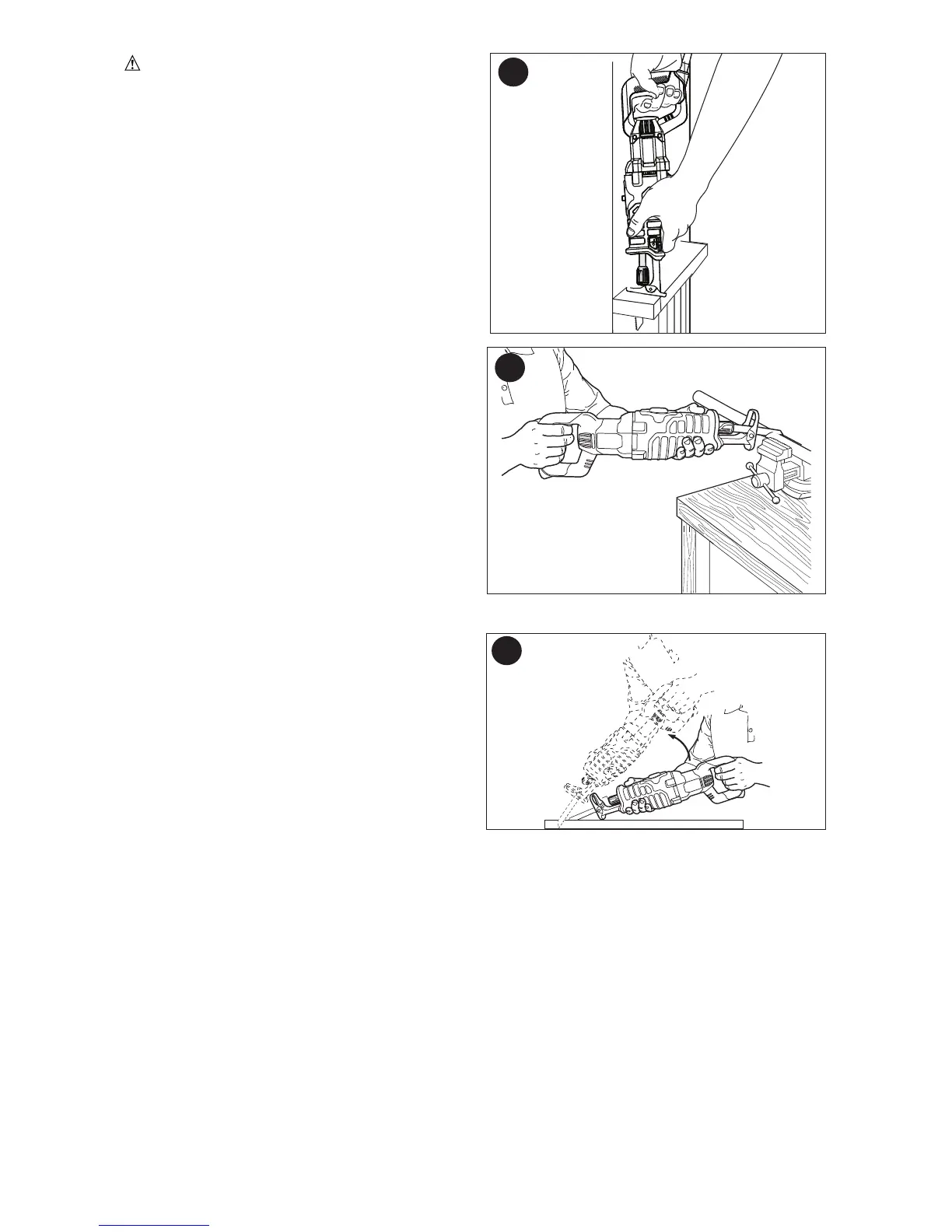
FLUSH CUTTING (FIGURE 7)
• The compact design of the reciprocating
saw motor housing and pivoting shoe
permit close cutting to floors, corners and
other difficult areas.
• To maximize flush cutting capabilities,
insert the blade shaft into the blade clamp
with the teeth of the blade facing up.
• Turn the saw upside down so you are as
close to the work surface as possible.
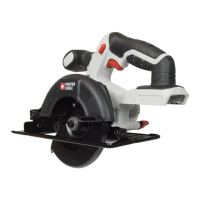
METAL CUTTING (FIGURE 8)
• Use a finer blade for ferrous metals and a
coarse blade for non-ferrous materials.
• In thin gauge sheet metals it is best to
clamp wood to the underside of the sheet.
This will ensure a clean cut without
excess vibration or tearing of metal.
• Avoid forcing cutting blade as this
reduces blade life and causes costly
blade breakage.
NOTE: Spread a thin film of oil or other
coolant along the line ahead of the saw cut
for easier operation and longer blade life.
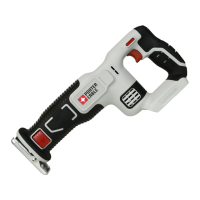
POCKET CUTTING - WOOD ONLY (FIGURE 9)
• Measure the surface area to be cut and
mark clearly with a pencil, chalk or
scriber.
• Insert blade in blade clamp and tighten
blade clamp securely.
• Tip the saw backward until the back edge
of the shoe is resting on the work surface
and the fully extended moving blade will
clear the surface.
• Grip unit with both hands, switch motor
on permitting blade to obtain maximum
speed.
• Begin a slow, deliberate upward swing with the main handle of the saw.
• The blade will begin to feed into material. Always be sure blade is completely
through material before continuing with pocket cut.
NOTE: In areas where blade visibility is limited, use the edge of the shoe as a guide.
PROJECT TIPS
• Cut only with sharp blades; they cut cleaner, faster and put less strain on the motor
while cutting.
• When cutting, always ensure that the shoe is held firmly against the workpiece and
the workpiece is secured from moving/deflecting. This will improve operator control
and minimize vibration.
• For longer blade life, use bi-metal blades. These utilize a carbon steel back welded
to high speed steel teeth making the blade more flexible and less prone to breaking.
8
9



 To Next Page