DRY PICK-UP
1.
The filter must always be
in
correct position to reduce the risk
of
leaks and possible
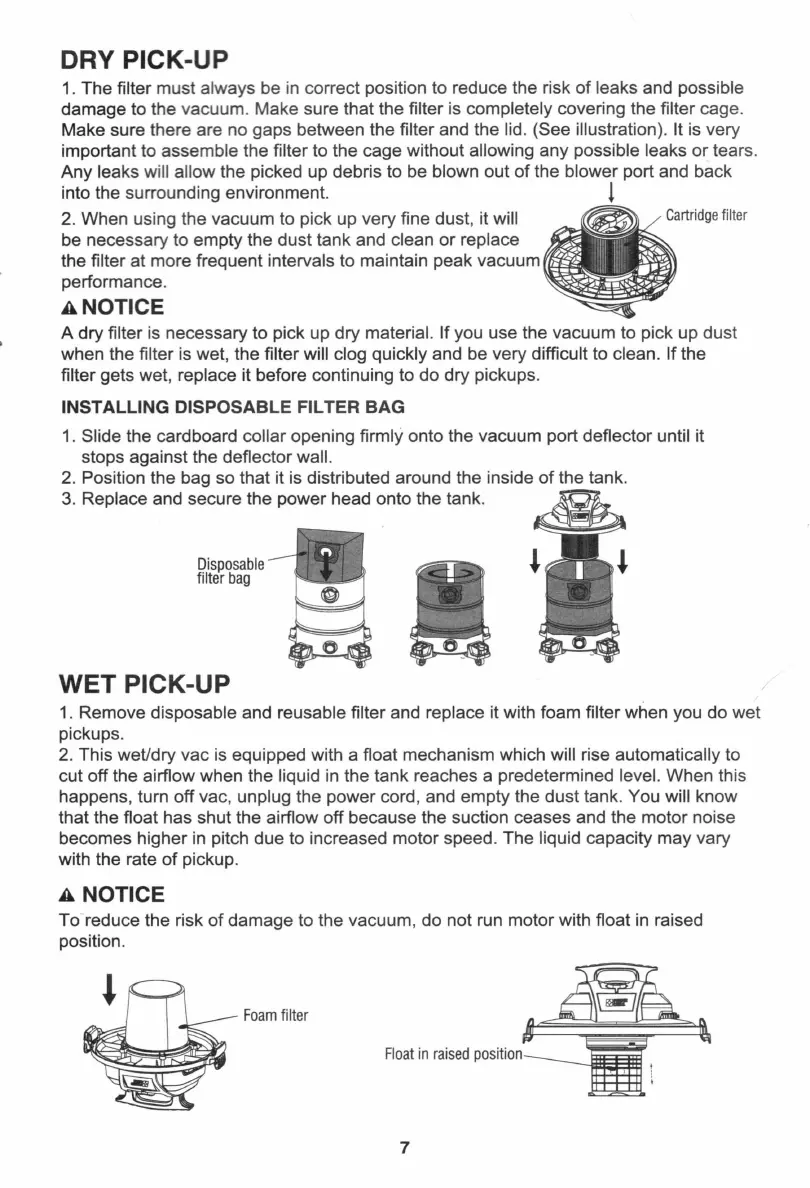
damage to the vacuum. Make sure that the filter is completely covering the filter cage.
Make sure there are no gaps between the
filter and the lid. (See illustration). It is very
important to
assemble the filter to the cage without allowing any possible leaks
or
tears.
Any
leaks will allow the picked up debris to be blown out
of
the blower port and back
into the surrounding environment.
2. When using the vacuum to pick up very fine dust, it
will
Cartridge
filter
be necessary to empty the dust tank and clean
or
replace
the filter at more frequent intervals to maintain peak vacuum
performance.
A NOTICE
A dry filter is necessary to pick up dry material. If you use the vacuum to pick up dust
when the
filter is wet, the filter will clog quickly and be very difficult to clean. If the
filter gets wet, replace it before continuing to do dry pickups.
INSTALLING DISPOSABLE FILTER BAG
1.
Slide the cardboard collar opening firmly onto the vacuum port deflector until it
stops against the deflector
wall.
2.
Position the bag so that it is distributed around the inside
of
the tank.
3.
Replace and secure the power head onto the tank.
Disposable
filter
bag
WET PICK-UP
1.
Remove disposable and reusable filter and replace it with foam filter when you do wet
pickups.
2.
This wet/dry vac is equipped with a float mechanism which will rise automatically to
cut off the airflow when the
liquid
in
the tank reaches a predetermined level. When this
happens, turn off vac,
unplug the power cord, and empty the dust tank. You will know
that the float has shut the airflow off because the suction ceases and the motor noise
becomes higher
in
pitch due to increased motor speed. The liquid capacity may vary
with the rate
of
pickup.
A NOTICE
To-reduce the risk of damage to the vacuum, do not run motor with float
in
raised
position.
Foam
filter
Float
in
raised
position
7


 To Next Page