Page 39
Chapter 2 - Pre-dive procedures
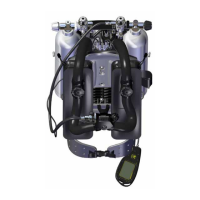
The Poseidon SE7EN is a compact and very powerful life-support system that offers an
unprecedented new experience in recreational or technical diving diving. But it is also a
complex assembly of high technology that includes sensors, actuators, computers, and
software that need to operate reliably in an underwater environment, for the important purpose
of keeping a diver alive and healthy. For the same reasons that good pilots use pre-ight
checklists to ensure their ying machine has a high probability of successful take-off, ight,
and landing; so does the rebreather diver need to formalize the process leading up to a dive.
The SE7EN design team has gone to extraordinary measures to automate the pre-dive proce-
dure and the operation of the rig during a dive. This chapter explains the pre-dive test proce-
dures, including manual actions that are required by the user, and how to interpret the results
of the automated tests, should any of them fail to complete successfully.
Initial Pre-dive procedures
Gas supply cylinders
Before the dive, make sure there is enough diluent (air) and oxygen to carry out the dive you
plan to do. The EU version of the Poseidon SE7EN comes with a 3-liter / 183-cubic inch
aluminum diluent (air) cylinder (with black valve knob) with a rated ll pressure of 204 bar /
2958 psi. Filled to its maximum allowed working pressure, it holds 612 liter / 21.6 cubic feet of
air. Because this cylinder is your open-circuit (OC) bailout gas in the event of an emergency,
DANGER:
Failure to properly and completely conduct the Pre-Dive tests
and to ensure that the rig is operating properly could lead to
permanent injury or death. Do NOT skip the Pre-Dive Procedure.
Your life depends on it.
Poseidon strongly recommends that this cylinder be full at the start of each dive. The included
oxygen cylinder (white valve knob) has the same capacity and pressure rating as the diluent
cylinder, but the recommended maximum lling pressure of oxygen is limited to 135 bar / 2000 psi
for reasons of re safety.
Attach both the diluent and oxygen cylinders using the procedures described in Chapter 1. Do
not turn the cylinders valves on initially, as this will result in wasted gas during certain portions
of the pre-dive tests. As described below, the cylinders should be turned on when the pre-dive
checks reach Test number 44 and 45. The pre-dive tests will fail if the pressure in the diluent
cylinder is less than 51 bar / 739psi, or the oxygen cylinder is less than 34 bar / 493 psi. Similarly,
if starting a dive with only a marginal amount of gas above these minimum safety limits, these
gas pressure limits will be reached soon after the start of the dive, leading to an unsatisfying
diving experience.
CO
2
Absorbent Cartridge
Follow the procedures described in Chapter 1 for installation of a new SofnoDive
®
797 CO
2
absorbent cartridge. When conducting a repetitive dive, it’s critical to keep track of the hours
of personal use for the cartridge once it is installed. The absorbent cartridge must be changed
whenever the oxygen cylinder is re-lled. While many people experience a strong reaction to
CO
2
buildup (as would result from diving with a depleted or missing cartridge) in the form of
un-naturally rapid breathing rate, disorientation and the onset of a strong headache, some
people do not experience them. Do not risk CO
2
poisoning! Change the cartridge every three
hours of use or whenever the oxygen cylinder is recharged, whichever comes rst.



 To Next Page