
 Need help?
Do you have a question about the Powerplus POWX1160 and is the answer not in the manual?
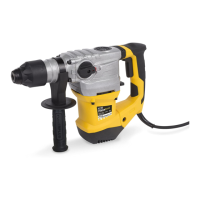
This document outlines the operation, maintenance, and safety guidelines for a Powerplus hammer drill, model POWX1160. It is designed for hammer drilling in concrete, brick, and stone, as well as light chiseling tasks. Additionally, it can be used for drilling without impact in wood, metal, ceramic, and plastic. The tool is not intended for commercial use.
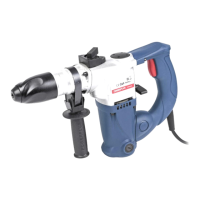
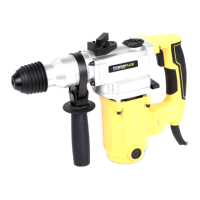
The hammer drill is equipped with a robust motor for various drilling and chiseling applications. It features an SDS-plus attachment system for quick and secure tool changes. The device offers multiple operating modes: hammer/drill mode for masonry, concrete, and natural stone; hammer mode for chiseling in similar materials; and drilling mode for wood, synthetic materials, and metal without impact. A front hammer/drill switch with a safety lock knob and a rear hammer/drill switch allow for precise selection of the desired function. The tool is designed for a safe and stable grip, aided by an auxiliary handle that can be rotated and tightened to achieve an optimal body position during operation.
Before using the tool, it is crucial to read the manual and general safety instructions thoroughly. Always ensure the power supply matches the voltage specified on the rating plate. The work area should be clean, well-lit, and free from flammable liquids, gases, or dust. Children and bystanders must be kept away from the operating area.
For personal safety, users should remain alert, use common sense, and avoid operating the tool while tired or under the influence of drugs or alcohol. Safety equipment, including eye protection, a dust mask, non-skid safety shoes, a hard hat, and hearing protection, should always be worn. Loose clothing, jewelry, and long hair should be kept away from moving parts.
The tool's SDS-plus attachment system simplifies the process of fitting and changing tools. Before insertion, tools should be cleaned and greased with a thin layer of machine grease. To fit a tool, pull back and hold the fastening sleeve, then push and rotate the dust-free tool into the holder until it locks automatically. Verification of the lock is done by pulling the tool. To remove a tool, pull back and hold the fastening sleeve, then remove the tool. It is important to note that accessories can become hot after use, so protective gloves should always be used for removal.
The auxiliary handle is essential for safe operation and must always be attached. It can be loosened, rotated, and tightened to achieve a comfortable and stable working position. A depth stop feature allows for pre-setting and repeating drilling depths. To set the depth, loosen the lock knob, slide the depth gauge to the desired position, and securely tighten the lock knob. The depth can be checked with a rule for accuracy, and the adjustment knob can be tightened to secure the auxiliary handle.
For hammer drilling vertically above the head, a dust collection device can be slid over the drill bit to minimize dust exposure. The hammer/drill switch allows users to select between hammer/drill, hammer, and drilling functions. A lock knob on the front switch must be depressed before making any adjustments to prevent unintentional changes. It is critical not to set the switch to a "no function" mode, as this can cause the motor to turn without load while the shaft remains stationary, potentially damaging the motor.
When drilling, a low pressure should be applied to avoid unnecessary load on the motor. Drill bits should be regularly checked, re-sharpened, or replaced if blunt. Always wait for the machine to come to a complete standstill before changing drilling or hammer functions. Before starting work, always check that the chisel or drill bit is properly locked in the chuck. The chuck should also be examined regularly for signs of wear or damage. The hammer tool should never be started until it is pressed against a workpiece. After use, the hammer drill should be unplugged, and the chisel or drill bit removed.
Regular cleaning and maintenance are vital for the longevity and safe operation of the hammer drill. Before performing any maintenance, always pull the power plug from the socket. The ventilation slots of the machine should be kept clean to prevent engine overheating. The machine housing should be regularly cleaned with a soft cloth, preferably after each use. The ventilation slots must be kept free from dust and dirt. If dirt persists, a soft cloth moistened with soapy water can be used. Solvents such as petrol, alcohol, or ammonia water should never be used, as they can damage plastic parts.
The carbon brushes should be removed and checked regularly. They must be replaced when worn down to the limit mark. Both carbon brushes should be replaced simultaneously, and only original carbon brushes should be used. The carbon brushes should be kept clean and allowed to slip freely in their holders.
The power cable should be protected from damage, as oil and acid can damage it. The machine should never be overloaded. All workpieces must be sufficiently secured. It is imperative to follow all national safety regulations concerning installation, operation, and maintenance. Chisel bits and drill bits can be accidentally flung from the machine, causing serious injury, so proper locking and regular inspection are crucial.
When not in use, the power tool should be stored out of reach of children, in a stable and secure position, in a cool and dry place, avoiding extreme temperatures. It should be protected from direct sunlight and kept in the dark if possible. Storing it in plastic bags should be avoided to prevent humidity build-up.
 General
| Voltage | 230-240 V |
|---|---|
| Chuck capacity / size | 13 mm |
| Power source | Corded Electric |
| Drilling capacity in steel | 13 mm |
| Drilling capacity in concrete / masonry | 16 mm |


 To Next Page