or cut with a torch as these procedures may have caused local
hardening of the steel. Over driving of the fastener should be
avoided as the rebound created may reduce the load capacity or
cause damage to the fastener. When fastening into unsupported
long steel members, it may be necessary to provide support in
the area of the fastening to prevent spring action which can
cause inconsistent penetration and a reduction in load capacity.
SUITABLE BASE MATERIAL
While powder actuated fasteners can be used successfully in
concrete, certain masonry materials, and A 36 steel, some
materials are completely unsuitable. Fasteners should never be
fired into hard or brittle materials such as cast iron, tile, glass, or
rock. These materials can shatter easily resulting in a potential
safety hazard. In addition, soft base materials such as wallboard,
plaster, or wood are not appropriate as the fastener could pass
completely through these materials. The user should never guess
when fastening into any base material. Failure to follow the
recommended installation and safety guidelines can result in
severe injury or death to the tool operator and/or bystanders.
CENTER PUNCH TEST
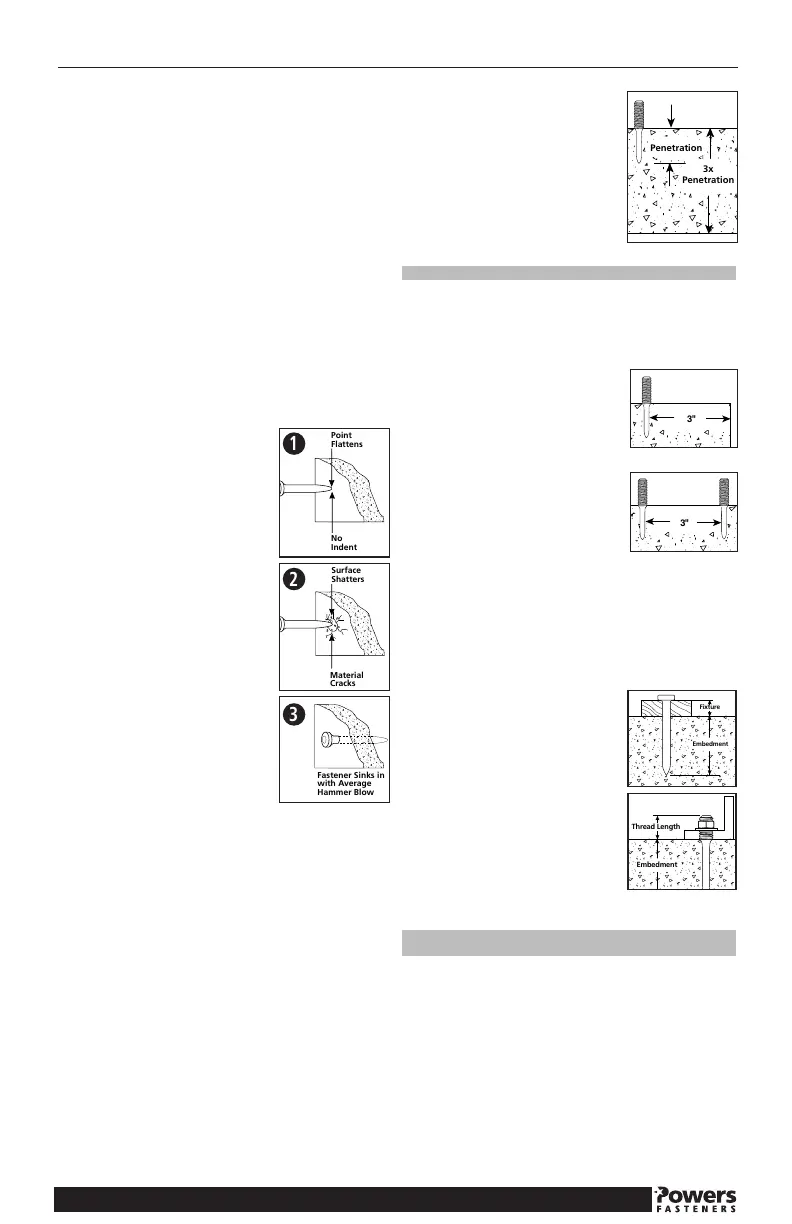
A center punch test should always be
performed to determine the suitability of
the base material for a powder actuated
fastening. This test is relatively simple and
can help to insure a safe, successful
fastening. Be sure to wear the appropriate
eye protection when performing this test.
To begin, select the fastener to be used for
the job. Then, place the point of the
fastener against the proposed base
material. Strike the fastener with a single
hammer blow, then examine the point. If
the point of the fastener is not blunted
and the base material has a clear point
indentation, it is acceptable to proceed
with the first test installation.
Use of a powder actuated system is not
recommended if the following occurs during
the center punch test:
1. The fastener point has been blunted. This
indicates that the base material is too hard.
2. The base material cracks or shatters.
This indicates that the base material is too brittle.
3. When using an average hammer blow, the fastener
penetrates the base material easily. This indicates that the base
material is too soft.
FASTENER INSTALLATION REQUIREMENTS
It is important to understand the required minimum base
material thickness requirements along with the minimum
spacing and edge distance requirements. Failure to follow these
requirements can result in an unsuccessful fastening and create
a safety hazard.
BASE MATERIAL THICKNESS
Concrete base material should be at least three (3) times as
thick as the fastener embedment penetration. If the concrete is
too thin, the compressive forces forming at the fasteners point
can cause the free face of the concrete to break away. This can
create a dangerous condition from flying concrete and/or the
fastener and also results in a reduction of fastener holding
power. For applications in the face shell of concrete masonry
block, select a fastener length which will not exceed the
thickness of the face shell.
FASTENER PENETRATION GUIDE
The following table lists typical
embedment or penetration depths
expected in the base materials listed.
The penetration will vary depending on
the density of the material. This table
should be used as a guide since the
consistency of these materials varies.
When in doubt, a job site performance
test should be conducted.
D
ENSITY TYPICAL BASE MATERIAL PENETRATION
Soft Masonry Concrete block 1" - 1-1/4"
Average concrete Poured concrete 3/4" - 1"
Dense concrete Pre-stressed/ 5/8" - 3/4"
pre-cast concrete
EDGE DISTANCE
Do not fasten closer than 3" from the
edge of concrete. If the concrete cracks, the
fastener may not hold. Closer edge
distances for applications such as sill plates
may be permitted if specific fastener testing
has been conducted.
SPACING
Setting fasteners too close together in
concrete or masonry can cause cracking.
The recommended minimum distance
between fasteners is 3" center to center.
FASTENER LENGTH SELECTION IN CONCRETE
For permanent applications using pins in concrete, first
determine the thickness of the fixture to be fastened. To this, add
the required embedment or penetration into the base material.
This will be the fastener shank length required. For applications
in the face shell of masonry block, select a fastener length which
will not exceed the thickness of the face shell.
For removable applications with
threaded studs, the shank length required
is equal to the embedment depth required.
To determine the minimum threaded
length, add the thickness of the fixture
and the nut / washer thickness. The nut
and washer thickness is equal to the
nominal thread diameter. Do not over
tighten threaded parts. Maximum
tightening torque values are listed in the
table below. Use of a nut setter is
recommended to reduce the possibility of
over tightening the fasteners. For critical
applications, perform a job site test.
MAXIMUM TORQUE MAXIMUM TORQUE
FOR 1/4" STUD (FT.-LBS.) FOR 3/8" STUD (FT.-LBS.)
24
INSTALLATION IN STEEL
The following guidelines are based on the installation of a
fastener in ASTM A 36 structural steel with the point fully
penetrating the steel member. Recommended steel material
thickness ranges from a minimum of 1/8" to a maximum of
3/8". For use in higher strength structural steel, applications
where the point does not penetrate the steel member, or a
thickness of steel greater than 3/8", job site performance tests
are recommended.
MODEL P2201 CAT. NO.52006/Deluxe Kit 52007/Blister Pack
3 P2201
@@@@@@
@@@@@@
@@@@@@
@@@@@@
@@@@@@
ÀÀÀÀÀÀ
ÀÀÀÀÀÀ
ÀÀÀÀÀÀ
ÀÀÀÀÀÀ
ÀÀÀÀÀÀ
@@@@@@
@@@@@@
@@@@@@
@@@@@@
@@@@@@
ÀÀÀÀÀÀ
ÀÀÀÀÀÀ
ÀÀÀÀÀÀ
ÀÀÀÀÀÀ
ÀÀÀÀÀÀ
@@@@@@
@@@@@@
@@@@@@
@@@@@@
@@@@@@
ÀÀÀÀÀÀ
ÀÀÀÀÀÀ
ÀÀÀÀÀÀ
ÀÀÀÀÀÀ
ÀÀÀÀÀÀ
@@@@@@
@@@@@@
@@@@@@
@@@@@@
@@@@@@
ÀÀÀÀÀÀ
ÀÀÀÀÀÀ
ÀÀÀÀÀÀ
ÀÀÀÀÀÀ
ÀÀÀÀÀÀ
@@@@@@
@@@@@@
@@@@@@
@@@@@@
@@@@@@
ÀÀÀÀÀÀ
ÀÀÀÀÀÀ
ÀÀÀÀÀÀ
ÀÀÀÀÀÀ
ÀÀÀÀÀÀ
@@@@@@
@@@@@@
@@@@@@
@@@@@@
@@@@@@
ÀÀÀÀÀÀ
ÀÀÀÀÀÀ
ÀÀÀÀÀÀ
ÀÀÀÀÀÀ
ÀÀÀÀÀÀ
@@@@@@
@@@@@@
@@@@@@
@@@@@@
@@@@@@
ÀÀÀÀÀÀ
ÀÀÀÀÀÀ
ÀÀÀÀÀÀ
ÀÀÀÀÀÀ
ÀÀÀÀÀÀ
yyyyyy
yyyyyy
yyyyyy
yyyyyy
yyyyyy
P
oint
Flattens
N
o
Indent
@@@@@@
@@@@@@
@@@@@@
@@@@@@
@@@@@@
ÀÀÀÀÀÀ
ÀÀÀÀÀÀ
ÀÀÀÀÀÀ
ÀÀÀÀÀÀ
ÀÀÀÀÀÀ
@@@@@@
@@@@@@
@@@@@@
@@@@@@
@@@@@@
ÀÀÀÀÀÀ
ÀÀÀÀÀÀ
ÀÀÀÀÀÀ
ÀÀÀÀÀÀ
ÀÀÀÀÀÀ
@@@@@@
@@@@@@
@@@@@@
@@@@@@
@@@@@@
ÀÀÀÀÀÀ
ÀÀÀÀÀÀ
ÀÀÀÀÀÀ
ÀÀÀÀÀÀ
ÀÀÀÀÀÀ
@@@@@@
@@@@@@
@@@@@@
@@@@@@
@@@@@@
ÀÀÀÀÀÀ
ÀÀÀÀÀÀ
ÀÀÀÀÀÀ
ÀÀÀÀÀÀ
ÀÀÀÀÀÀ
@@@@@@
@@@@@@
@@@@@@
@@@@@@
@@@@@@
ÀÀÀÀÀÀ
ÀÀÀÀÀÀ
ÀÀÀÀÀÀ
ÀÀÀÀÀÀ
ÀÀÀÀÀÀ
@@@@@@
@@@@@@
@@@@@@
@@@@@@
@@@@@@
ÀÀÀÀÀÀ
ÀÀÀÀÀÀ
ÀÀÀÀÀÀ
ÀÀÀÀÀÀ
ÀÀÀÀÀÀ
@@@@@@
@@@@@@
@@@@@@
@@@@@@
@@@@@@
ÀÀÀÀÀÀ
ÀÀÀÀÀÀ
ÀÀÀÀÀÀ
ÀÀÀÀÀÀ
ÀÀÀÀÀÀ
yyyyyy
yyyyyy
yyyyyy
yyyyyy
yyyyyy
Surface
Shatters
Material
Cracks
@@@@@@
@@@@@@
@@@@@@
@@@@@@
@@@@@@
ÀÀÀÀÀÀ
ÀÀÀÀÀÀ
ÀÀÀÀÀÀ
ÀÀÀÀÀÀ
ÀÀÀÀÀÀ
@@@@@@
@@@@@@
@@@@@@
@@@@@@
@@@@@@
ÀÀÀÀÀÀ
ÀÀÀÀÀÀ
ÀÀÀÀÀÀ
ÀÀÀÀÀÀ
ÀÀÀÀÀÀ
@@@@@@
@@@@@@
@@@@@@
@@@@@@
@@@@@@
ÀÀÀÀÀÀ
ÀÀÀÀÀÀ
ÀÀÀÀÀÀ
ÀÀÀÀÀÀ
ÀÀÀÀÀÀ
@@@@@@
@@@@@@
@@@@@@
@@@@@@
@@@@@@
ÀÀÀÀÀÀ
ÀÀÀÀÀÀ
ÀÀÀÀÀÀ
ÀÀÀÀÀÀ
ÀÀÀÀÀÀ
@@@@@@
@@@@@@
@@@@@@
@@@@@@
@@@@@@
ÀÀÀÀÀÀ
ÀÀÀÀÀÀ
ÀÀÀÀÀÀ
ÀÀÀÀÀÀ
ÀÀÀÀÀÀ
@@@@@@
@@@@@@
@@@@@@
@@@@@@
@@@@@@
ÀÀÀÀÀÀ
ÀÀÀÀÀÀ
ÀÀÀÀÀÀ
ÀÀÀÀÀÀ
ÀÀÀÀÀÀ
@@@@@@
@@@@@@
@@@@@@
@@@@@@
@@@@@@
ÀÀÀÀÀÀ
ÀÀÀÀÀÀ
ÀÀÀÀÀÀ
ÀÀÀÀÀÀ
ÀÀÀÀÀÀ
yyyyyy
yyyyyy
yyyyyy
yyyyyy
yyyyyy
Fastener Sinks in
with Average
Hammer Blow
1
2
3
Penetration
3
x
P
enetration
@@@@@
@@@@@
@@@@@
ÀÀÀÀÀ
ÀÀÀÀÀ
ÀÀÀÀÀ
@@@@@
@@@@@
@@@@@
ÀÀÀÀÀ
ÀÀÀÀÀ
ÀÀÀÀÀ
@@@@@
@@@@@
@@@@@
ÀÀÀÀÀ
ÀÀÀÀÀ
ÀÀÀÀÀ
@@@@@
@@@@@
@@@@@
ÀÀÀÀÀ
ÀÀÀÀÀ
ÀÀÀÀÀ
@@@@@
@@@@@
@@@@@
ÀÀÀÀÀ
ÀÀÀÀÀ
ÀÀÀÀÀ
@@@@@
@@@@@
@@@@@
ÀÀÀÀÀ
ÀÀÀÀÀ
ÀÀÀÀÀ
@@@@@
@@@@@
@@@@@
ÀÀÀÀÀ
ÀÀÀÀÀ
ÀÀÀÀÀ
yyyyy
yyyyy
yyyyy
@@@@@@@
@@@@@@@
@@@@@@@
ÀÀÀÀÀÀÀ
ÀÀÀÀÀÀÀ
ÀÀÀÀÀÀÀ
@@@@@@@
@@@@@@@
@@@@@@@
ÀÀÀÀÀÀÀ
ÀÀÀÀÀÀÀ
ÀÀÀÀÀÀÀ
@@@@@@@
@@@@@@@
@@@@@@@
ÀÀÀÀÀÀÀ
ÀÀÀÀÀÀÀ
ÀÀÀÀÀÀÀ
@@@@@@@
@@@@@@@
@@@@@@@
ÀÀÀÀÀÀÀ
ÀÀÀÀÀÀÀ
ÀÀÀÀÀÀÀ
@@@@@@@
@@@@@@@
@@@@@@@
ÀÀÀÀÀÀÀ
ÀÀÀÀÀÀÀ
ÀÀÀÀÀÀÀ
@@@@@@@
@@@@@@@
@@@@@@@
ÀÀÀÀÀÀÀ
ÀÀÀÀÀÀÀ
ÀÀÀÀÀÀÀ
@@@@@@@
@@@@@@@
@@@@@@@
ÀÀÀÀÀÀÀ
ÀÀÀÀÀÀÀ
ÀÀÀÀÀÀÀ
yyyyyyy
yyyyyyy
yyyyyyy
@@@@@@
@@@@@@
@@@@@@
@@@@@@
ÀÀÀÀÀÀ
ÀÀÀÀÀÀ
ÀÀÀÀÀÀ
ÀÀÀÀÀÀ
@@@@@@
@@@@@@
@@@@@@
@@@@@@
ÀÀÀÀÀÀ
ÀÀÀÀÀÀ
ÀÀÀÀÀÀ
ÀÀÀÀÀÀ
@@@@@@
@@@@@@
@@@@@@
@@@@@@
ÀÀÀÀÀÀ
ÀÀÀÀÀÀ
ÀÀÀÀÀÀ
ÀÀÀÀÀÀ
@@@@@@
@@@@@@
@@@@@@
@@@@@@
ÀÀÀÀÀÀ
ÀÀÀÀÀÀ
ÀÀÀÀÀÀ
ÀÀÀÀÀÀ
@@@@@@
@@@@@@
@@@@@@
@@@@@@
ÀÀÀÀÀÀ
ÀÀÀÀÀÀ
ÀÀÀÀÀÀ
ÀÀÀÀÀÀ
@@@@@@
@@@@@@
@@@@@@
@@@@@@
ÀÀÀÀÀÀ
ÀÀÀÀÀÀ
ÀÀÀÀÀÀ
ÀÀÀÀÀÀ
@@@@@@
@@@@@@
@@@@@@
@@@@@@
ÀÀÀÀÀÀ
ÀÀÀÀÀÀ
ÀÀÀÀÀÀ
ÀÀÀÀÀÀ
yyyyyy
yyyyyy
yyyyyy
yyyyyy
@À
@À
@À
@À
@À
@À
@À
y
@@@@@@
@@@@@@
@@@@@@
@@@@@@
ÀÀÀÀÀÀ
ÀÀÀÀÀÀ
ÀÀÀÀÀÀ
ÀÀÀÀÀÀ
@@@@@@
@@@@@@
@@@@@@
@@@@@@
ÀÀÀÀÀÀ
ÀÀÀÀÀÀ
ÀÀÀÀÀÀ
ÀÀÀÀÀÀ
@@@@@@
@@@@@@
@@@@@@
@@@@@@
ÀÀÀÀÀÀ
ÀÀÀÀÀÀ
ÀÀÀÀÀÀ
ÀÀÀÀÀÀ
@@@@@@
@@@@@@
@@@@@@
@@@@@@
ÀÀÀÀÀÀ
ÀÀÀÀÀÀ
ÀÀÀÀÀÀ
ÀÀÀÀÀÀ
@@@@@@
@@@@@@
@@@@@@
@@@@@@
ÀÀÀÀÀÀ
ÀÀÀÀÀÀ
ÀÀÀÀÀÀ
ÀÀÀÀÀÀ
@@@@@@
@@@@@@
@@@@@@
@@@@@@
ÀÀÀÀÀÀ
ÀÀÀÀÀÀ
ÀÀÀÀÀÀ
ÀÀÀÀÀÀ
@@@@@@
@@@@@@
@@@@@@
@@@@@@
ÀÀÀÀÀÀ
ÀÀÀÀÀÀ
ÀÀÀÀÀÀ
ÀÀÀÀÀÀ
yyyyyy
yyyyyy
yyyyyy
yyyyyy


 To Next Page
 Loading...