MAINTENANCE
6
MAINTENANCE
6
OPERATION
6
OPERATION
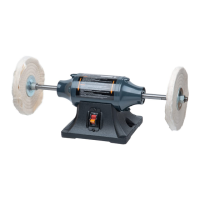
9. Every few minutes, check the condition and wear of the
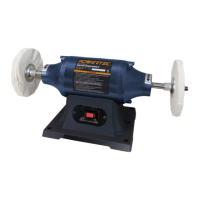
buffing wheels and buffing compound coating.
• If the wheel is worn or damaged, remove and
replace immediately.
• If the rim surface is glazed over from material residue or
new/different grade (color) of compound is needed, use a
buffing rake to remove the old compound from the wheel.
10. When buffing is finished, remove the workpiece from the
buffing wheel before turning bench buffer OFF.
11. After completing the buffing and polishing operations,
turn the buffer OFF. NOTE: It will take a few minutes for
the buffing wheels to come to a complete stop. NEVER
STOP THE BUFFER BY FORCING MATERIAL INTO THE
WHEEL. Let the buffer stop rotating on its own.
12. Unplug the buffer from the power source. IMPORTANT: To
prevent unauthorized use of the machine, the power switch
has a removable locking key. With the power switch in the
OFF position, pull the locking key out. The Buffer can not be
turned ON with the key removed.
13. To resume buffing, insert the locking key into the ON/
OFF switch.
WARNING
Always place the ON/OFF switch in the OFF position
and unplug the power cord from its power source before
performing any assembly or adjustment. Failure to do so
could result in accidental starting resulting in possible serious
personal injury.
6
GENERAL MAINTENANCE
WARNING
Repairs to the bench buffer should be performed by trained
personnel only. Unauthorized repairs or replacement with
non‑factory parts could cause serious injury to the operator and
damage to the bench buffer.
WARNING
If the supply cord of this power tool is damaged, have it replaced
by a qualified service technician.
Before each use, inspect the general condition of the tool.
Check for:
• loose hardware,
• misalignment or binding of moving parts,
• cracked or broken parts,
• damaged electrical wiring, and
• any other condition that may affect its safe operation
CLEANING
After each use, wipe external surfaces of the tool with a
clean cloth.
Hand wash the buffing wheels using mild detergents, air dry. If
a buffing wheel has become too hard, use a stiff wire brush (not
included) to fluff it up.
Do not immerse any part of the tool in liquid.
WARNING
Periodically blow dirt and dust out of all air vents with clean,
dry air. To minimize the risk of eye injury, always wear ANSI
approved eye protection and NIOSH approve breathing
protection when performing this.


 To Next Page