2
Choosing the right clipping
blade for each situation
Premier Top Blade
It is the upper and moving portion of Premier’s blade sets. Also available as a
replacement. The top blade is included with every Premier Super Surgical, Surgical, Fine,
Medium and Coarse blade set.
Premier Super Surgical Blade Set
35 teeth. 0.02 normal cutting depth. Trims the closest of any blade available. It can give
thin skinned animals the appearance of razor burn if not used by an experienced clipper.
This blade can only be sharpened 1 to 3 times in its lifetime.
• For slick shearing lambs
• For surgical procedures
Premier Surgical Blade Set
35 teeth. 0.04 normal cutting depth. Surgical blades shave the fi ber right down to the
skin. Very smooth result.
• For slick shearing lambs
• For surgical procedures
Premier Fine Blade Set
35 teeth. 0.06 normal cutting depth.
• For slick shearing sheep
• For clipping heads and bellies of cattle
• For body clipping performance horses
Premier Medium Blade Set
35 teeth. 0.08 cutting depth (twice a surgical blade set).
• For body clipping horses
• For slick shearing pink-shinned sheep
Premier Coarse Blade Set
18 teeth. 0.12 in. cutting depth. Half as many teeth as Fine/Medium's. Leaves more
fi ber, but a less even fi nish.
• For clipping llamas/alpacas
• For body clipping dirty, dense, matted hair on dogs and horses
Premier Xtra Cover Blade Set
24 lower teeth; 22 upper teeth. 0.25 in. cutting depth. Leaves 300% more fi ber depth
than a “Premier Fine”. Make sure to follow your local or state rules for appropriate length
of hair to be left on pigs.
• For clipping show pigs and goats
• Leaves smooth, even high ber nish on cattle and sheep for production sales
1.
2.
3.
3
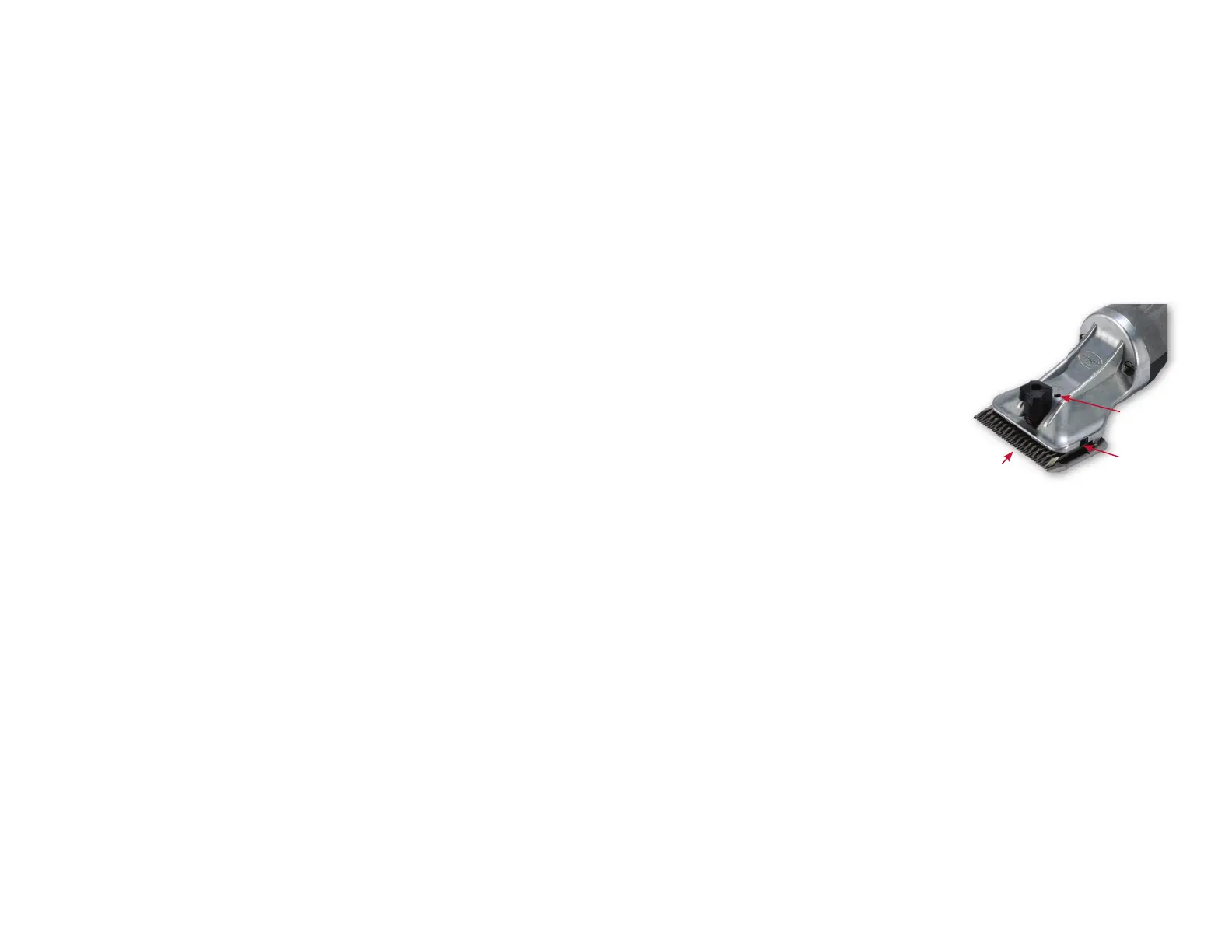
Oil Points (see diagram at right)
1. Oil the Round Drive
2. Oil tips of the upper and lower
blades with oil—frequently.
3. Oil Guide Blocks /Stainless Inserts
• Purpose? To reduce blade wear, blade heat build-up and the load on the clipper motor.
• How often? Most do not lubricate frequently enough—and use too much oil when they
do so. Apply three drops of oil every 3 minutes to the tips of the teeth. If the hair, wool or
fi ber is very dry (e.g. alpaca and llama fi bers), the lubrication must be more frequent. If
the hair is wet or contains natural oils (e.g. unwashed sheep with lanolin in their wool)
the lubrication can be less frequent.
• Where should the oil be placed? On to the top of the blades at the front of the
head (2 above)—very important to oil frequently. Every 10 minutes (every third blade
lubrication), oil the round drive (1 above). Also on outer tips of the two guide blocks of
the upper blade (3 above).
• Do you need to remove blades to lubricate them? Not unless they stop cutting.
• What type of oil should be used? We supply #10 White Clipping Oil because it is
thick enough to lubricate, thin enough not to collect dirt and hair fi bers and clear—thus
reducing the risk of oil stains on the animal. If you wish to use another oil, be careful not
to use oil that is too thick.
• What about blade washes? They are rarely needed. It is better to simply oil frequently
and use a brush to remove any loose hair that may accumulate on the top of the blades.
Warning: If you use blade wash or dip the blades in an oil bath, be very careful not
to tip the clipper upwards until it has run for 5 seconds. Otherwise, lubricant may run
backwards through the lubricated head and eventually foul the gears and motor.
• What about spray-on blade coolants? They accelerate evaporation from the blade
surfaces and thus do cool the blades more rapidly. However, all blade coolants are also
excellent solvents—that remove the oil from the blades at the same time. So, if you use
a coolant, immediately re-oil after the solvent/coolant has evaporated and before you
continue clipping. You also need to check the tension of the blades. If they are becoming
hot, the tension is probably too tight and/or the blades need more frequent lubrication
with the correct oil.
Preparing the Animal for Clipping
• Remove the dirt from the hair rst. If this is not done, expect accelerated
blade wear and a reduction in animals clipped between blade sharpenings in exact
proportion to the amount of dirt present. The benefi ts of dirt removal prior to clipping
cannot be over-emphasized. Example: Those who wash their lambs prior to clipping
often clip 20 – 30 club lambs between sharpenings (if the blades have been sharpened
properly on a lapping machine). Those who don’t and have lambs with sand and soil
in the wool often clip less than two lambs between sharpenings.
• Washing the animal with soap and water removes the most dirt. If this is not
practical, use a high power vacuum or blower to remove as much dirt as possible from
the hair or wool.
• Restrain the animal. Few animals like the sound of a clipper or the feel of vibration
on their skin. When they react to either without warning, accidents can and will
happen. Therefore, for the sake of you, your animal and your clipper, restrain the
animal properly prior to clipping.
Clipping Machine Lubrication


 To Next Page
 Loading...