11
SECTION 7: INSTALLING/REMOVING PROPANE CYLINDER
7.1 USING THE CORRECT PROPANE CYLINDER
7.2 ATTACHING THE PROPANE CYLINDER
7.3 REMOVING THE PROPANE CYLINDER
Alwaysusepropanecylindersor“bottles”thatarethecorrectsize.16.4oz/465gcylindersthat
areapproximately3⅞inches(9.5cm)indiameterarethecorrectcylinders.Donotusecylinders
withasmallerdiameter,astheywillnotlatchsecurelytotheunit,becomeloose,maycause
damageandpotentiallyresultinadangerousleak.
1.Makesuretheengineisoff.
2.Makesurethecylindercageclampisintheunlatched
position.
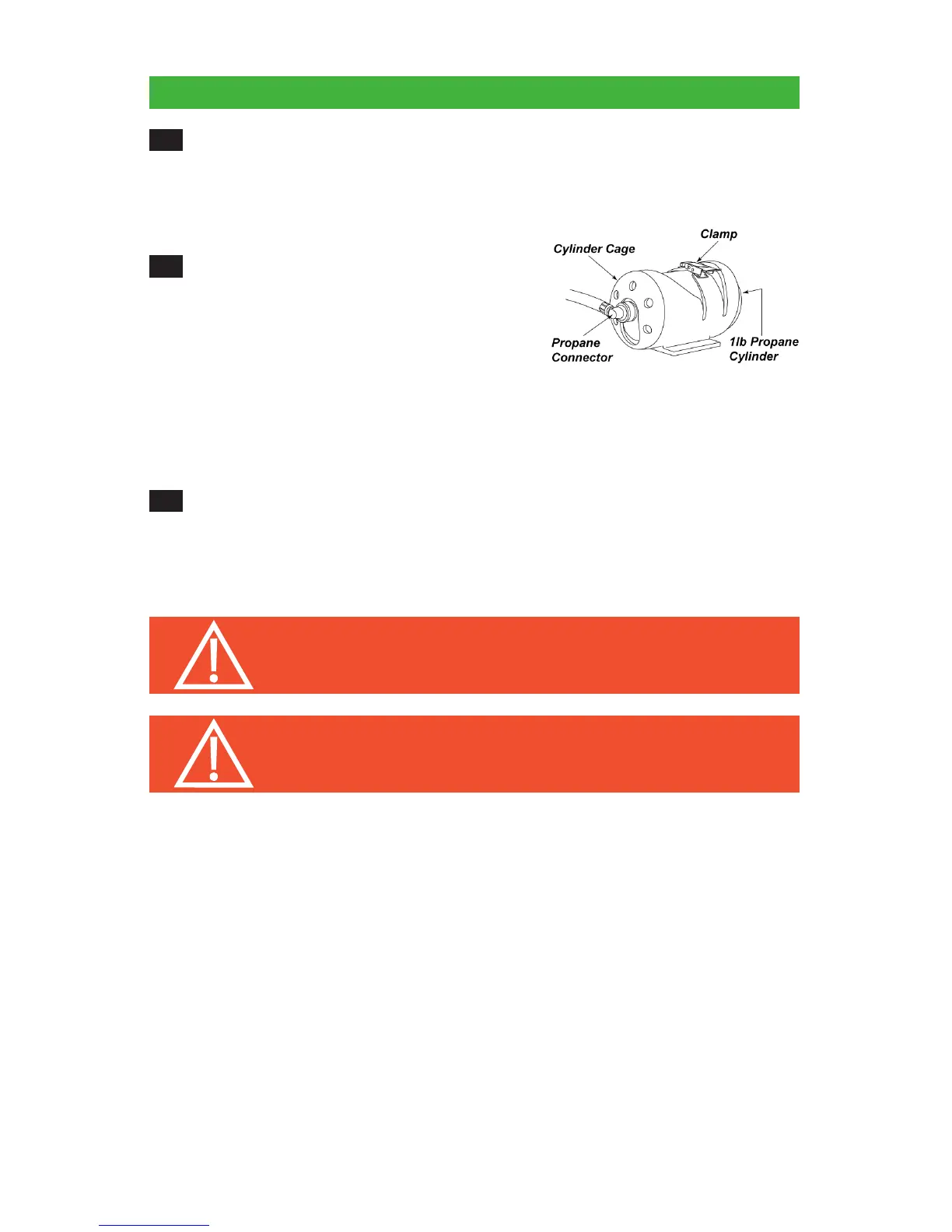
3.Insertthethreadedendofthepropanecylinderinto
thecageasfarasitcango(fig.5).Insertthepropane
connectorontothethreadedendofthecylinderandscrewitontothreadsclockwise(↻)until
snug.Donotovertighten.Itmaybenormaltohearorsmellamomentaryleakofpropaneas
theconnectorisbeingscrewedin.Makesurethattheconnectorisinstalledtightlyenoughso
thatanyleaksstop.
4.Manualtighteningissufficient.Latchthecylinderclamptosecurethecylinderinitsplace.
1.Makesuretheengineisoff.
2.Unlatchtheclampandremovethepropaneconnectorbyturningitcounterclockwise(fig5).
3.Pullouttheemptycylinder.
4.DisposeofemptypropanecylindersinaccordancetoFederal,StateandlocalRegulations.
WARNING: Never attempt to force a connector onto a propane cylinder that
has improper or damaged threads.
WARNING: Propane is highly flammable and its vapors can explode if
ignited.
Fig. 5



 To Next Page