15
Rev. D / January 2015
CVM-780 Contact Voltmeter
When the probe p is not in contact with ground or making a dened measurement, the
measurement system is “oang”. When oang free of a contact measurement any indi-
cated displayed voltage is not meaningful. (See Instrument Maintenance, below.)
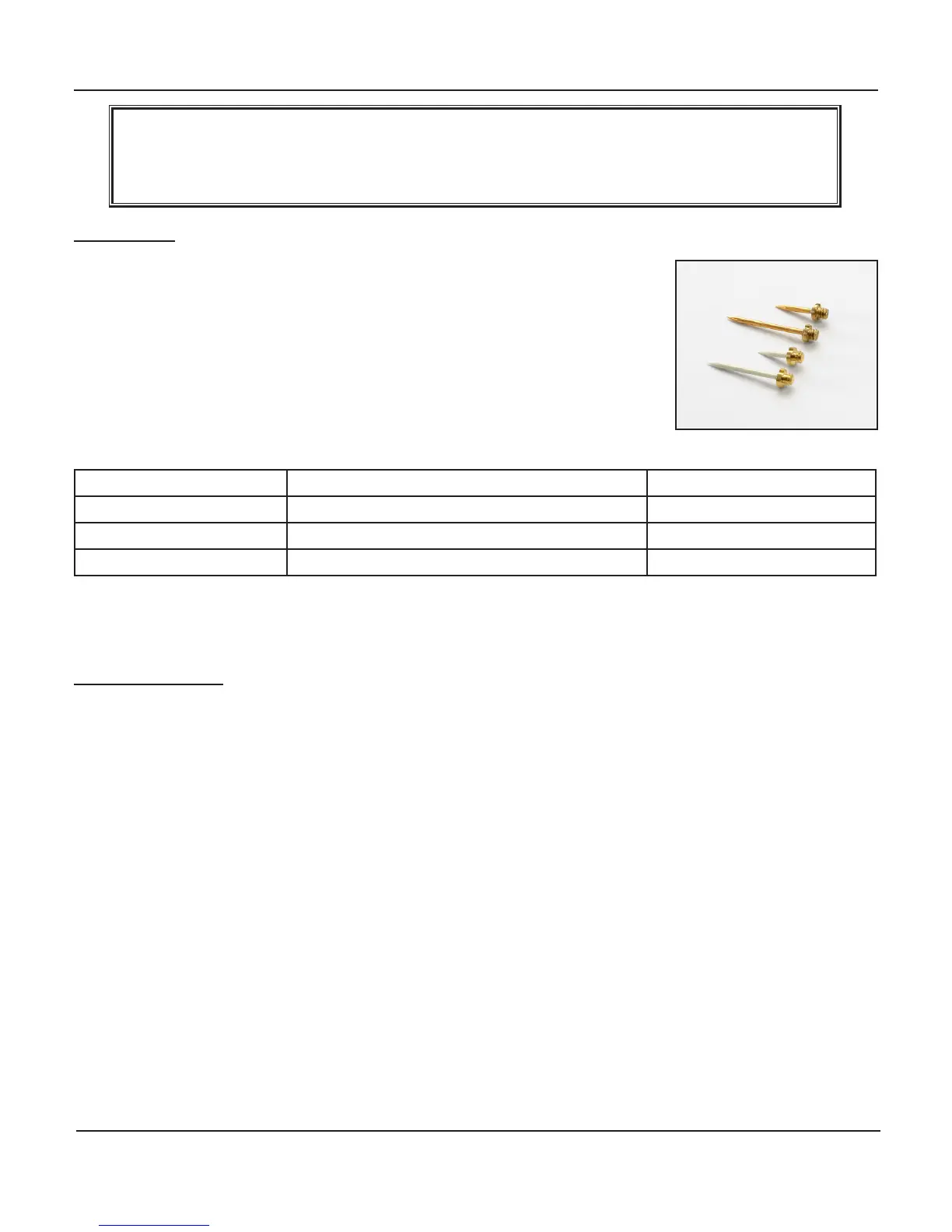
Tip Selecon
Tip selecon is a maer of praccality, but will inuence measurement ac-
curacy. Typical measurement error is quite small regardless of p selecon:
≤ ±5%, ±2 Counts from ±25 to ±525 Volts
≤ ±10%, ±2 Counts from 0 to ± 25 Volts
However, performance accuracy will vary within these tolerances depending
on p material and p length. Comparave measurements indicate the fol-
lowing general guidelines for p performance.
Metal Tips Largest deviaon from reference Small ESD/RFI
Ceramic Tips Smallest deviaon from reference No ESD/RFI
Long Tips (0.9 – 1.3”) Largest deviaon from reference
Short Tips (0.4 – 0.6”) Smallest deviaon from reference
Consequently, the least accurate p is a long metal p; while the most accurate is a short ceramic p. In
all cases, accuracy will also vary based on technique, ambient condions, ground reference quality and
other variables discussed below.
Measurement Error
When measuring a constant, precision DC voltage reference, error is typically 1 volt or less, but always
equal to or less than ±2 volts. The circuit is capable of measuring the instrument’s enre voltage range, as
follows:
1A 500 V ≤ ±5 V
2A 100 V ≤ ±2 V
3A 50 V ≤ ±2 V
1B 10 V ≤ ±1 V
This procedure conrms the ability of the CVM-780 to measure DC voltage accurately, as would be ex-
pected of any good quality DC voltmeter. Variables within the error range are usually aributed to manual
zeroing of the instrument to ground. Indicaon of praccal measurement performance error in process
applicaons is a dierent maer and most important.
There are many variables in the manufacturing environment that will inuence measurement perfor-
mance of a contact voltmeter. To minimize those variables and esmate instrument measurement er-
ror, contact measurement of a charged precision 20 pF capacitor is made while the capacitor’s voltage is
monitored by a second high impedance contact voltmeter. The procedure creates a stable contact voltage
measurement situaon, as follows:


 To Next Page