
 Need help?
Do you have a question about the Protector PRO-LUX 7000 and is the answer not in the manual?
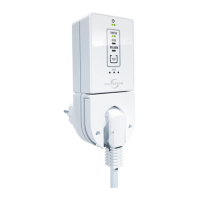
Identifies the main receiver unit of the system.
Indicates the power status of the central unit.
Shows the status of window, stove, and roller shutter transmitters.
Describes the test button and reset button functionalities.
Highlights the microfuse and the essential plug guard.
The sensor unit for detecting window status.
Status LED and learn button for transmitter operation.
Jumper settings for logic and battery type for power.
Magnet component for detecting window position.
Packer parts used for adjusting component positions.
Sensor unit for monitoring temperature or flue gas.
Status LED and learn button for transmitter operation.
Connection for thermal sensor cable and battery compartment.
The probe for measurement and its associated mounting bracket.
Sensor unit for detecting roller shutter position.
Status LED and learn button for transmitter operation.
Jumper settings for logic and battery type for power.
Magnet component for detecting shutter position.
Packer parts used for adjusting component positions.
Describes the general application and purpose of the exhaust air controller.
Covers essential safety notes regarding air quality and dangerous gases.
Important note on sensor teaching and plug guard usage.
Warning regarding roller shutter position for adequate fresh air supply.
Recommends installation by a qualified technician for safe operation.
Detailed steps for installing the AS-7000 central unit (receiver).
Points to consider for installing the window transmitter and magnet.
Pre-installation step to determine required window opening size.
Table correlating window area and exhaust air capacity for minimum opening.
Illustrations showing correct placement of window transmitter and magnet.
Instructions for attaching the window transmitter in the tilt position.
Instructions for attaching the window transmitter in the swivel position.
Guidance on selecting attachment points for correct signal detection.
Steps for mounting the window transmitter lower and upper casings.
Procedure for mounting the magnet that works with the transmitter.
Specifies optimal locations and distance limits for mounting.
Steps to attach the roller shutter transmitter to the window frame.
Procedure for attaching the magnet for the roller shutter sensor.
Procedure for testing the tilt and swivel positions of the window transmitter.
Steps for attaching the roller shutter transmitter and magnet.
Defines optimal positions and distance limits for roller shutter components.
Steps to test the correct function of the roller shutter sensor.
Important safety warning and preparation before handling the stove transmitter.
Steps for attaching the stove transmitter and thermal sensor to the exhaust pipe.
Instructions for connecting the thermal sensor to the stove transmitter.
Procedure for testing the roller shutter sensor's open/closed signals.
Steps for final placement and attachment of the stove transmitter.
Procedure to reset and configure factory settings for the control unit.
Steps to pair window, roller shutter, and stove sensors with the central unit.
Describes how sensor inputs are logically combined for system operation.
Procedure to delete all learned transmitters and reset the unit.
Steps to teach and pair individual sensors with the central unit.
Explains the logic behind sensor pairing and potential errors during the process.
How to teach additional sensors or maintain the current setup.
Procedure to test the correct operation of the entire system.
Confirms the system is ready for operation after successful testing.
Describes status and error messages for window open/closed conditions.
Covers general error messages like communication failures.
Indicates messages related to low or empty batteries.
Status and error messages for heater off and heater on conditions.
Status and error messages for AS-7040 window open/closed.
Status and error messages for blinds open/closed conditions.
Covers general errors, battery status, and relay states.
Notes on how static, electrical, or RF fields can affect functionality.
Details on compliance with European directives and radio regulations.
Lists network voltage, switching capacity, radio range, frequency, and protection class.
Specifies the battery types used for different transmitters.
Covers warranty void conditions, liability, repair prohibitions, usage environment.
Details the terms and conditions of the product guarantee.
Lists conditions under which warranty claims will not be accepted.
Defines the manufacturer's liability for loss or damage.
Information about Protector GmbH and the publication of the manual.
 General
| Brand | Protector |
|---|---|
| Model | PRO-LUX 7000 |
| Category | Accessories |
| Language | English |

 To Next Page