30. EXTENSION CORDS
A. Use only extension cords that are intended for outdoor use. These extension cords are identified by a label,
“Acceptable for use with outdoor appliances; store indoors while not in use”. Use only extension cords having an
electrical rating not less than the rating of the product. Do not use damaged extension cords. Examine extension
cord before using and replace if damaged. Do not abuse extension cords and do not yank on any cord to
disconnect. Keep cord away from heat and sharp edges. Always disconnect the extension cord from the receptacle
before disconnecting the product from the extension cord.
WARNING: To reduce the risk of electrocution, keep all connections dry and off the ground. Do not touch plug with
wet hands.
B. Ground Fault Circuit Interrupter (GFCI) protection should be provided on the circuit(s) or outlet(s) to be used
for the tile saw. Receptacles that have built-in GFCI protection are available and may be used for this measure of
safety.
31. GROUNDING INSTRUCTIONS
A. All grounded, cord-connected tools:
In the event of a malfunction or breakdown, grounding provides a path of least resistance for electric current to
reduce the risk of electric shock. This tool is equipped with an electric cord having an equipment-grounding
conductor and a grounding plug. The plus must be plugged into a matching outlet that is properly installed and
grounded in accordance with all local codes and ordinances.
Do not modify the plug provided - if it will not fit the outlet, have the proper outlet installed by a qualified
electrician.
Improper connection of the equipment-grounding conductor can result in a risk of electric shock. The
conductor with insulation having an outer surface that is green with or without yellow stripes is the
equipment-grounding conductor. If repair or replacement of
the electric cord or plug is necessary, do not connect the
equipment-grounding conductor to a live terminal.
Check with a qualified electrician or service personnel if the
grounding instructions are not completely understood, or if
in doubt as to whether the tool is properly grounded.
Use only 3-wire extension cords that have 3-prong
grounding plugs and 3-pole receptacles that accept the
tool's plug.
Repair or replace damaged or worn cord immediately.
B. Grounded, cord-connected tools intended for use on a supply circuit having a nominal rating less than 150 volts:
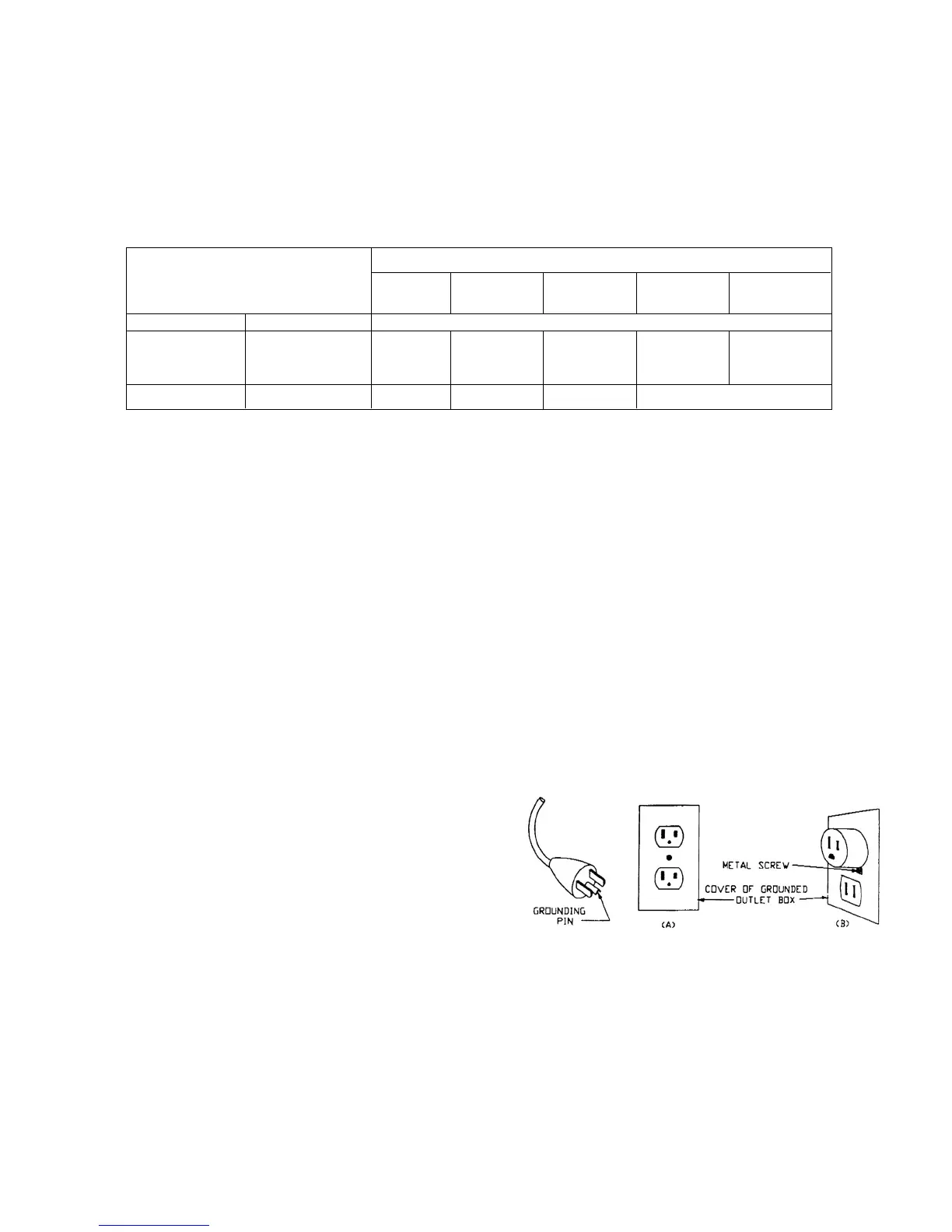
This tool is intended for use on a circuit that has an outlet that looks like the one shown in Sketch A in Illustration 2.
The tool has a grounding plug that looks like the plug illustrated in Sketch A in Illustration 2. A temporary adapter,
which looks like the adapter shown in Sketch B in Illustration 2, may be used to connect this plug to a 2-pole
receptacle as shown in Sketch B in Illustration 2 if a properly grounded outlet is not available. The temporary
adapter should be used only until a properly grounded outlet can be installed by a qualified electrician. The
green-colored rigid ear, lug, and the like, extending from the adapter must be connected to a permanent ground
such as a properly grounded outlet box.
- 3 -
Volts
120V 25ft. 50ft. 100ft. 150ft.
240V 50ft. 100ft. 200ft. 300ft.
18 16 16 14
18 16 14 12
16 16 14 12
14 12
Not Recommended
Total length of cord in feet
More Than Not More Than
06
610
10 12
12 16
Minimum Gauge for Cord
AWG
Ampere Rating
Illustration 2
Grounding Methods



 To Next Page