QK-A024/26 Manual
V 3.0 6 of 16 2020
3.3. VHF/AIS Antenna
A024/26 is not supplied with a VHF antenna, as the antenna and cable requirements differ from vessel to
vessel. A suitable VHF antenna must be connected before the receiver will operate fully.
AIS communication systems use frequencies in the maritime VHF band, which is considered to be ‘line
of sight’ radio. This means that if an AIS receiver’s antenna cannot ‘see’ the antennas of other vessels,
the AIS signals from vessels will not reach that receiver. In practice, this is not a strict requirement, a few
buildings and trees between may be fine. Large obstacles such as hills and mountains, on the other
hand, will significantly degrade the AIS signal.
To have the best possible receiving range, the AIS antenna should be placed as high as possible with a
relatively clear view of the horizon. Large obstructions might shade the AIS radio communication from
certain directions, giving uneven coverage.
VHF antennas can be used for AIS messages or radio communications. One antenna cannot be
connected to both AIS and VHF radio equipment unless an active VHF/AIS splitter is used. There are
important considerations when deciding whether to use two separate antennas or a combined antenna:
• 2 VHF antennas: The best reception is achieved by using two separate antennas, one for AIS
and one for VHF radio. The antennas must be separated as much space as possible (ideally at
least 3.0 meters). A good distance between the AIS VHF antenna and the radio communication
VHF antenna is required to avoid interference.
• 1 shared VHF antenna: If using only one antenna, e.g. Using an existing VHF radio antenna to
receive AIS signals, proper separation equipment (an active VHF Splitter) must be installed
between the antenna and the connected equipment.
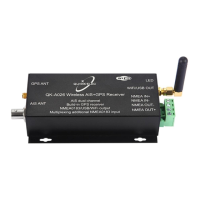
Figure 4: GPS (SMA) and AIS (BNC) antenna connections
3.4. GPS input (A026 only)
A026 uses a standard SMA female 50 Ohm connector for connecting to a GPS antenna (antenna not
included).
For best results, the GPS antenna should be located in ‘line of sight’ of the sky. Once connected to a
GPS antenna, the integrated GPS module supplies positional data to the NMEA 0183 output, WiFi and
USB, synchronously.

 To Next Page
 Loading...