The LC86L EVB (Evaluation Board) is an essential assistant tool designed for engineers to develop and test the Quectel LC86L module. This document outlines its usage, operation procedures, and various interface applications, ensuring a comprehensive understanding for users.
Function Description
The LC86L EVB serves as a platform for evaluating the Quectel LC86L GNSS module, which is part of the GNSS Module Series. Its primary function is to facilitate the development and testing of applications that incorporate the LC86L module. The EVB allows users to interact with the module, transmit and receive data, and monitor its operational status. It supports the reception of GPS, GLONASS, BeiDou, and Galileo satellite signals, making it a versatile tool for various positioning applications. The board is designed to provide a stable environment for testing, ensuring accurate and reliable results during development.
Usage Features
The LC86L EVB offers several features that enhance its usability and functionality:
Interface Applications
The EVB is equipped with multiple interfaces to support diverse testing scenarios:
- Micro-USB Interface (J103): This interface serves a dual purpose: it provides power to the EVB and facilitates data transmission between the LC86L module and a PC. This allows for easy connectivity and communication, enabling users to send commands and receive data from the module.
- Antenna Interface (J403): An antenna connector is provided for connecting an external GNSS antenna. This can be either a passive or an active antenna, offering flexibility based on the testing requirements and environmental conditions. Proper antenna connection is crucial for optimal satellite signal reception.
- Switches and Buttons: The EVB includes several switches and buttons for controlling the module's operation:
- Power Switch (S101): A power input switch to turn the EVB on or off.
- USB/SD Switch (S201): A digital input switch used for data transmission via USB.
- Reset Button (S301): A digital input button that, when pressed and released, resets the module. This is useful for restarting the module during testing or in case of an error.
- Force_on Button (S302): A digital input button that wakes up the module when it is in Backup mode.
- Boot Button (S401): A digital input button that is currently unused.
- Operation Status Indication LEDs: The EVB features several LEDs (D303, D304, D305, D306, D307) that provide visual feedback on the module's operational status:
- 1PPS (D303): A digital output LED that lights up (frequency 1Hz) when positioning is successful and is dark when there is no positioning.
- TXD (D304): A digital output LED that lights up when data is being output and is dark when there is no data output.
- JAM_IND (D305): A digital output LED indicating jamming detection. This feature is not used by the LC86L.
- GEO_FORCE (D306): A digital output LED indicating geo-fence boundary. This feature is not used by the LC86L.
- AADET_N (D307): A digital output LED that lights up when an active antenna is connected well and is dark when an active antenna is not connected to EX_ANT or has poor contact with the antenna feeding point.
- Test Points (J104): A set of test points are available for monitoring various signals, including RXD (receive data), TXD (send data), 1PPS (one pulse per second), RESET (module reset), GND (ground), 3.0V (power input), SCL (I/O), SDA (I/O), and 3DFIX (DO). These test points are crucial for in-depth debugging and signal analysis.
EVB Operation Procedures
The EVB operation involves several key steps:
- Communication via Micro-USB Interface:
- Connect the EVB to a PC using a Micro-USB cable and switch the POWER to ON.
- Install the USB driver from the provided USB flash drive. The USB port numbers will be visible in the PC's Device Manager.
- Use the QCOM tool (provided by Quectel) to establish communication between the LC86L module and the PC. This involves selecting the correct COM Port and setting the Baudrate (default 9600bps).
- Firmware Download: The LC86L module's firmware can be upgraded via the USB port. The process involves:
- Installing and opening the Flash tool software.
- Connecting the EVB to a PC via USB and powering it on.
- Configuring the Flash tool by selecting the baud rate (Auto Detect), COM port, and the appropriate download files (Reserve for download management and ROM for project firmware).
- Initiating the firmware upgrade by clicking "Download," "OK," and "Go."
- PowerGPS Instructions: The PowerGPS tool is used to monitor the status of GPS, GLONASS, BeiDou, and Galileo satellite reception.
- COM Port and Baud Rate Setting: After connecting and powering on the EVB, launch PowerGPS. Select the correct COM port and set the baud rate (9600 bps by default), then click "Create Connection."
- PowerGPS Interface Description: The interface displays GNSS information such as Carrier-to-Noise Ratio (CNR) messages, time, position, speed, and precision. It also shows satellite information, indicating tracked satellites (blue) and untracked satellites (light blue), along with their PRN (Pseudorandom Noise) and elevation angles.
- PMTK Command Sending: PowerGPS allows users to send PMTK commands to control the module. Commands should be entered in the format '$PMTKXXX,Y,Z*CS'.
- Automatic TTFF Testing: This feature measures the Time to First Fix (TTFF) under various conditions (full cold start, cold start, warm start, hot start). Users can select the number of tests (1, 10, 20, 100, 1000, 10000) and initiate the test by clicking "Run," which can be stopped with "Stop." The configuration involves setting a reference point and defining the TTFF Time-out (sec). The test results are stored in charts and log files.
Maintenance Features
The LC86L EVB is designed with considerations for safe and reliable operation, which indirectly contribute to its maintenance:
- Safety Information: Adherence to safety precautions is emphasized throughout all phases of operation. This includes ensuring compliance with national safety and environmental regulations, keeping the product away from explosive and flammable materials, and powering it with a stabilized voltage source conforming to security and fire prevention regulations. These measures help prevent damage to the EVB and ensure its longevity.
- ESD Handling: Proper ESD (Electrostatic Discharge) handling procedures are crucial during mounting, handling, and operation of any application incorporating the module. This prevents ESD damages, which can significantly impact the module's performance and lifespan.
- Firmware Upgrades: The ability to easily upgrade firmware through the USB port ensures that the module can always run the latest software, benefiting from bug fixes, performance improvements, and new features. This proactive approach to software maintenance helps keep the EVB and module operating optimally.
- Documentation and Support: Quectel provides comprehensive documentation and support channels, including email and online resources, for any assistance required. This ensures that users have access to necessary information and help, facilitating troubleshooting and maintenance tasks. The USB flash drive includes LC86L related documents, tools, and drivers, making it easy to set up and maintain the EVB.
- Test Points: The inclusion of test points allows for easy diagnosis of issues by providing access to critical signals. This facilitates efficient troubleshooting and repair, should any problems arise with the module or the EVB.
- Status LEDs: The operation status indication LEDs provide immediate visual feedback on the module's state, allowing users to quickly identify if the module is positioning correctly, transmitting data, or if there are any antenna connection issues. This simplifies monitoring and initial diagnostics.
By integrating these features, the LC86L EVB provides a robust and user-friendly platform for engineers, supporting both the development and ongoing maintenance of applications utilizing the Quectel LC86L GNSS module.

 Need help?
 General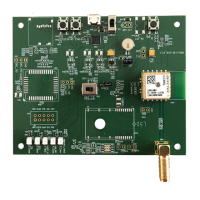

 To Next Page