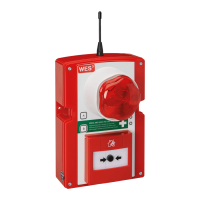
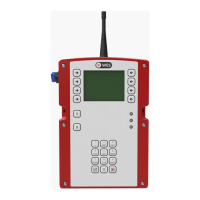
The WES3 CONNECT is a central control unit designed to facilitate the setup and management of a WES3 fire and emergency system. This quick start guide aims to provide users with the necessary steps to get their WES3 system operational as quickly as possible, covering initial setup, unit activation, numbering, positioning, fixing, and system testing. The WES3 system is designed for ease of installation and operation, ensuring that units can communicate effectively across a site.
Function Description
The WES3 CONNECT serves as the primary interface for configuring and controlling the WES3 network. Its core function is to allow users to activate and pair WES3 units, establish network communication, and manage system settings such as language, inspection delay, and pre-alarm mode. The system is designed to provide site-wide emergency alerts, with various units like Call Points and Detectors contributing to a comprehensive safety network.
Upon initial activation, the WES3 CONNECT guides the user through a series of on-screen options to configure essential settings. The "Inspection Delay" feature allows for an optional delay between a Call Point being triggered and a site-wide alarm being raised, providing time for initial investigation. The "Pre-Alarm" function defines how the network behaves during this delay, either by emitting an intermittent sound and flash across the entire network (if enabled) or only at the local Call Point (if disabled). These settings are crucial for tailoring the system's response to specific site requirements.
The unit numbering process is fundamental to the WES3 system, allowing Call Points, Detectors, and other WES3 units to be added to create a cohesive network. Each unit is assigned a unique four-digit number, which helps in identifying the exact location of an alert on a site plan. This feature is vital for efficient emergency response and management.
The WES3 system also incorporates a robust system test function, which is essential for confirming proper operation after installation and on a weekly basis. This test mode isolates all devices, allowing for physical testing of each unit without triggering a site-wide alarm. This ensures that all components are functioning correctly and that the network is ready to respond in an emergency.
Usage Features
The WES3 CONNECT is designed for straightforward operation, starting with its activation process. To power on the unit, users hold down button 'A' and press 'B' three times in quick succession, which illuminates all three LEDs before the amber LED begins to flash. This simple sequence initiates the setup process.
Language selection is one of the first configuration options, offering choices such as English, German, French, Spanish, Italian, Swedish, and Polish, ensuring accessibility for a diverse user base. This setting can be changed at any time, providing flexibility.
The inspection delay can be set in one-minute increments, up to a maximum of 10 minutes, allowing site managers to customize the time window for investigating potential alarms before a full site evacuation is initiated. This setting is confirmed on-screen during the initial activation process.
The pre-alarm mode, once set during initial activation, dictates whether the entire network emits an intermittent sound and flash during an inspection delay, or if only the triggered Call Point sounds. This setting can only be changed by reactivating the WES3 CONNECT unit, emphasizing its importance as a foundational network behavior.
Unit numbering is performed using the numeric keypad or the '+' and '-' buttons on the WES3 CONNECT. To pair a unit, users press and hold 'A' on both the CONNECT and the unit to be numbered. Successful pairing is indicated by the illumination of green LEDs on both units, signifying that they have been successfully added to the network and a site group has been created. If pairing fails, the red LED illuminates, prompting the user to repeat the process.
Once units are activated and paired, they can be securely fixed in place. The design requires the tamper switch on the rear of each unit to be in contact with the wall or ceiling, ensuring that the units are properly mounted and cannot be easily dislodged without triggering an alert. Detector units are specifically designed for ceiling mounting and indoor use, while Call Points can be fixed to robust vertical surfaces. Each unit features two integrated mounting points for secure installation.
The system test function is initiated from the WES3 CONNECT's main menu. During this mode, the CONNECT displays a confirmation message, and users can walk the site to check all units. Call Points can be manually triggered, and Detectors can be tested with standard equipment like smoke spray or heat probes. Upon completion, users return to the CONNECT and press either the or button to exit test mode. The test results are indicated by LED flashes: green for pass, red followed by amber for radio OK but other fault, and amber for no radio signal.
Silencing an alarm can be done either by using a reset key or directly on the WES3 CONNECT unit. Alarms automatically silence after 30 minutes, but manual cancellation is possible from a triggered Call Point using the provided reset key. After an alarm is cleared, a short two-minute re-arm period follows, during which sirens sound intermittently and amber warning LEDs flash, indicating that the system is re-arming and cannot be reactivated. It is crucial to confirm that there is no hazard before silencing the alarm.
Resetting a Call Point involves inserting a reset key with the tab to the right, pushing it in as far as possible, and turning it anti-clockwise until a mechanical click is heard. This ensures the Call Point is fully reset and ready for use. Partially resetting a latched Call Point can inadvertently retrigger the evacuation alarm.
Maintenance Features
The WES3 system incorporates several features to aid in maintenance and fault diagnosis. The LED codes on the units provide immediate visual feedback on their status. A green LED flashing every 4 seconds indicates that the unit is operational and has no faults.
Amber LED flashes are used to indicate various faults, with grouped patterns providing specific diagnostic information. These patterns signal issues such as low battery (Group Flash 1), low signal (Group Flash 2), unpaired unit (Group Flash 3), tamper detection (Group Flash 4), or re-arm/unit latched status (Group Flash 5). When an amber LED flashes, it signifies that the unit requires further investigation and should not be relied upon until the fault is corrected. A detailed chart is provided to help users determine the nature of the issue based on the flash pattern.
The WES3 CONNECT also provides warning codes on its screen, offering more detailed information about system faults. These codes include 'MED' for medical alert, 'BAT' for low battery, 'DET' for detector tamper, 'EXT' for external tamper, 'FLT' for flat battery, 'INT' for internal tamper, 'LAT' for latched Call Point, 'REM' for removed unit, 'SIG' for low signal, 'TST' for system test initiated, 'NEW' for unexpected unit, and 'GON' for missing unit. Some of these warnings are self-clearing, while others require manual intervention.
Regular system testing is a key maintenance practice. Beyond the initial installation test, it is recommended to conduct a full system test weekly and whenever significant changes are made to the site environment, such as new structures or construction equipment, which could affect the network signal. This proactive approach helps ensure the system's ongoing reliability.
The system is designed to self-calibrate for background radio noise for a minimum of 60 minutes after initial installation, which is important for the accuracy of system tests. Users are advised to wait this period before performing the first system test.
It is important to note that powering off the WES3 CONNECT unit will perform a 'factory reset' of the entire system. This means all configurations and pairings would be lost, requiring a complete re-setup. Therefore, powering off should be avoided unless absolutely necessary.
The WES3 system also provides information on unit sounds. If a Call Point unit periodically beeps after an alarm has been reset, it indicates that the Call Point is latched and needs to be manually reset with the provided key. If the WES3 CONNECT beeps frequently, it signals a system warning, and the LCD screen will display "ALARM ALARM ALARM" along with details of the unit that raised the alarm, prompting users to check the warning code table for diagnosis.
Access to the Ramtech VIP Area via vip.ramtechglobal.com provides additional resources, including 'How To' videos, a complete User Guide, and an Operation Manual, which are invaluable for comprehensive maintenance and troubleshooting. This online resource ensures that users have access to detailed technical information whenever needed.


 To Next Page
 General