Need help?
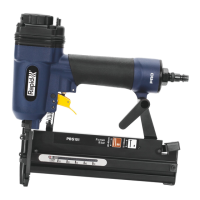
Do you have a question about the Rapid PBS151 and is the answer not in the manual?
Read tool instructions and warnings carefully before use to avoid serious injury.
Read manual for personal safety, operation, and maintenance before using the tool.
Keep all safety warnings and instructions for future reference.
Tool is for professional use only and not for other purposes.
Users must assess specific risks associated with each use of the tool.
Any use outside the intended purpose of this tool is forbidden.
Keep fingers away from the trigger when not operating or moving the tool.
Understand all safety instructions before performing any operation or maintenance on the tool.
Keep body parts away from the firing direction to prevent injury from fasteners.
Be aware that fasteners may deflect and cause injury during use.
Hold the tool firmly and be prepared to manage recoil for safe operation.
Only technically skilled operators should use the fastener driving tool.
Do not modify the fastener driving tool as it can reduce safety.
Do not discard the instruction manual for future reference.
Do not use the tool if it has been damaged to ensure safety.
Handle fasteners carefully due to sharp points, especially during loading/unloading.
Always check the tool for broken or worn parts before use.
Use the tool in a safe place, maintaining proper footing and balance.
Keep bystanders away and clearly mark the operating area for safety.
Never point the tool at yourself or at other people.
Keep finger off the trigger when moving or picking up the tool to prevent accidental firing.
Wear gloves for control, lay tool flat, or hook securely when not in use.
Do not operate the tool while under the influence of alcohol or drugs.
Do not use the tool on scales, stairs, scaffolds, or ladders.
Always wear appropriate hearing protection to prevent hearing damage.
Hold the tool correctly and be ready to counteract recoil or sudden movements.
Maintain a balanced body position and secure footing for stable operation.
Use appropriate safety glasses, gloves, and protective clothing.
Use the correct energy supply as specified in the instruction manual.
Do not use the tool on moving platforms or truck beds due to risk of losing control.
Always assume the tool contains fasteners, even when not in use.
Do not rush or force the tool; handle it carefully during operation.
Watch footing, maintain balance, secure air hose, and ensure no one is below when working at height.
When working at height, drive fasteners moving forward and work from top to bottom.
Avoid driving fasteners on top of others or into knots to prevent bending or jamming.
Avoid triggering the tool when the magazine is empty to prevent damage.
Immediately disconnect and pass defective tools to a specialist for inspection.
Disconnect tool from air supply for breaks and at end of shift; empty magazine.
Protect compressed air connectors and hoses from contamination to prevent damage.
Disconnect tool from air supply when unloading, adjusting, clearing jams, or changing accessories.
Ensure fasteners penetrate correctly and do not misfire towards people.
Be aware that debris from workpiece and fastening system may be discharged during operation.
Always wear appropriate eye protection compliant with safety standards.
Operators must assess risks to others present in the work area.
Be cautious with tools without workpiece contact as they can fire unintentionally.
Ensure the tool is always safely engaged on the workpiece to prevent slipping.
Hold the tool correctly and be ready to counteract recoil or sudden movements.
Maintain a balanced body position and secure footing for stable operation.
Use appropriate safety glasses, gloves, and protective clothing.
Always wear appropriate hearing protection to prevent hearing damage.
Use the correct energy supply as specified in the instruction manual.
Do not use the tool on moving platforms or truck beds due to risk of losing control.
Always assume the tool contains fasteners, even when not in use.
Do not rush or force the tool; handle it carefully during operation.
Watch footing, maintain balance, secure air hose, and ensure no one is below when working at height.
When working at height, drive fasteners moving forward and work from top to bottom.
Avoid driving fasteners on top of others or into knots to prevent bending or jamming.
Avoid triggering the tool when the magazine is empty to prevent damage.
Immediately disconnect and pass defective tools to a specialist for inspection.
Disconnect tool from air supply for breaks and at end of shift; empty magazine.
Protect compressed air connectors and hoses from contamination to prevent damage.
Monitor for symptoms like pain or numbness and seek medical advice if they persist.
Adopt a suitable ergonomic posture and maintain secure footing to avoid strain.
Take rests, avoid overreaching, and use minimal force to prevent repetitive strain injury.
Disconnect energy supply before changing accessories or making adjustments.
Use only accessories and consumables provided by the manufacturer.
Use only lubricants that are recommended in this manual.
Be aware of slippery surfaces and trip hazards caused by the tool or air hose.
Proceed with caution in unfamiliar surroundings, checking for hidden hazards.
Tool is not intended for use in potentially explosive atmospheres.
Ensure no electrical cables or gas pipes are present that could be damaged.
Keep the work area clean and well-lit to prevent accidents.
Comply with local regulations concerning noise levels and use shutters if needed.
Check surroundings as exhaust may blow dust or objects, potentially hitting people.
Direct exhaust to minimize disturbance of dust in dusty environments.
Reduce dust and object emission as much as possible to minimize health hazards.
Unprotected exposure to high noise levels can cause permanent hearing loss.
Conduct a risk assessment for noise hazards and implement controls.
Use damping materials to prevent workpieces from 'ringing' to reduce noise.
Always use appropriate hearing protection to safeguard hearing.
Operate and maintain the tool as recommended to prevent unnecessary noise increase.
Use sound damping supports for workpieces to reduce noise emission.
Assess vibration hazards and implement controls, considering grip and workpiece.
Exposure to vibration can cause disabling damage to nerves and blood supply.
Wear warm clothing and keep hands warm and dry when working in cold conditions.
Seek medical advice if symptoms like numbness or pain in fingers/hands occur.
Operate and maintain the tool as recommended to prevent unnecessary vibration increase.
Hold the tool with a light, safe grip; risk from vibration is greater with higher grip force.
Compressed air can cause severe injury; handle with extreme care.
Always shut off air supply and disconnect the tool when not in use.
Disconnect tool from air supply before changing accessories, adjustments, or repairs.
Keep fingers away from the trigger when not operating or moving the tool.
Never direct compressed air at yourself or anyone else.
Check hoses for damage or loose fittings, as whipping hoses can cause injury.
Never carry a pneumatic tool by its hose or drag it by the hose.
Do not exceed the maximum operating pressure (ps max) when using pneumatic tools.
Use the lowest pressure required for the work process to reduce noise and vibration.
Using oxygen or combustible gases for pneumatic tools creates fire and explosion hazards.
Be careful as the tool can become cold, affecting grip and control.
Keep finger off the trigger when moving or picking up the tool to prevent accidental firing.
Contact actuation tools are intended for production applications like pallets and furniture.
Do not use contact actuation for closing boxes, crates, or fitting transportation safety systems.
Warning that the tool shall only be used in safe working places.
Be careful when changing from one driving location to another.
Disconnect the tool from air supply before loading fasteners.
Release the magazine by squeezing the click lever.
Place a strip of staples over the rail and push until it clicks into place.
Hold nail gun down, load nails into cartridge with points down, push rail until it clicks.
Use only the recommended fasteners as specified in the technical specifications.
The tool and specified fasteners are to be considered as one safety system.
Point the tool away from yourself and others, then connect to air supply.
Operate the tool at the lowest pressure needed to reduce noise, wear, and energy use.
Press the tool nose onto the workpiece and press the trigger to fire staples.
Adjust air pressure by increments of 0.5 bar to achieve desired fastener penetration.
Always endeavor to work with the lowest possible air pressure for efficiency.
Hold the tool securely to prevent injuries from possible recoil or disruptions.
Disconnect the tool from the compressed air system for transportation.
Carry the tool using only the handle, never with the trigger actuated.
Take workplace conditions into account, as fasteners can penetrate thin workpieces.
Use personal protective equipment such as hearing and eye protection for safety.
Trigger and safety yoke must be actuated for each driving operation.
Avoid triggering the tool if the magazine is empty.
Disconnect defective tools from air supply and pass to a specialist for inspection.
Disconnect tool from air supply during breaks or at end of shift; empty magazine.
Protect compressed air connectors and hoses from contamination to prevent leaks and damage.
Requires filtered, dry, and lubricated compressed air in adequate quantities for proper function.
If line pressure exceeds tool limit, fit a pressure reducing valve and safety valve.
Connect the tool to the air supply using a suitable pressure hose with quick-action connectors.
Ensure compressor plant is adequately dimensioned for pressure and performance requirements.
Permanently laid pipelines should have an internal diameter of at least 19 mm.
Lay pipelines with a gradient and install accessible water separators at lowest points.
User junctions should be joined to pipelines from above.
Connect tool points with a compressed air servicing unit (filter/separator/oiler).
Check oilers daily and top up; for hoses >10m, add oil directly to tool air inlet.
If a staple jam occurs, disconnect the tool from air supply and remove jammed fasteners.
Release the magazine and slide the rail back to remove jammed fasteners.
 General
| Type of nail gun | Brad nailer |
|---|---|
| Power source | Pneumatic |
| Nail type | Brad nails |
| Nail length | 15 - 50 mm |
| Magazine capacity | 100 nails |
| Operating pressure | 5 - 7 bar |

 To Next Page