Need help?
Do you have a question about the RCGF 40CC-TS and is the answer not in the manual?
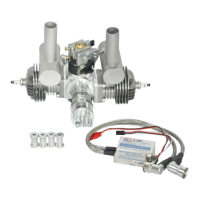
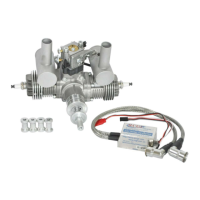
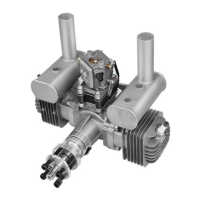
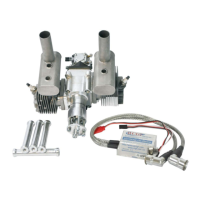
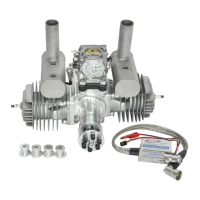
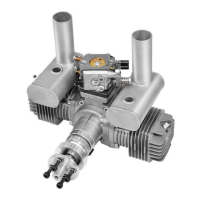
The RCGF 40CC-TS is a twin-cylinder, two-cycle piston valve type gasoline engine designed for model airplanes. It boasts a displacement of 40cc (2.44 cu. in.) with a bore and stroke of 1.26 in (32mm) x 1.02 in (26mm). The engine utilizes a Walbro carburetor and features CDI (Computer Controlled auto advance, electronic ignition system) for reliable ignition. It operates on a power supply ranging from 4.8V to 8.4V and delivers a maximum output of 4.6HP at 8600rpm, with a recommended speed range of 1500-8600rpm.
The manual provides detailed installation instructions for the engine, including preparing the engine for installation, connecting the ignition module, installing the spark plug, and mounting the engine on the airplane. Fuel line setup diagrams are provided for both 2-line and 3-line systems, emphasizing proper routing to prevent siphoning and ensure adequate fuel supply to the carburetor.
Throttle and choke control linkages are explained, with recommendations for using a high torque metal gear servo for the throttle. The manual also covers the critical process of drilling and installing the propeller, emphasizing the use of a drill guide and proper centering to ensure balance and safety.
Operating this engine requires strict adherence to safety guidelines. Always ensure the engine is installed in a properly ventilated area. Before starting, check all screws and bolts for tightness and ensure the engine mount is secure. During the break-in period, the engine should be installed on an aircraft or test stand with an appropriate shock absorber. Always use a balanced spinner and propeller combination to avoid vibrations that can cause damage or injury. Never use a propeller that has hit the ground, is nicked, cracked, or split. Keep foreign objects away from the propeller and never start the engine on loose gravel or sand. Do not attempt to stop the engine by throwing anything into the path of the propeller. Ensure the fuel line is well-secured to the engine and fuel tank. Use gasoline-approved vinyl or neoprene rubber fuel line and secure the fuel line away from the cylinder. The engine's heat can damage the fuel line. Never touch the engine immediately after a run as it will be hot. Always use high-quality oil intended for 2-stroke (2-cycle) engines. During break-in, a 3.5-gallon run is recommended with a high-quality synthetic 2-cycle oil to achieve optimum performance.
The manual outlines key adjustments for the Walbro carburetor, including idle, low-speed, and high-speed needle adjustments. It provides troubleshooting steps for common issues such as the engine not starting, engine flooding, or engine cutting out.
The ignition timing is preset at 28-30° before Top Dead Center (TDC). The timing can be advanced or retarded by loosening the ignition sensor Phillips head screws and sliding the sensor. Adjusting timing can affect engine performance and temperature.
A table is provided for diagnosing and fixing common engine problems:
An optional Digital Tachometer is available to display engine RPM. It connects to the ignition module via a Y-harness.
Regularly clean the fuel filter in the RCGF Carburetor. To do this, remove the Phillips head screw securing the carburetor filter cover and the carburetor filter gasket. Clean the opening around the filter. The manual includes diagrams of the carb filter gasket, carburetor gasket, and fuel filter for easy identification.
The RCGF-40cc TS comes with a two-year limited warranty through the RCGF service center, starting from the date of purchase. Retain your receipt as proof of purchase. Contact information for RCGF engine service is provided at www.rcgfengine.com and www.rcgfservice.com.

 To Next Page
 General