CMM 100 : INSTALLATION, CALIBRATION AND OPERATION
5
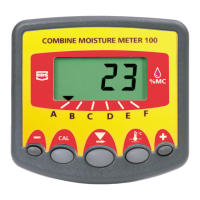
The operator is able to select from channels "A" to "F", which correspond to
different crop types.
The head unit is normally powered on via the ignition circuit. It has a rear-
mounted on-off switch that also enables entry into the calibration mode
without having to switch the engine off.
1.2 Calibration
The grain moisture value should still be checked periodically against a
reading from a reference moisture meter, particularly when combining oily or
dirty crops, since the sensor can produce a false reading due to extraneous
material adhering to it.
The CMM 100 has factory-default calibration settings for each channel A to F.
These settings assume channels A to F are assigned to the following crop
types,
A = Wheat
B = Barley
C= Oats
D = Oilseed Rape
E = Beans
F = Maize
Adjustment is needed if the harvest moisture reading is different from that of
a reference moisture meter.
The operator can adjust the calibration settings for each channel, including:
Calibration Factors "A", "B" and "C" – for calibrating the sensor.
Excess Moisture Content - Alarm Threshold.
Low Grain Voltage Threshold – for when there is insufficient grain passing
over the sensor to give a sensible reading of moisture content, such as
occurs when the combine harvester /drier first starts up. By default, this
feature is switched off in the CAL mode ("UOLt" setting).
The operator changes the calibration settings for each channel using a
secure method of entry that helps to prevent any accidental changes.
Please refer to the "Calibration" section.


 To Next Page