Need help?
Do you have a question about the REC Alpha 72 Series and is the answer not in the manual?
Instructions on navigating and utilizing the content of this installation manual.
Outlines the duties of installers and where to seek technical assistance or guidance.
Details limitations of liability and warranty conditions for product use and installation.
Critical warnings regarding DC electricity risks, arcs, and lethal shock potential during installation.
Safety protocols for working at heights, preventing accidental current generation, and handling panels.
Procedures for safely handling, transporting, and storing REC solar panels to prevent damage.
Criteria and restrictions for selecting suitable and safe locations for panel installation.
Technical requirements for electrical connections, string configuration, and system design.
Understanding electrical ratings, voltage/current limits, and derating factors for PV output.
Guidelines for fire classification, building codes, setbacks, and optimal panel orientation for performance.
Requirements for mounting rails, clamp grip length, and torque specifications for secure panel attachment.
Detailed instructions for clamping panels to rails parallel to the short side, including clamping zones.
Procedures for installing panels using slide-in systems and the designated mounting holes in the frame.
Information on panel drainage holes and essential grounding procedures for system safety and compliance.
Guidelines for ensuring connector compatibility, safe mating, and proper cable termination.
Instructions for routing cables, maintaining bend radius, and securing them to prevent damage.
Recommendations for panel cleaning, frequency, and regular system inspections for integrity.
Guidelines for recycling packaging and properly disposing of solar panels as electronic waste.
Detailed technical specifications, dimensions, electrical data, and temperature ratings for REC Alpha 72 Series panels.
Requirements for water salinity, wave height, and general site conditions for water platform installations.
Guidelines for panel mounting, protection against environmental factors, and regular maintenance on water platforms.
Safety precautions specific to floating platforms, including immediate disconnection procedures.
Procedures for attaching Module Level Power Electronics (MLPE) devices to solar panels and their mounting zones.
Instructions for securely connecting MLPE devices and safety measures during installation.
This document is an installation manual for REC Alpha 72 Series solar panels, certified according to IEC 61215 & IEC 61730 standards. It provides comprehensive instructions for the safe and effective installation, operation, and maintenance of these photovoltaic panels.
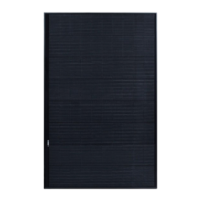
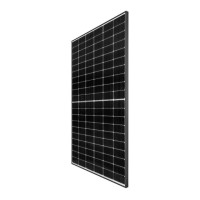
REC Alpha 72 Series solar panels are designed to capture solar radiation and convert it into electricity, providing long-lasting and reliable power output. They are engineered with intelligent design and manufactured to high-quality and environmental standards, ensuring decades of clean and renewable energy. These panels are suitable for terrestrial installations and are rated for use in electrical Application Class A, Protection Safety Class II, where hazardous levels of voltage, current, and power are present, and general contact access is anticipated. The panels are designed to withstand anticipated wind and snow loads, with specific test load ratings provided for both downward and upward pressures. The IP rating of the junction box allows for mounting in any orientation. The panels incorporate 144 half-cut cells with REC heterojunction cell technology, arranged in 6 strings of 24 cells in series, optimizing performance.
The installation manual emphasizes the importance of adhering to all local standards and regulations, including obtaining necessary permits. Installers are responsible for ensuring the panels are in suitable condition for use and appropriate for the particular installation environment. For mechanical installation, the panels can be mounted using clamps with rails parallel to the short side, or via mounting holes. When using clamps, they must be secured in a minimum of four separate zones, with one clamping point in each quarter of the panel, ensuring the clamp's grip length and central fixation point are fully within the designated clamping zones. The rails must run underneath the panel to provide frame support. For mounting with holes, the four 11x6.6 mm holes on the underside of the panel, 455 mm from the corner, must be utilized with appropriate devices like screws or lockbolts. The frame and panel edge must be supported by two rails made of aluminum or galvanized steel. Drainage holes, spaced 60 mm from each corner, must remain uncovered to allow water egress and prevent damage. Electrical installation requires careful attention to string configuration, ensuring the number of panels connected to an inverter does not exceed voltage limits or operating ranges specified by the manufacturer. Panels in a string must have the same ampere rating. Wiring layout should minimize voltage surges by bundling cables together to form small loops. Connectors must be secure, tight, electrically and mechanically sound, and UV-resistant. Only factory-installed connectors or approved replacements from the same manufacturer and type are permitted to ensure compatibility and prevent damage. Cable management guidelines include ensuring cables exit the junction box in a straight line, maintaining a minimum bending radius of 30 mm, securing cables firmly without over-tightening, and positioning connectors for sufficient air circulation to dry effectively. The panels have a Class C fire classification and must be mounted over a fire-retardant roof covering with at least 60 mm distance from the mounting surface to allow air circulation. Optimal orientation and tilt angle are crucial for maximizing system output, with panels in a string ideally having the same orientation and tilt. For installations on water platforms, specific instructions apply, including installation on closed bodies of fresh water with salinity not exceeding 25 mS/cm and a maximum wave height of 1 m. A minimum installation height of 15 cm between the water surface and the panel's lowest edge is required to shield from direct water spray. MLPE devices can be installed in designated green zones on the panel backsheet, ensuring a minimum gap of 2.5 mm between the device and the backsheet for thermal expansion.
Regular maintenance is crucial for optimizing electricity output and ensuring system longevity. Cleaning instructions recommend cleaning panels when cool, such as early morning, to avoid thermal shock. Only deionized water, a sponge, microfiber cloth, or a soft brush should be used to wipe away dirt. Mild, biological, and biodegradable washing-up liquid can be used for further cleaning, and Isopropyl alcohol (less than 10% concentration) for stubborn stains. High-pressure hoses, acidic or alkaline detergents, and putting pressure on the panel surface are prohibited. After cleaning, the panel surface should be wiped from top downwards with a soft rubber squeegee to remove residual water. System inspection should be performed regularly to ensure that fasteners are secure, tight, and free from corrosion, electrical connections are secure, tight, clean, and free from corrosion, mechanical integrity of cables is intact, and bonding points to ground are tight, secure, and free from corrosion. The manual also covers recycling and disposal of old electrical and electronic equipment. REC makes efforts to minimize packaging, with paper and cardboard packaging being recyclable. Panels should be recycled at the end of their useful life according to local guidelines and regulations, with most components being recyclable. In the European Union, REC solar panels are subject to WEEE regulations, indicating they must not be treated as household waste and should be disposed of at appropriate collection points.
 General
| Model | REC Alpha 72 Series |
|---|---|
| Cell Type | Heterojunction (HJT) |
| Temperature Coefficient (%/°C) | -0.26 |
| Operating Temperature Range (°C) | -40 to +85 |
| Warranty | 25 years product and performance |

 To Next Page