4-5
Fuel Fill/Vent
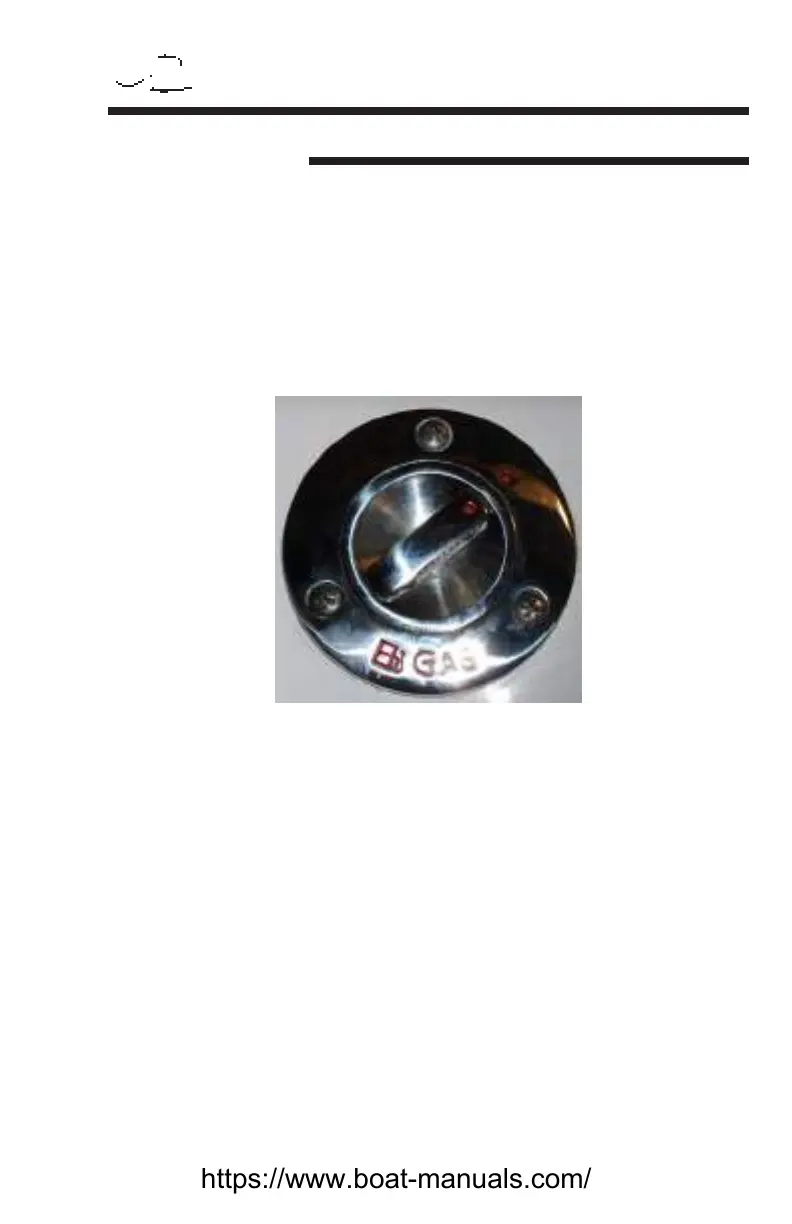
The fuel ll tting is labeled “gas” and in addition displays the
international symbol. When fueling the boat keep the ll nozzle in
contact with the fuel ll pipe since it decreases static electricity. Always
use the recommended fuel octane rating as specied in your engine
owner’s manual.
Extinguish all ame-producing agents before fueling!
Currently, domestic EPA-compliant fuel tanks vent fumes back into the
fuel tank system. While the tank is lled, air displaced by the incoming
fuel is vented through the fuel system charcoal canister.
Your vessel uses a combo type (internal vented) fuel ll. Both the fuel
ll and vent occupy the same cavity under a protective cover. If fuel
overows through the vent, the design forces it back into the fuel ll
hose and tank.
A seasoned skipper will hear a distinct sound as the tank nears the “top
out” or full mode and may see fuel overowing back into the fuel hose
through the vent. DO NOT OVERFILL THE TANK. This helps
avoid any overboard spills that harm the environment. There is a key
that ts the fuel ll. Use it to secure the tting from leaking fuel. Store
the key in a safe place so it can be easily found for fueling. Check the
vent ll screen periodically for debris.
https://www.boat-manuals.com/



 To Next Page