Regency I2400M | 9
9
|
installation
1) Positive Flue
Connection
with Cleanout
FLUE CONNECTOR
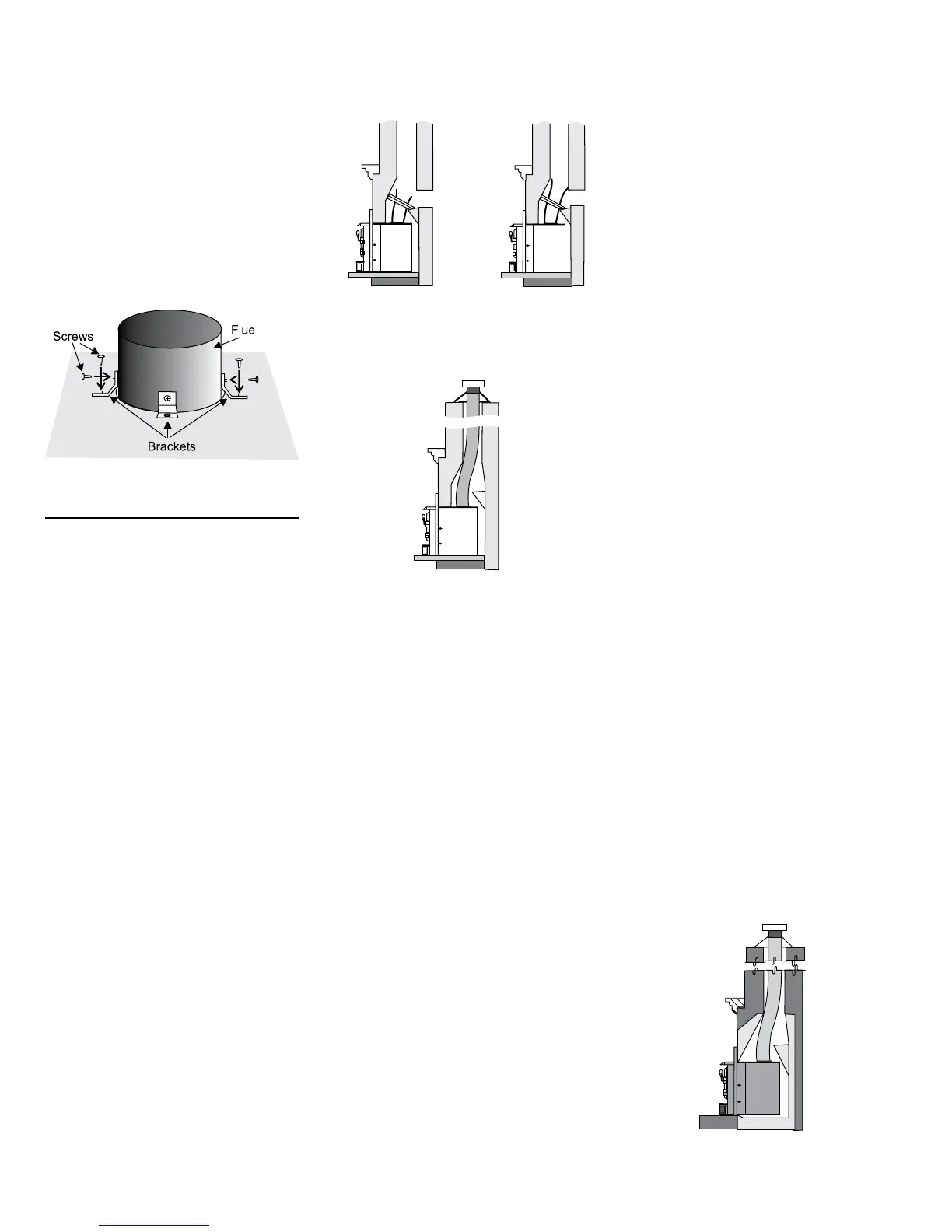
BRACKET
Package contains: 3 brackets and 6 screws.
These brackets are to be used to hold the ue
liner (not supplied) to the Insert and keep the
connection. The brackets are screwed into the
top of the Insert in the pre-punched holes and
then screwed into the ue liner.
INSTALLATION INTO A
MASONRY FIREPLACE
The insert must be installed as per the require-
ments of your local inspection authority. Three
methods of ue connection are acceptable in
most areas in the US, however a full ue liner
is required in Canada.
1) Positive ue connection, where a large
blocking plate and a short connector pipe
is used.
2) Direct ue connection, where a smaller
blocking plate and a connector pipe to the
rst ue liner tile is used.
3) Full ue liner, where a stainless steel rigid
or exible liner pipe is routed from the insert
outlet collar to the top of the chimney.
Regency highly recommends the use of a full
liner as the safest installation and provides the
most optimum performance. Your retailer should
be able to help you decide which system would
be the best for your application.
Note: A clean-out door is sometimes
required, by your inspector, to be
installed when either the Positive ue
connection or Direct ue connection
method is used.
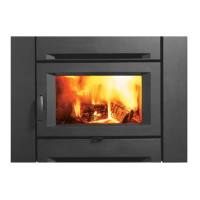
Flush Inserts
2) Direct Flue
Connection
with Cleanout
3a) Full Flue Liner
(No Cleanout Required)
The use of one of the connection methods listed
on this page not only increases the safety of your
insert by directing the hot gases up the ue, but
will also help increase the unit's eciency and
decrease creosote deposits in the chimney.
When a connected ue or liner is in use, the
insert is able to “breathe” better by allowing a
greater draft to be created. The greater draft can
decrease problems such as, dicult start-ups,
smoking out the door, and dirty glass.
Draft is the force which moves air from the ap-
pliance up through the chimney. The amount of
draft in your chimney depends on the length of the
chimney, local geography, nearby obstructions
and other factors. Too much draft may cause
excessive temperatures in the appliance and
may cause damage. An uncontrollable burn or
excessive temperature indicates excessive draft.
Inadequate draft may cause back pung into the
room and plugging of the chimney. Inadequate
draft will cause the appliance to leak smoke
into the room through appliance and chimney
connector joints. Ensure the heater is installed
in areas that are not too close to neighbors or
in valleys that would cause unhealthy air quality
or nuisance conditions.
STEP-BY-STEP
INSTALLATION INTO A
FACTORY BUILT
FIREPLACE
1) When installed in a factory built replace, a
full stainless steel rigid or exible ue liner
is mandatory, for both safety and perform-
ance purposes. When a ue or liner is in
use, the insert is able to breathe better by
allowing a greater draft to be created. The
greater draft can decrease problems such
as, dicult start-ups, smoking out the door,
and dirty glass.
2) In order to position the ue liner, the exist-
ing rain cap must be removed from your
chimney system. In most cases the ue
damper should also be removed to allow
passage of the liner.
3) In most cases opening the existing spark
screens fully should give enough room for
the insert installation. If it does not, remove
and store.
4) If the oor of your replace is below the
level of the replace opening, adjust the
insert's levelling bolts to accommodate the
dierence. When additional shimming is
required, use non-combustible masonry or
steel shims.
5) Measure approximately the alignment of
the ue liner with the position of the smoke
outlet hole on the insert to check for pos-
sible oset. If an oset is required, use a
proper stainless steel unit available with the
chimney liner.
6) Once the above items have been checked,
slide your insert into position after rst po-
sitioning the ue liner and oset if required.
(Re-install raincap at completion of installa-
tion).
NOTE: Refer to "Requirements for Installing
Solid-fuel Inserts in Factory-built Fire-
places" section for the requirements
for installing solid fuel inserts in factory
built replaces.



 To Next Page