Page 30
Operation 1 Draining the cooling system
Drain plugs are provided, one on the left hand side of the cylinder
block (Figure 1) and one in the base of the radiator (Figure 2).
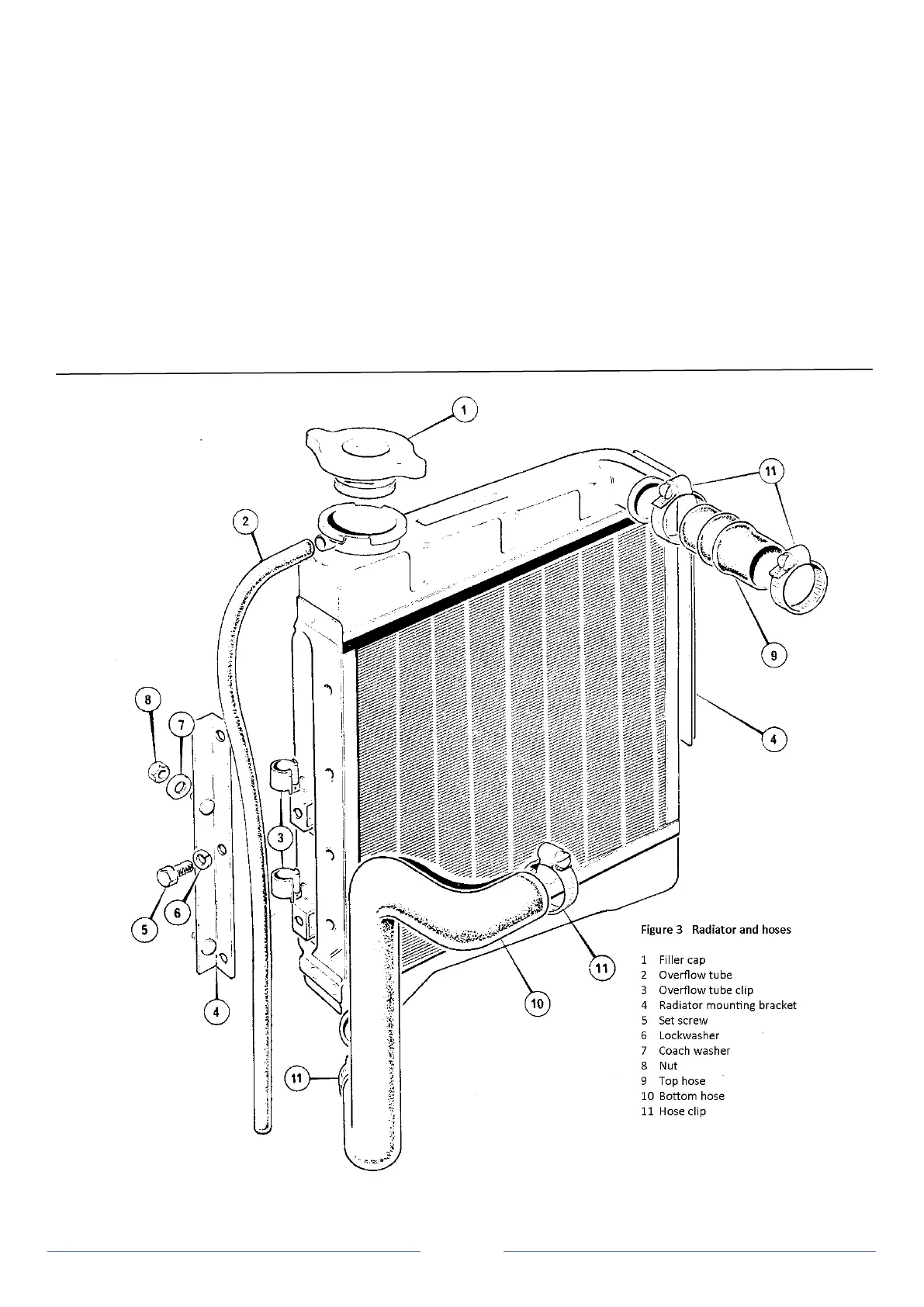
Some vehicles may have a radiator without a drain plug fitted. To
drain the radiator on this type the bottom hose must be removed.
1. The vehicle should be standing on level ground with the
radiator filler cap removed when draining.
Note: Do not remove the radiator cap when the engine is hot as this
will cause very hot water and steam to be blown out of the filler neck
possibly leading to injury from scalding.
2. If anti-freeze is being used it is advised that the coolant be
collected in a clean container beneath the vehicle and retained for re-
use.
3. Drain the cooling system and flush through by inserting a
hose pipe in the radiator filler orifice and allowing water to flow
through the system until clean.
Note: It is advisable to leave an indication within the vehicle that the
cooling system has been drained should the vehicle be left standing.
Running the engine without coolant can lead to severe internal
damage.
To refill
1. Replace drain plugs (refit bottom hose if removed).
2. If anti-freeze solution has been retained, return it to the
cooling system. If the liquid retained is not sufficient to fill the system,
add additional anti-freeze solution as required. Do not top up with
only water, otherwise the solution may be weakened making it less
effective in adverse conditions.
3. Do not over fill the radiator. The correct level of the coolant
in the radiator is reached when the top header tank is approximately
two thirds full. Some vehicles may have a radiator with a coolant level
indicator, visible in the filler neck.



 To Next Page