- 16 -
Using the Executive HD Base Station with a Control System
The Executive HD Base Station is capable of being monitored and controlled via any serial capable
control system. The only logic communication that takes place between multiple Base Stations, via
the ‗BUS‘ cable, is ―Master Mute‖ status. Therefore, each Base Station requires its own serial
connection to the control system in order to communicate. The ―Control System‖ option must be
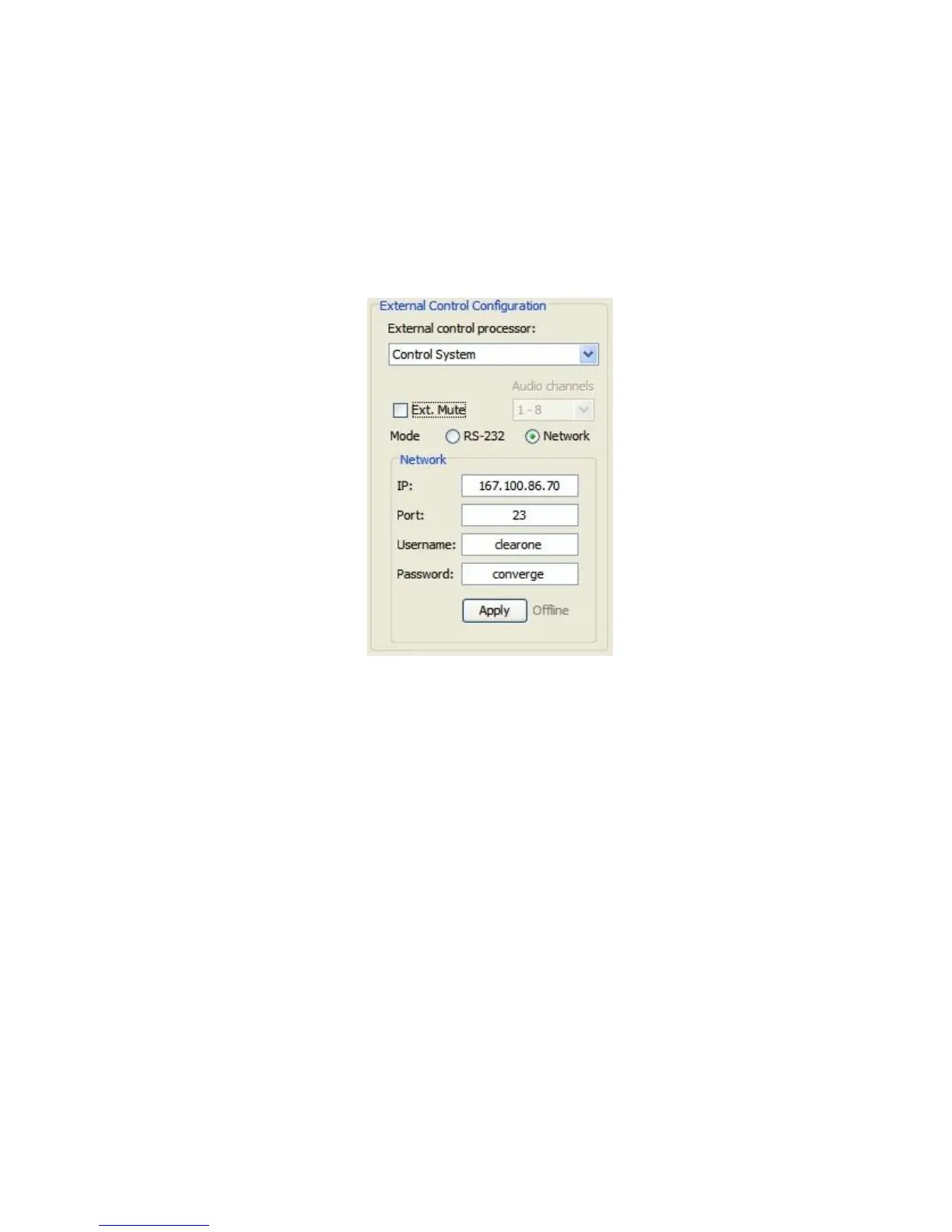
selected, under the ―External Control Processor‖ drop down menu, in the Executive HD Control Panel
software, in order for this configuration to function properly. You must also set the RS-232 or Network
settings of the Base Station to match the communication settings of the control system.
When using a control system, the microphone mutes can be configured to ―int. mute‖, which mutes
the microphone audio inside of the base station, or ―ext. mute‖, which allows the control system to
choose another location for the mute to take place. When ―ext. mute‖ is selected, the microphones
will always pass audio no matter their mute state.
Note: Both a control system and DSP cannot be connected to a Base Station as a serial control
processor at the same time. When using a control system, the DSP control must be done by the
control system and not the Base Station.
Serial Command & Return Strings:
The Serial Strings of an Executive HD Base Station begin with the Argument and terminates with a
Carriage Return. The Command String structure is as follows:
<Argument> <Command> ch <Channel #> <Value> <CR>
All variable changes to the microphone or Base Station will result in a Return String. A Return String
will begin with ―val‖ and terminate with a Carriage Return. You will receive a Return String for every
value change that has taken place in the microphones or base station including changes that are a
result of the Command String sent to the Base Station. The Return String structure is as follows:
val <Command> ch <Channel #> <Value> <CR>


 To Next Page