EasyManua.ls Logo

RITE-HITE RHV Series - User Manual

RITE-HITE RHV Series
34 pages
Print Icon
To Next Page IconTo Next Page
Loading...
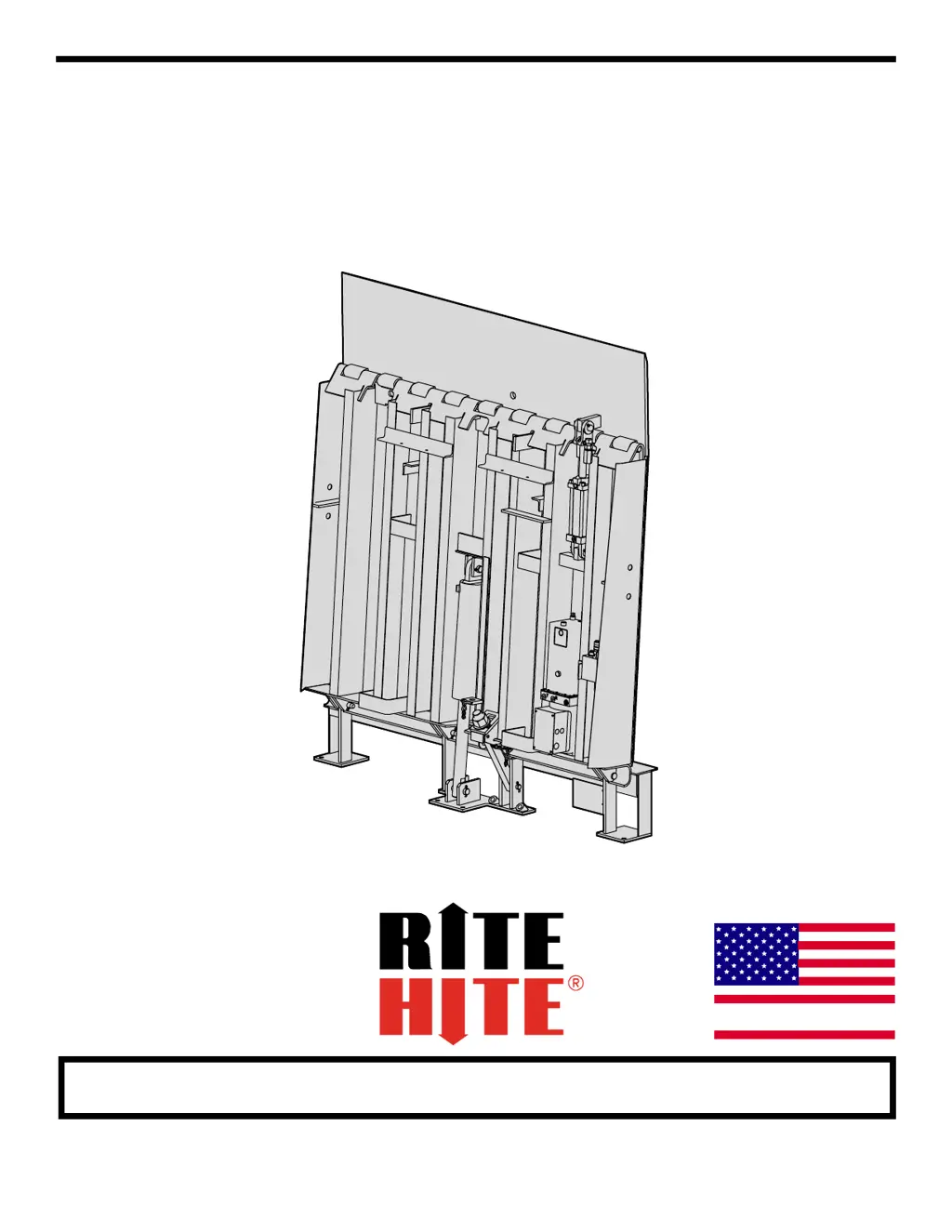
RHV
Dock Leveler
Owners Manual
This Manual Covers Dock Levelers Built After Serial Numbers:
07AD930001M and up
PRINTED IN U.S.A.
RITE-HITE PRINT SHOP
PUBLICATION NO. 1218
FEBRUARY 2008
MADE IN U.S.A.
part of the SMOOTH TRANSITION DOK SYSTEM
TM

Questions and Answers

  • D
    Debra WilliamsAug 19, 2025
    How to troubleshoot a RITE-HITE RHV Lifting Systems unit that will not operate?
    • R
      ronniewalkerAug 19, 2025
      If your RITE-HITE Lifting System unit isn't operating, there could be several reasons. First, check the main power supply and fuses in the control box. Also, an overload relay might have tripped; single-phase units reset automatically, but three-phase units need manual reset in the control box. Ensure all connections are tight and no wires are broken, and that pushbutton contacts are functional. Finally, verify the power requirements and motor wiring are correct.
  • K
    Kelly MooreAug 21, 2025
    Why is my RITE-HITE RHV Lifting Systems unit functioning slowly?
    • L
      Lisa TuckerAug 21, 2025
      If your RITE-HITE Lifting Systems unit is functioning slowly, consider these potential causes: * Check the oil level and refill if necessary. * Verify the power unit is proper for the incoming voltage. * Check hoses, valves, and fittings for leaks, and replace if necessary. * Make sure that there is no debris stuck in the hydraulic system. * Verify that the spools are magnetized, and if not, verify wiring and/or replace solenoid coil. Check power requirements for motor. * If none of these resolve the issue, the pump or motor may be faulty, consider replacing the power unit assembly.
  • R
    Robert PaulAug 23, 2025
    What to do if RITE-HITE Lifting Systems functions stop during control box cycle?
    • W
      wsellersAug 25, 2025
      If the functions of your RITE-HITE Lifting Systems unit stop during the control box cycle, here's what to check: ensure the main power supply is active and check the fuses and disconnect. If it is a three-phase unit, the overload relay may have tripped and needs manual reset in the control box (single phase units reset automatically). Verify all connections are tight, wires are intact, and pushbutton contacts are working. Also, check to make sure that the hydraulic pump has power and inspect hoses, valves, and fittings for leaks. Replace power unit assembly.
  • C
    Courtney StephensonAug 26, 2025
    Why solenoids have power but motor doesn’t run on RITE-HITE RHV Lifting Systems?
    • D
      Diana MorenoAug 26, 2025
      If the solenoids in your RITE-HITE Lifting Systems have power and operate, but the motor doesn’t run, the overload relay may have tripped. For single-phase units, it should reset automatically. For three-phase units, reset it manually in the control box. Also, verify the motor wiring to ensure proper electrical hookup.
  • D
    David MayerAug 28, 2025
    Why does RITE-HITE RHV Lifting Systems unit raise when either PLATFORM LOWER or PLATFORM RAISE button is pressed?
    • M
      Madeline PerezAug 28, 2025
      If your RITE-HITE Lifting Systems unit raises when either the PLATFORM LOWER or PLATFORM RAISE button is pressed, the four-way valve may not be shifting. Check the solenoid coil for magnetism/operation, and inspect the valve for debris by removing it from the valve block and plunging the valve. Replace the valve assembly if needed. Also, the button may not be making contact with the contact block or energizing; in this case, replace the contact block on the button and check the motor operation.
  • N
    nfernandezAug 30, 2025
    Why does the lip fall too slowly or not at all on my RITE-HITE RHV?
    • M
      Melissa ThomasAug 30, 2025
      If the lip on your RITE-HITE Lifting Systems falls too slowly or not at all, it may be due to debris or lip cylinder binding. Check for debris and lubricate the lip spools. If the lip cylinder is binding, check for debris and consider replacing the lip cylinder. Also, a faulty or incorrect P.O. flow control or check valve could be the issue; check for debris in the system and replace the flow control or check valve as needed, ensuring the check valve is correct for the lip size.
  • J
    Julie MontesSep 2, 2025
    Why platform falls too quickly on RITE-HITE RHV Lifting Systems?
    • J
      Julia KaneSep 2, 2025
      If the platform on your RITE-HITE Lifting Systems falls too quickly and does not stop at any position, it could be due to improper maintenance. Also, the “CB” valve may not be adjusted properly.
  • C
    caseyrobertSep 4, 2025
    What causes the lip to fall too fast on a RITE-HITE RHV Lifting Systems?
    • J
      John SanchezSep 4, 2025
      If the lip on your RITE-HITE Lifting Systems falls too fast, it could be due to a faulty or incorrect P.O. flow control. Check for debris in the system and replace the flow control if necessary. Another cause could be the three-way valve. Check the solenoid coil for magnetism/operation and inspect the valve for debris by removing it from the valve block and plunging the valve. Replace the valve assembly if needed.
  • B
    Beth BurnsSep 6, 2025
    Why platform falls too slowly on RITE-HITE RHV Lifting Systems?
    • L
      lrodriguezSep 6, 2025
      If the platform on your RITE-HITE Lifting Systems falls too slowly, it may be due to improper maintenance or a “CB” valve that is not adjusted properly.
  • A
    Anne DouglasSep 9, 2025
    What to do if RITE-HITE RHV Lifting Systems unit raises when LIP EXTEND button is pressed?
    • H
      Howard CastroSep 9, 2025
      If the RITE-HITE Lifting Systems unit raises when the LIP EXTEND button is pressed, it could be because the Lip Extend 3-way valve is not energizing. Verify the wiring of the solenoids. Another cause may be leakage past the valves; check the solenoid coil and replace the assembly if needed. Also, the button may not be making contact with the block, and the motor is not energizing; replace the contact block on the button and check the motor for contact operation.

Summary

RHV Dock Leveler Manual Introduction

Safety Warnings and Procedures

Lockout;Tagout Procedures

Details OSHA requirements for locking out power sources during maintenance and repairs.

Operational Safety Hazards

Danger: Crush Hazard Warning

Highest safety alert; failure to follow instructions may result in severe injury or death.

Warning: Operational Hazards

Statement of serious hazard; failure to follow instructions could cause injury or death.

Additional Safety Precautions

Caution: Safe Operating Procedures

Safe operating procedures; ignoring them may cause personal injury.

Important: Machine Damage Prevention

Procedures to follow to prevent machine damage.

Maintenance Safety Protocols

Danger: Platform Path Safety

Highest safety alert; failure to follow instructions may result in severe injury or death.

Warning: Maintenance Area Safety

Advises posting warnings and barricading the area during maintenance.

Maintenance Pin Engagement Procedure

Illustrates the engagement and disengagement procedures for the maintenance pin.

Owner Responsibilities

Operating Instructions Overview

Danger: Operating Path Safety

Highest safety alert; failure to follow instructions may result in severe injury or death.

Warning: Lip Handling Safety

Statement of serious hazard; failure to follow instructions could cause injury or death.

Caution: Trained Personnel Operation

Equipment should only be operated by trained personnel.

Important: Leveler Operation Notes

Notes regarding leveler operation and maintenance pin engagement.

Lowering the Leveler Platform

Step-by-step instructions on how to lower the dock leveler platform.

Raising the Leveler Platform

Step-by-step instructions on how to raise the dock leveler platform.

Dock Leveler Operation Details

Lowering Leveler to Working Position

Illustrates the process of lowering the dock leveler to its working position.

Raising Leveler to Vertical Position

Illustrates the process of raising the dock leveler to its vertical stored position.

End Load Operations

End Load Operating Procedure

Detailed steps for operating the dock leveler for end load applications.

Figure 5: End Load Illustration

Illustrates the steps involved in handling end loads with the dock leveler.

Below Dock End Load Operations

Figure 6: Below Dock End Load

Illustrates the procedure for below dock end loads from a horizontal position.

Figure 7: Below Dock End Load

Illustrates an alternative view or step for below dock end loads.

Horizontal Position Operations

Figure 8: Raise Leveler and Extend Lip

Illustrates raising the leveler and extending the lip from a horizontal position.

Figure 9: Lowering Leveler to Working Position

Illustrates lowering the leveler to the working position with the lip on the truck floor.

Maintenance Procedures and Schedules

Danger: Maintenance Path Safety

Highest safety alert; failure to follow instructions may result in severe injury or death.

Caution: Servicing Equipment

Equipment should only be operated or serviced by trained personnel.

Suggested Leveler Maintenance

Outlines suggested maintenance procedures for the dock leveler.

Daily Maintenance Tasks

Daily tasks to be performed for routine maintenance of the dock leveler.

90-Day Maintenance Tasks

Maintenance tasks to be performed every 90 days.

180-Day Maintenance Tasks

Maintenance tasks to be performed every 180 days.

Advanced Maintenance and Lubrication

360-Day Maintenance Tasks

Maintenance tasks to be performed annually (360 days).

Figure 10: Lubrication Points

Illustrates the lubrication points on the dock leveler.

Hydraulic Adjustments and Valve Settings

Important: Valve Adjustment Warning

Procedures to follow to prevent machine damage during valve adjustment.

Caution: Trained Personnel for Adjustments

Equipment should only be operated or serviced by trained personnel.

Counterbalance Valve Adjustment

Instructions for adjusting the counterbalance valve for proper operation.

Figure 12: Counterbalance Valve Diagram

Diagram showing the counterbalance valve component.

Figure 13: Leveler at Dock Height

Illustrates the leveler's position at dock height for adjustment purposes.

Tilt Back Adjustment Procedure

Danger: Tilt Back Operation Safety

Highest safety alert; failure to follow instructions may result in severe injury or death.

Important: Level or Plumb Line Usage

Guidance on using level or plumb lines for tilt back adjustment.

Leveler Tilt Back Adjustment Steps

Detailed steps for adjusting the tilt back mechanism of the leveler.

Figure 14: Tilt Back Adjustment Illustration

Illustrates the tilt back adjustment process and measurement.

Troubleshooting Common Issues

Unit Will Not Operate

Addresses issues where the dock leveler unit fails to operate.

Unit Functions Slowly

Addresses issues where the dock leveler operates at a reduced speed.

Troubleshooting Advanced Issues

Platform Falls Too Slowly

Troubleshooting steps for when the platform descends too slowly.

Platform Falls Too Quickly

Troubleshooting steps for when the platform descends too rapidly or has too much float.

Platform Drops Suddenly

Addresses issues where the platform drops suddenly and then stops functioning.

Hydraulic System Schematic

Figure 15: Hydraulic Schematic Diagram

A detailed diagram illustrating the hydraulic system components and flow.

Electrical Schematics (120 V)

Figure 16: 120 V 1 Phase Schematic

Electrical schematic for a 120V, 1-phase power supply.

Electrical Schematics (240 V Single Phase)

Figure 17: 240 V 1 Phase Schematic

Electrical schematic for a 240V, 1-phase power supply.

Electrical Schematics (240 V Three Phase)

Figure 18: 240 V 3 Phase Schematic

Electrical schematic for a 240V, 3-phase power supply.

Electrical Schematics (380 V Three Phase)

Figure 19: 380 V 3 Phase Schematic

Electrical schematic for a 380V, 3-phase power supply.

Electrical Schematics (480 V Three Phase)

Figure 20: 480 V 3 Phase Schematic

Electrical schematic for a 480V, 3-phase power supply.

Electrical Schematics (575 V Three Phase)

Figure 21: 575 V 3 Phase Schematic

Electrical schematic for a 575V, 3-phase power supply.

Replacement Parts: Lip and Platform Components

Replacement Parts List: Lip and Platform

Replacement Parts: Hydraulic Components

Replacement Parts List: Hydraulic Components

Replacement Parts: Hydraulic Manifold

Replacement Parts: Shim Kit

Replacement Parts: Control Box Components

Replacement Parts List: Control Box

Standard Warranty and Liability

Limitation of Liability

Limits RITE-HITE's liability for loss of use or consequential damages.

RITE-HITE RHV Series Specifications

General IconGeneral
TypeVertical Reciprocating Conveyor (VRC)
Platform SizeCustom sizes available
Power SourceElectric
ControlsPush-button
Safety Featuresinterlocks, emergency stop

Related product manuals