
 Need help?
Do you have a question about the RKC INSTRUMENT RB900 and is the answer not in the manual?
Details the high-performance features of the digital controller, including panel saving, display, and tuning functions.
Explains the instrument's input/output and function blocks, illustrating connections and capabilities.
Guides users on checking delivered items, model codes, and external appearance for completeness.
Lists specifications and corresponding suffix codes for product model identification and configuration.
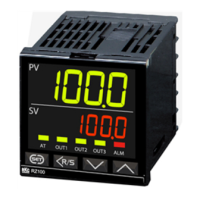
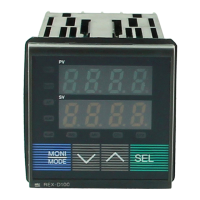
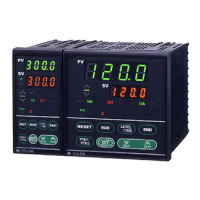
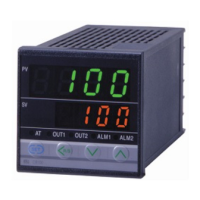
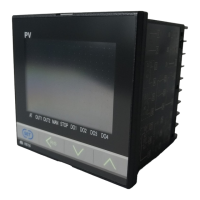
Describes various display units, indication lamps, and operation keys on the front panel of the controllers.
Outlines the step-by-step procedure for configuring settings required for instrument operation after installation.
Provides crucial warnings and conditions for safe and proper instrument mounting to prevent hazards.
Details the physical dimensions and mounting hole requirements for various RB series controller models.
Explains the mounting positions for single and close mounting, including detailed procedures for installation.
Emphasizes precautions for preventing electric shock and instrument failure during wiring.
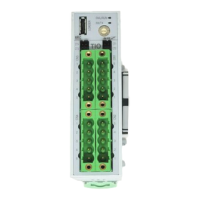
Illustrates the terminal layout for different RB series models, mapping terminals to functions.
Provides specific wiring instructions for power supply, outputs, inputs, and communication terminals.
Details the procedures for mounting and removing the terminal cover for safe access to wiring.
Describes the controller's five different modes and how to access various setting modes.
Guides users on how to increase, decrease, and store new values for parameters using the front keys.
Details how to check and set input, event, and control action parameters in Engineering mode.
Explains how to set the control target value (SV) and event set value for the instrument.
Covers precautions before operation, action at input errors, and event hold actions.
Explains how to transfer between control start (RUN) and stop (STOP) modes via key, DI, or communication.
Describes how to start, cancel, and finish the Autotuning function for automatic PID value calculation.
Details the Startup Tuning function used to compute PID values based on system response during startup.
Explains how to adjust control response speed from fast to slow using the Fine tuning setting.
Describes how to switch between Auto and Manual modes, including bumpless function behavior.
Guides on setting lock levels to protect instrument data from unauthorized changes.
Explains how to set parameters to display or hide in various modes for a cleaner interface.
Details how to release interlock actions for events via digital input, communication, or front keys.
Explains how to switch between up to four stored set values (SV1-SV4) using keys, DI, or communication.
Describes timer functions for control start/stop, ramp/soak control, and repeat execution.
Details how to configure transmission output for measured, set, or manipulated values as voltage or current signals.
Explains the various monitors available, including PV/SV, CT input, and output values.
Describes how to set the target value (SV) or manipulated output value (MV) in Auto or Manual modes.
Outlines operations for Auto/Manual transfer, data unlock/lock, and interlock release.
Details how to set various parameters including set values, timer settings, and control parameters.
Explains the structure of engineering mode function blocks and how to configure advanced settings.
Explains error displays for input errors and self-diagnostic errors, including actions and solutions.
Provides solutions for common problems related to display, control, event functions, and heater break alarms.
Details input types, ranges, and accuracy for thermocouple, RTD, voltage, and current inputs.
Provides specifications for current transformer input, including types, ranges, and CT ratios.
Details specifications for digital inputs, including input methods, capture time, and functions.
Describes various output types (relay, voltage pulse, current, triac, open collector) and their specifications.
Covers PID control methods, additional functions like autotuning, and overshoot suppression.
Details the number of events, output methods, and event actions supported by the instrument.
Explains the transmission output function, its contents, types, scaling, and adjustment values.
Outlines the SV selection function, including number of SVs, setting methods, and timer function integration.
Describes timer functions for control start/stop, ramp/soak control, and repeat execution.
Describes Auto mode, Manual mode, and control stop (STOP mode) statuses and output actions.
Provides a step-by-step guide for safely removing the internal assembly from the instrument case.
Details the procedure for replacing case and board rubber packing for maintaining environmental protection.
Provides dimensional drawings for Current Transformer (CT) models CTL-6-P-N and CTL-12-S56-10L-N.
Shows the dimensions of the 250 Ω shunt resistor (KD100-55) used for current input.
 General
| Brand | RKC INSTRUMENT |
|---|---|
| Model | RB900 |
| Category | Temperature Controller |
| Language | English |






 To Next Page


