
 Need help?
Do you have a question about the Robe SPOT 250 XT and is the answer not in the manual?
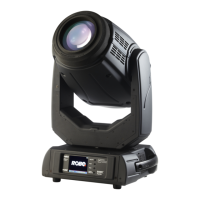
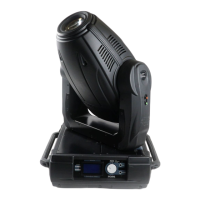
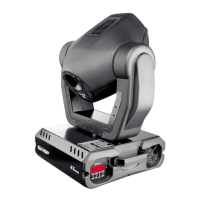
Overview of the fixture's moving head, base, carrying handles, and panel connections.
Procedure for fitting, adjusting, and replacing the lamp for optimal performance.
Instructions for installing optional lenses and inserting or exchanging gobos.
Methods for securely rigging the fixture using clamps, omega holders, or mounting plates.
Steps to verify and change power supply settings for different voltage and frequency regions.
Connecting the fixture to mains power and building DMX-512 serial chains.
Setting the DMX address and configuring controller modes for operation.
Operating the fixture in stand-alone mode or as part of a master/slave synchronized setup.
Setting DMX addresses and configuring master/slave operational modes.
Accessing lamp life, temperature, software version, and other fixture status data.
Customizing fixture behavior like movement resolution, display, and fan speed.
Switching the lamp on/off, setting lamp behavior based on DMX presence or absence.
Running built-in test sequences and selecting stand-alone playback programs.
Performing fixture resets and accessing advanced functions like calibration and effect control.
Interpreting and responding to various error codes and information displayed by the fixture.
Detailed technical data including power, optics, beam characteristics, dimensions, and DMX mapping.
Procedures for cleaning the fixture, its components, and replacing the fuse.
 General
| Type | Moving Head Spot |
|---|---|
| Light Source | Discharge lamp |
| Beam Angle | 15° |
| Static Gobos | Yes |
| Focus | Motorized |
| Pan | 540° |
| Pan Range | 540° |
| Tilt Range | 280° |
| DMX Channels | 16 |
| Lamp | 250W |
| Color Filters | Dichroic filters |
| Gobo Wheel 1 | 7 rotating gobos |
| Gobo Wheel 2 | 9 static gobos |
| Rotating Gobos | Yes |
| Prism | 3-facet prism |
| Dimmer | 0-100% |
| Shutter | Strobe effect |
| Control Protocol | DMX512 |
| Control | DMX |
| Effects | Prism rotation |


 To Next Page