EasyManua.ls Logo

Rockford Fosgate 2.6 - User Manual

Rockford Fosgate 2.6
52 pages
Print Icon
To Next Page IconTo Next Page
Loading...
.6
Installation Installation
Installation
and and
and and
and
OperationOperation
OperationOperation
Operation
.3
.6
® ®
car audio
fanatics
for
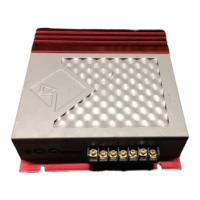
100 Watt Amplifier
2-channel
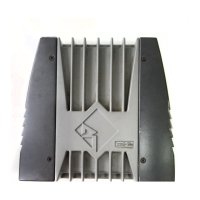
150 Watt Amplifier
2-channel w/crossover
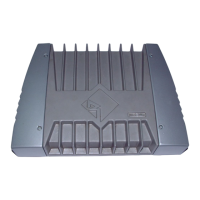
300 Watt Amplifier
4-channel w/crossover

Questions and Answers

  • D
    David MorenoAug 15, 2025
    What to do if my Rockford Fosgate 2.6 makes a noise (turn-on pop)?
    • J
      Jennifer EvansAug 16, 2025
      A turn-on pop from your Rockford Fosgate Amplifier can be caused by a voltage spike entering through the input signal. To troubleshoot, disconnect the input signal to the amplifier and turn it on and off. If the noise is eliminated, connect the REM lead of the amplifier to the source unit using a delay turn-on module. Another cause could be a voltage spike from the remote turn-on lead. Try using a different 12 volt source for the amplifier's REM lead, such as directly from the battery. If this resolves the issue, use a relay to isolate the amplifier from the noisy turn-on output.
  • D
    David HansonAug 22, 2025
    Why am I getting engine noise with high level inputs on my Rockford Fosgate 2.6?
    • C
      Crystal RamosAug 22, 2025
      If you're experiencing engine noise with high-level inputs on your Rockford Fosgate Amplifier, it might be due to the absence of a reference ground. To resolve this, connect the GND terminal of the high-level input to the chassis of the source unit.
  • H
    hsmithAug 30, 2025
    Why is the speaker output low or distorted on my Rockford Fosgate 2.6?
    • A
      amberallenAug 30, 2025
      If you are experiencing low or distorted speaker output from your Rockford Fosgate Amplifier, it might be due to several reasons. First, the input gain signal might be incorrectly set, so readjust it. Also, the source unit output could be too low or have no output; in this case, verify the source and repair or replace it if needed. Another potential cause is a missing or improperly placed XCard, so check its position. Finally, low battery voltage or significant voltage drops to the amplifier under load could be the issue. Inspect the alternator, battery, fuse, and power and ground wiring, and repair as necessary.
  • M
    Melanie HoffmanNov 7, 2025
    How to eliminate engine noise from my Rockford Fosgate Amplifier?
    • B
      Brittany LoveNov 7, 2025
      If you're hearing engine noise through your Rockford Fosgate Amplifier, start by checking the connections and rerouting the RCA cables away from high current sources, as the noise might be radiating into them. Also, a bad component in the signal chain can cause this, so bypass additional components like crossovers and equalizers to identify the culprit. Noise radiating into speaker cables can also be the issue. Disconnect existing speakers and connect a test speaker to the amplifier's output terminals; if the noise disappears, reroute the speaker cables away from high voltage sources. Multiple grounds in the audio system can also introduce noise. Check ground connections and connect amplifiers, signal processors, and other components to a central location or try a different grounding point...

Summary

INTRODUCTION

TECHNICAL DESIGN FEATURES

TRANS•ANA Amplifier Circuit

Describes the TRANSconductance Active Nodal Amplifier circuit for audio signal processing.

TOPAZ Noise Reduction System

Explains TOPAZ circuitry for solving ground loop noise issues.

MOSFET Device Advantages

Details benefits of MOSFETs for linearity and stability.

DSM Manufacturing Technology

Explains DSM process for compact, efficient components.

NOMAD Protection System

Describes NOMAD for safe output power management.

Input Signal Handling

Covers High Level Inputs and XCard Crossover functionality for input signal compatibility.

AMPLIFIER COMPONENTS AND FEATURES

Heatsink and Terminals

Details the extruded heatsink and connection terminals (barrier strip, RCA).

Controls and Indicators

Covers input sensitivity controls, LED indicator, and bias controls.

INSTALLATION CONSIDERATIONS

MOUNTING LOCATION

Trunk Mounting

Recommends vertical mounting in the trunk for optimal cooling.

Passenger Compartment Mounting

Requires sufficient airflow; at least 1" air gap around heatsink.

Engine Compartment Mounting

Strongly not recommended; voids warranty.

BATTERY AND CHARGING

WIRING THE SYSTEM

USING PASSIVE CROSSOVERS

XCARD CROSSOVER SETUP

Using the XCard

How to insert and set the XCard for different operations.

Customizing the XCard

Method for altering crossover points by changing resistor values.

Resistor Chart

Provides resistor values for crossover frequency adjustments.

XCARD ACCESS

Steps to access the XCard by removing the amplifier cover.

SPECIFIC INSTALLATION

2.3 & 2.6 x High Level Input Installation

Covers "Single Ended" and "B.T.L." input types.

4.6 x High Level Input Installation

Details high-level input configurations for the 4.6x model.

Operation Mode Wiring

Illustrates wiring for various stereo and mono configurations.

SYSTEM DIAGRAMS

60 Watt System Diagram

Wiring diagram for the 60 Watt system.

120 Watt System Diagram

Wiring diagram for the 120 Watt system.

150 Watt System Diagram

Wiring diagram for the 150 Watt system.

300 Watt System Diagram

Wiring diagram for the 300 Watt system.

TROUBLESHOOTING

No Power or No Sound Issues

Diagnoses and remedies for amplifier not turning on or producing sound.

Output and Noise Problems

Addresses low/distorted output, turn-on pops, and engine noise.

High Level Input Noise & Ground Loops

Solutions for noise with high-level inputs and ground loops.

POWER MEASUREMENT EXPLANATION

Dynamic Power Measurement Standards

Explains IHF-202 standard and music simulation for power testing.

Understanding Loudspeaker Impedance

Discusses dynamic impedance and phase shifts of loudspeakers versus resistors.

PowerCube Data Interpretation

Explains how PowerCube data forms a 3D cube and its meaning.

SPECIFICATIONS AND WARRANTY

Technical Specifications Summary

Lists key specifications like power ratings, frequency response, and dimensions.

Warranty Information Details

Outlines warranty length, coverage, exclusions, and service procedures.

INTERNATIONAL INFORMATION

Rockford Fosgate 2.6 Specifications

General IconGeneral
Channels2
Crossover Slope12dB/Octave
Frequency Response20Hz - 20kHz
Crossover Frequency50Hz to 250Hz
Bass Boost0dB

Related product manuals