1
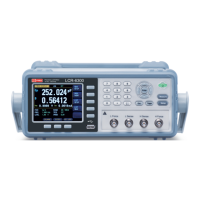
Profeesional LCR Meter / English
1.Safety Summary
The following safety precautions apply to both operating and maintenance personnel and must be observed
during all phases of operation, service, and repair of this instrument.
Do Not Operate In an Explosive Atmosphere
Do not operate the instrument in the presence of flammable gases or fumes. Operation of any electrical
instrument in such an environment constitutes a definite safety hazard.
Keep Away From Live Circuits
Instrument covers must not be removed by operating personnel. Component replacement and internal
adjustments must be made by qualified maintenance personnel.
Do Not Substitute Parts or Modify The Instrument
Do not install substitute parts or perform any unauthorized modifications to this instrument. Return the
instrument to distributor for service and repair to ensure that safety features are maintained.
Warnings And Cautions
Warning
and
Caution
statements, such as the following examples, denote a hazard and appear throughout
this manual.
Follow all instructions contained in these statements.
A
Warning
statement calls attention to an operating procedure, practice, or condition, which, if not
followed correctly, could result in injury or death to personnel.
A
Caution
statement calls attention to an operating procedure, practice, or condition, which, if not
followed correctly, could result in damage to or destruction of part or all of the product.
2.Safety Guidelines
To ensure that you use this device safely, follow the safety guidelines listed below:
• This meter is for indoor use, altitude up to 2,000 m.
• The warnings and precautions should be read and well understood before the instrument is used.
• When measuring in-circuit components, first de-energize the circuits before connecting to the test leads.
• Discharge capacitor before testing.
• Use the meter only as specified in this manual. Otherwise, the protection provided by the meter may be
impaired.
• The power for the meter is supplied with six standard 1.5V batteries.
Caution
• Do not measure a capacitor that is not fully discharged.
• Connecting a charged or partially charged capacitor to the input terminals will damage the instrument.
• When measuring within a circuit, the circuit must be de-energized before connecting the test leads.
• When used in a dusty environment, the instrument should be wiped and cleaned regularly.
• Do not leave the instrument exposed to direct heat from the sun for long periods of time.
• Before removing the cover, ensure that the instrument is disconnected from any circuit and is powered
OFF.


 To Next Page