EasyManua.ls Logo

RTI T2i - User Manual

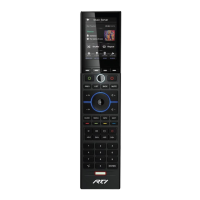
RTI T2i
4 pages
Print Icon
To Next Page IconTo Next Page
Loading...
1 | P a g e
08/2020
Tips for Touchscreen Remotes & Touchpanels
Content
A. Overview ......................................................................................................................................................................... 1
B. Power On of T2i, T2x, T3x, T4x Remote Controls ............................................................................................................ 1
C. Power Off of T2i, T2x, T3x, T4x Remote Controls ........................................................................................................... 2
D. Reset the T2i Remote Control ......................................................................................................................................... 2
E. Access the Control Panel of T2i, T2x, T3x, T4x Remote Controls .................................................................................... 2
F. Access the Screen Calibration of a T2i Remote Control .................................................................................................. 3
G. Change WiFi Settings of T2i, T2x, T3x, T4x Remote Controls .......................................................................................... 3
H. Reset the Battery Memory of T2i, T2x, T3x, T4x Remote Controls ................................................................................. 3
I. Access the Screen Calibration Mode of a KX2 Touchpanel ............................................................................................. 3
J. Access the Debug Menu of a KX3 Control Processor / Touchpanel ................................................................................ 4
A. Overview
In this document you will find shortcuts for easy access to service functions of touchscreen remotes and
touchpanels.
B. Power On of T2i, T2x, T3x, T4x Remote Controls
Press and hold the “Backlight” button and the “OK” buttons simultaneously for
approximately 1 or 2 seconds until the remote turns On.

Other manuals for RTI T2i

Question and Answer IconNeed help?

Do you have a question about the RTI T2i and is the answer not in the manual?

Summary

Overview and Remote Control Operations

Overview of Touchscreen Remotes

Provides shortcuts for easy access to service functions of touchscreen remotes and touchpanels.

Power On Remote Controls

Instructions to power on T2i, T2x, T3x, T4x remotes by pressing Backlight and OK buttons.

Power Off Remote Controls

Procedure to power off T2i, T2x, T3x, T4x remotes by holding Backlight and OK buttons.

Reset T2 i Remote

Steps to reboot the T2i remote by holding Backlight and OK buttons for an extended period.

Access Control Panel

How to display the Control Panel page on T2i, T2x, T3x, T4x remotes by holding the Backlight button.

Screen Calibration T2 i

Sequence of button presses on the Control Panel page to access T2i screen calibration.

Change WiFi Settings

Guidance on changing WiFi settings for T2i, T2x, T3x, T4x remotes and power cycling.

Reset Battery Memory

Steps to reset T2i, T2x, T3x, T4x remote battery memory: flash firmware, replace battery, charge.

Touchpanel Operations

Screen Calibration KX2

Procedure to access KX2 screen calibration mode by holding a button during power-up.

Debug Menu KX3

Accessing the debug menu on KX3 control processors/touchpanels via button press during power-up.

Overview

This document, titled "Tips for Touchscreen Remotes & Touchpanels," provides a comprehensive guide to accessing various service functions and settings on RTI (Remote Technologies Incorporated) touchscreen remotes and touchpanels, including models T2i, T2x, T3x, T4x, KX2, and KX3. It serves as a technical bulletin offering shortcuts for programming steps, installation notes, and integration tips, aimed at assisting users with troubleshooting and maintenance.

Function Description

The document details how to perform essential operations and access advanced settings on RTI touchscreen devices. It covers power management, system resets, access to control panels, screen calibration, network settings, battery management, and debug menus. These functions are crucial for the initial setup, ongoing maintenance, and diagnostic procedures of the devices.

For the T2i, T2x, T3x, and T4x remote controls, the document outlines procedures for:

  • Power On: This involves simultaneously pressing and holding the "Backlight" and "OK" buttons for approximately 1 to 2 seconds until the remote powers on. This is a fundamental step for initiating device operation.
  • Power Off: To power off these remotes, users must press and hold the "Backlight" button, then the "OK" button, holding both for about 5 seconds until the remote turns off. This ensures a proper shutdown, which can be important for conserving battery life or resolving minor software glitches.
  • Reset the T2i Remote Control: A hard reset for the T2i remote is performed by pressing and holding the "Backlight" button, then the "OK" button, and holding both for at least 12 seconds until the T2i reboots. This action can help resolve more persistent software issues by restarting the device's operating system.
  • Access the Control Panel: The control panel, which provides access to various device settings, can be displayed by holding down the "Backlight" button for approximately 5 seconds until the control page loads. This is a gateway to further configuration and diagnostic options. To exit the control panel, users simply tap the touchscreen anywhere.
  • Access the Screen Calibration of a T2i Remote Control: Once in the Control Panel page, a specific button sequence is required to access screen calibration: Guide, Menu, Guide, Menu, Channel Up. This allows users to recalibrate the touchscreen for accurate input, which can degrade over time or after certain events. Tapping the touchscreen exits this mode.
  • Change WiFi Settings: The document notes that after making any changes to the WiFi settings of a remote and uploading the file, the remote needs to be power cycled. This step is essential to apply the new WiFi parameters to the remote's systems, ensuring proper network connectivity.

For the KX2 Touchpanel, the document provides instructions for:

  • Access the Screen Calibration Mode: To access the KX2 control panel, users must hold down the button located in the lower right corner (default labeled with the power symbol) while applying power or resetting the KX2. Following this, a specific button sequence is required: Top Left Button, Bottom Right Button, Top Left Button, Bottom Right Button, Top Right Button. This allows for precise calibration of the touchpanel's screen, ensuring accurate user interaction.

For the KX3 Control Processor / Touchpanel, the document details:

  • Access the Debug Menu: The KX3 control panel can be accessed by pressing and holding down the button located in the lower left corner while applying power or resetting the KX3. Alternatively, a "Control Panel" page link can be assigned to a button in the Integration Designer programming. Once in the control panel, the following sequence of taps on the actual text (not the numerical space) is required: IP, MAC, IP, MAC. This action leads to the debug menu, where users can select "Launch HW Diagnostics" to perform tests, including hard button functionality, which is invaluable for diagnosing hardware issues.

Usage Features

The document emphasizes ease of use through "shortcuts" for accessing service functions. These shortcuts are designed to streamline the process of diagnosing and configuring RTI devices, making them more accessible for technicians and advanced users. The clear, step-by-step instructions, often accompanied by visual aids (though not explicitly described in detail, the presence of button diagrams on pages 1 and 2 implies this), ensure that users can follow the procedures accurately.

The ability to access control panels, calibration modes, and debug menus directly from the device itself, without necessarily requiring external tools for every step, highlights a user-centric design for maintenance and troubleshooting. For instance, the power on/off sequences are simple button combinations, making basic control intuitive. The specific button sequences for calibration and debug menus, while more complex, are clearly laid out to guide the user.

The document also implicitly suggests the integration capabilities of these devices within a larger system, particularly with the mention of "Integration Designer programming" for the KX3. This indicates that these touchscreens and remotes are part of a broader control ecosystem, where their settings and functionalities can be customized and managed through specialized software.

Maintenance Features

The document is primarily a maintenance guide, offering critical information for keeping RTI touchscreen devices in optimal working condition. Key maintenance features include:

  • System Resets: The ability to perform a hard reset on the T2i remote is a crucial maintenance function for resolving software glitches or unresponsive behavior.
  • Screen Calibration: Regular screen calibration, as detailed for the T2i and KX2, is vital for maintaining the accuracy and responsiveness of the touchscreen interface, which is the primary mode of interaction with these devices. Over time, touchscreens can drift, and recalibration ensures that user inputs are correctly interpreted.
  • WiFi Settings Management: The instruction to power cycle the remote after changing WiFi settings underscores the importance of proper network configuration for device functionality. Maintaining correct WiFi settings is essential for the remote to communicate with other components of the control system.
  • Battery Memory Reset: For T2i, T2x, T3x, and T4x remotes, the document provides a procedure to reset battery memory: flashing the firmware, removing and replacing the battery, and then charging for 24 hours. This is a significant maintenance feature for optimizing battery life and ensuring accurate battery level reporting, which can degrade over time due to "memory effect" in older battery technologies or calibration issues.
  • Diagnostic Tools (Debug Menu): The debug menu for the KX3, accessible via a specific tap sequence, offers "Launch HW Diagnostics." This is an advanced maintenance tool that allows users to perform tests on the device's hardware, such as hard button functionality. Such diagnostics are invaluable for identifying hardware failures, distinguishing them from software issues, and guiding repair efforts.

Overall, the document serves as an essential resource for anyone involved in the installation, configuration, or maintenance of RTI touchscreen remotes and touchpanels, providing clear, actionable steps for a variety of common and advanced service tasks.

RTI T2i Specifications

General IconGeneral
BrandRTI
ModelT2i
CategoryRemote Control
LanguageEnglish

Related product manuals