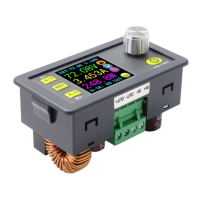
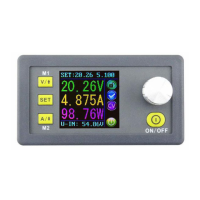
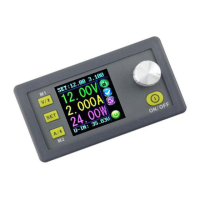
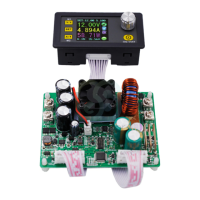
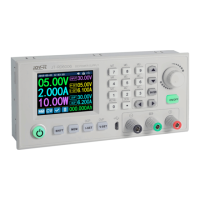
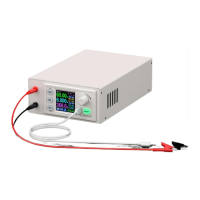
DPH5005 CNC Power Communication Protocol V1.2
Communication protocol overview:
The communication protocol for this device is specifically MODBUS RTU. This can be used via RS232, RS485 or
Bluetooth serial interface.
Note, This product only supports MODBUS RTU Function Codes 0x03 (03H), 0x06 (06H), 0x10 (10H)
II. Communication protocol described:
Message transmission is asynchronous, Modbus-RTU is in 11-bit bytes.
(For a full description of the general MODBUS RTU Protocol see http://modbus.org/docs/PI_MBUS_300.pdf)
Modbus is a generic protocol. The implementation of the location and function of registers is specific to the
designer of this device however the format of the command structure for the Modbus Communication is fixed and
as detailed in the above referenced document. Below is a brief introduction to the Standard Modbus RTU
protocol and the registers and Modbus RTU Function Codes used in this specific device.
Data Format:
Before sending data, the bus silent period (no data transmition time) is more than 3.5 character, (eg: Baud rate is
9600, the time is 5ms).
RTU messages start with a silent interval of at least 3.5 character time periods.Following the last transmitted
character, a similar interval of at least 3.5 character times marks the end of the message. A new message can
begin after this interval.
The entire message frame must be transmitted as a continuous stream. If a silent interval of more than 3.5
character times occurs before completion of the frame, the receiving device flushes the incomplete message and
assumes that the next byte will be the address field of a new message.
Similarly, if a new message begins earlier than 3.5 character times following a previous message, then the
receiving device will consider it to be a continuation of the previous message. This will set an error, as the value
in the final CRC field will not be valid for the combined messages.
1.1 Address Field:
The address field of a message frame contains eight bits, from 1 to 255. This byte shows the slaver of setting
address by user will receive the message form main. Every slaver must have unique address field, and only the
salver fits the address field, it can respond loopback message. When slaver send the message back, the
loopback data will begin with its own address filed. The address field sent by the main is the address filed the
salver received, and the loopback address filed is the loopback slaver filed address. The corresponding address
filed show where it come from.
1.2 Function Field:
The Function Code field tells the addressed slave what function to perform. This device only supports the
functions 0x03 0x06 0x10.



 To Next Page
 Loading...