
 Need help?
Do you have a question about the Russell Hobbs RHCF198B and is the answer not in the manual?
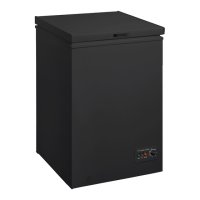
This document is an instruction manual for a Russell Hobbs Chest Freezer, covering models RHCF99 (B), RHCF142 (B), and RHCF198 (B). It provides comprehensive guidance on the safe and efficient operation, installation, and maintenance of the appliance.
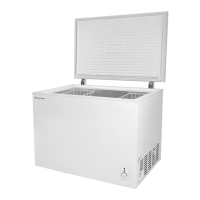
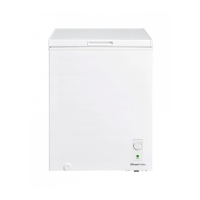
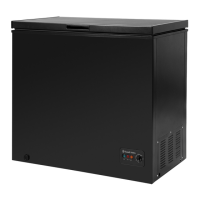
The Russell Hobbs Chest Freezer is designed for the long-term storage of frozen foods. It utilizes natural refrigerant gas, R600a (Isobutene), as part of its cooling system, which is environmentally friendly. The appliance maintains a standard operating temperature for the freezer compartment between -18°C and -30°C, ensuring food preservation. It features a temperature control dial to regulate the internal temperature, with settings ranging from 1 (warmest) to 6 (coldest). The recommended setting for normal conditions is between 3 and 2. The freezer also includes indicator lights for "Power" (indicating the freezer is switched on), "Run" (indicating the appliance is working, with the red light switching on and off as required), and "Alarm" (indicating when the inside temperature is too high). An "OFF" position on the temperature control initiates an automatic shutdown and defrosting process. The design includes a handle for opening the lid, a wire basket for organized storage, and a drainage hole for defrosting water.
Installation and Setup: Before initial use, the appliance requires careful handling during transportation, tilting no more than 45 degrees and lifting from the base and rear corners. It is crucial to ensure adequate personnel are present due to the unit's weight. Upon arrival, the freezer should be placed on a flat, firm, and well-ventilated surface, at least 10cm away from heat sources like stoves or ovens, and 10cm from other chest freezers to prevent humidity build-up. A minimum of 30cm clearance above the appliance and 5cm from kitchen cabinets is recommended, with the rear at least 6cm from the back wall. The appliance must be used in a vertical position, and adjustable feet should be used to ensure stability and quiet running. It is not suitable for carpeted surfaces as this impedes ventilation.
Before plugging in, ensure the electricity supply voltage matches the rating plate (230-240V AC; 50Hz). The appliance must be plugged into an earthed socket, and adaptors or extension leads should not be used. After positioning, the appliance should stand for at least 3 hours before being switched on to allow the coolant to settle. The interior should be cleaned with a bicarbonate of soda solution and warm water, then wiped dry, ensuring the appliance is disconnected from power during this task. Any transport tapes and foam protection pieces must be removed. Once settled, the thermostat knob should be set to "3" and the power switched on. The door should remain closed for a minimum of 4 hours to allow the appliance to reach its operating temperature. Faint gurgling or bubbling sounds are normal as the refrigerant circulates, and a slight whirring or pulsating noise may be heard when the compressor is in operation.
Temperature Control: The temperature is controlled by a dial located on the front, bottom right-hand side. Rotating the knob left or right adjusts the temperature. Setting 1 is the warmest, and 6 is the coldest. For normal operation, settings between 3 and 2 are recommended. The "OFF" position will shut down the appliance and initiate defrosting.
Energy Saving Advice: To optimize energy efficiency, avoid installing the freezer near heat sources. Ensure it is in a cool, well-ventilated room with clear air vents. Minimize the frequency and duration of door openings to prevent warm air entry and ice build-up. Check that door seals are clean and intact, and that no obstructions prevent proper door closure. Avoid overloading the appliance, as this can block cooling air. Always allow hot food to cool down before placing it in the freezer.
Freezer Storage Advice: Store fresh food in airtight containers or wrap it in suitable bags or foil for freezing. Avoid direct contact between frozen and fresh food. Pre-frozen food should be placed in the freezer as quickly as possible after purchase. Fresh vegetables and fruits should be processed appropriately to prevent frost damage before freezing. Always adhere to storage guidelines on food packaging. Suggested maximum storage times at -18°C (4-star freezer rating) include: fresh meat & poultry (up to 12 months), cooked meat (up to 2 months), fresh fish (up to 6 months), fruit & vegetables (up to 12 months), and bread & cakes (up to 6 months).
Power Failure: In the event of a power failure, keep the freezer door closed to maintain temperature. If the internal temperature rises, do not refreeze food without checking its condition. Specific guidelines for thawed items include: discarding ice cream; cooking and using soft fruit and vegetables; refreezing bread and cakes without danger; refrigerating and quickly using shellfish, cooked dishes, large pieces of meat, small joints, and chicken.
Internal Cleaning: Before cleaning, disconnect the appliance from the power supply. Do not pour water directly over the appliance. The interior cavity should be cleaned periodically with a solution of bicarbonate of soda (5ml to 0.5 litre of water) and lukewarm water. Accessories should be cleaned separately with soap and water, not in a dishwasher. Abrasive products, detergents, or soaps should not be used. After washing, rinse with clean water and dry carefully. Reconnect the plug with dry hands once cleaning is complete.
External Cleaning: The outer cabinet can be washed with warm soapy water. Abrasive products should not be used. Care must be taken due to sharp edges on the underside of the product. Once or twice a year, dust the rear of the appliance and the compressor with a brush or vacuum cleaner to prevent dust accumulation, which can affect performance and increase energy consumption.
When Not in Use: For long periods of non-use, disconnect the appliance from the electricity supply, empty all food, and clean the inside. Leave the door open to prevent the build-up of odors.
Defrosting: Defrosting should be performed twice a year or when a frost layer of approximately 7mm (1/4") has formed. Six hours before defrosting, set the thermostat knob to "6" to ensure food is at its lowest temperature. Remove all frozen foods, wrap them in several layers of newspaper, and store them in a cool place (e.g., fridge or larder). Switch off the appliance at the socket and unplug it. Remove the freezer basket and leave the lid open. Containers of warm (not hot) water can be placed inside to speed up the process. Never use hairdryers, electrical heaters, or other electrical appliances for defrosting.
Once the ice has melted, drain the water from the bottom of the freezer by removing the plastic tap located inside the appliance. A small plastic drain cap is also situated on the front left bottom corner of the appliance's exterior. Place a container under this drain tap and slowly unscrew it to catch the defrosted water. The water will flow into the container once the tap is fully unscrewed. This may require several attempts to drain all water. After draining, replace the tap inside the appliance and rotate the drainage cap on the outside. Wipe up any spillages. It is crucial to keep the plastic tap safe during defrosting and replace it afterwards. Never use sharp metal tools for defrosting, as this can damage the appliance. Electrical heaters should also be avoided to prevent electric shock.
Troubleshooting: The manual provides a troubleshooting guide for common issues such as the freezer not working (check power, plug, fuse, voltage, socket), insufficient cooling (check food quantity, thermostat setting, direct sunlight exposure, ambient temperature, door opening frequency), excessive coldness (adjust thermostat to a lower setting), wet inner/outer surfaces (caused by condensation, dry carefully), and excess ice/frost (check if door was left open, door gasket clean and undamaged). It also addresses smells/odours (check for expired food, spillages) and unusual noises (bubbling/gurgling from coolant, water flowing during defrost, normal compressor noise).
 General
| Type | Chest Freezer |
|---|---|
| Capacity | 198 Litres |
| Energy Rating | A+ |
| Colour | Black |
| Noise Level | 42 dB |
| Number of Shelves | 1 |
| Defrost System | Manual |
| Temperature Range | -18°C to -24°C |


 To Next Page