in any way. Be sure the bump head or blade is
properly installed and securely fastened. Failure to do
so can cause serious injury.
■ Make sure all guards, straps, deflectors and handles
are properly and securely attached.
■ Use only the manufacturer's replacement line in the
cutting head. Do not use any other cutting attachment.
■ Never operate unit without the grass deflector in
place and in good condition.
■ Maintain a firm grip on both handles while trimming.
Keep bump head below waist level. Never cut with
the bump head located more than 76 cm above the
ground.
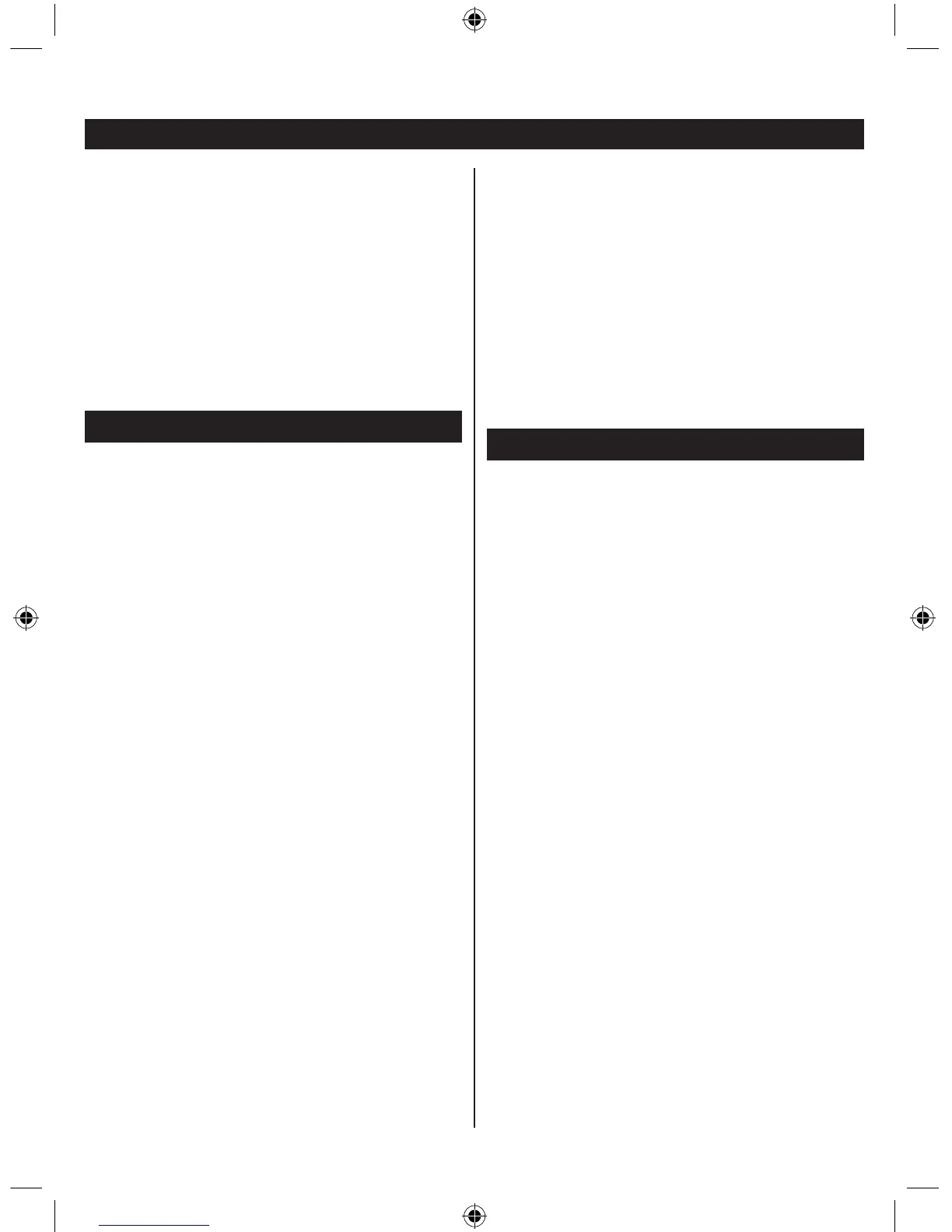
BRUSHCUTTER SAFETY WARNINGS
■ After engine stops, keep rotating blade in heavy
grass or pulpy weeds until it stops.
■ Do not operate the brushcutter unless the blade
guard is firmly secured in place and in good condition.
■ Use heavy gloves while installing or removing blades.
■ Always stop the engine and remove the spark plug
wire before attempting to remove any obstruction
caught or jammed in the blade or before removing
and installing the blade.
■ Do not attempt to touch or stop the blade when it is
rotating.
■ A coasting blade can cause injury while it continues
to spin after the engine has been stopped or the
throttle trigger has been released. Maintain proper
control until the blade has completely stopped
rotating.
■ Replace any blade that has been damaged. Always
make sure blade is installed correctly and securely
fastened before each use. Failure to do so can cause
serious injury.
■ Use only the manufacturer's replacement TRI-ARC
blade intended for use on this brushcutter. Do not use
any other blade.
■ The TRI-ARC blade is suited for cutting pulpy weeds
and vines only. Do not use for any other purpose.
Never use the TRI-ARC blade to cut woody brush.
■ Exercise extreme caution when using the blade with
this unit. Blade thrust is the reaction that may occur
when the spinning blade contacts anything it cannot
cut. This contact may cause the blade to stop for an
instant, and suddenly “thrust” the unit away from the
object that was hit. This reaction can be violent enough
to cause the operator to lose control of the unit.
Blade thrust can occur without warning if the blade
snags, stalls, or binds. This is more likely to occur
in areas where it is difficult to see the material being
cut. For cutting ease and safety, approach the weeds
being cut from the right to the left. In the event an
unexpected object or woody stock is encountered,
this could minimize the blade thrust reaction.
■ Never cut any material with diameter over 13 mm.
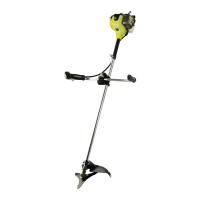
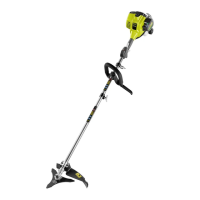
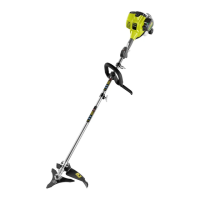
■ Always wear the shoulder strap when using the
brushcutter and adjust to a comfortable operating
position. Maintain a firm grip on both handles while
cutting with a blade. Keep the blade away from body
and below waist. Never use the brushcutter with the
blade located 76 cm or more above the ground level.
■ Cover the blade with the blade protector before
storing the unit, or during transportation. Always
remove the blade protector before using the unit.
If not removed, the blade protector could become a
thrown object as the blade begins to turn.
RESIDUAL RISK
Even when the product is used as prescribed, it is still
impossible to completely eliminate certain residual risk
factors. The following hazards may arise in use and
the operator should pay special attention to avoid the
following:
■ Injury caused by vibration. Always use the right tool for
the job, use designated handles and restrict working
time and exposure.
■ Exposure to noise can cause hearing injury. Wear ear
protection and limit exposure
■ Kickback can occur when using the brush cutter.
Ensure proper control by using both hands on the
designated handles. Read and follow the directions
elsewhere in this manual to help reduce the risk of
kickback.


 To Next Page