EasyManua.ls Logo

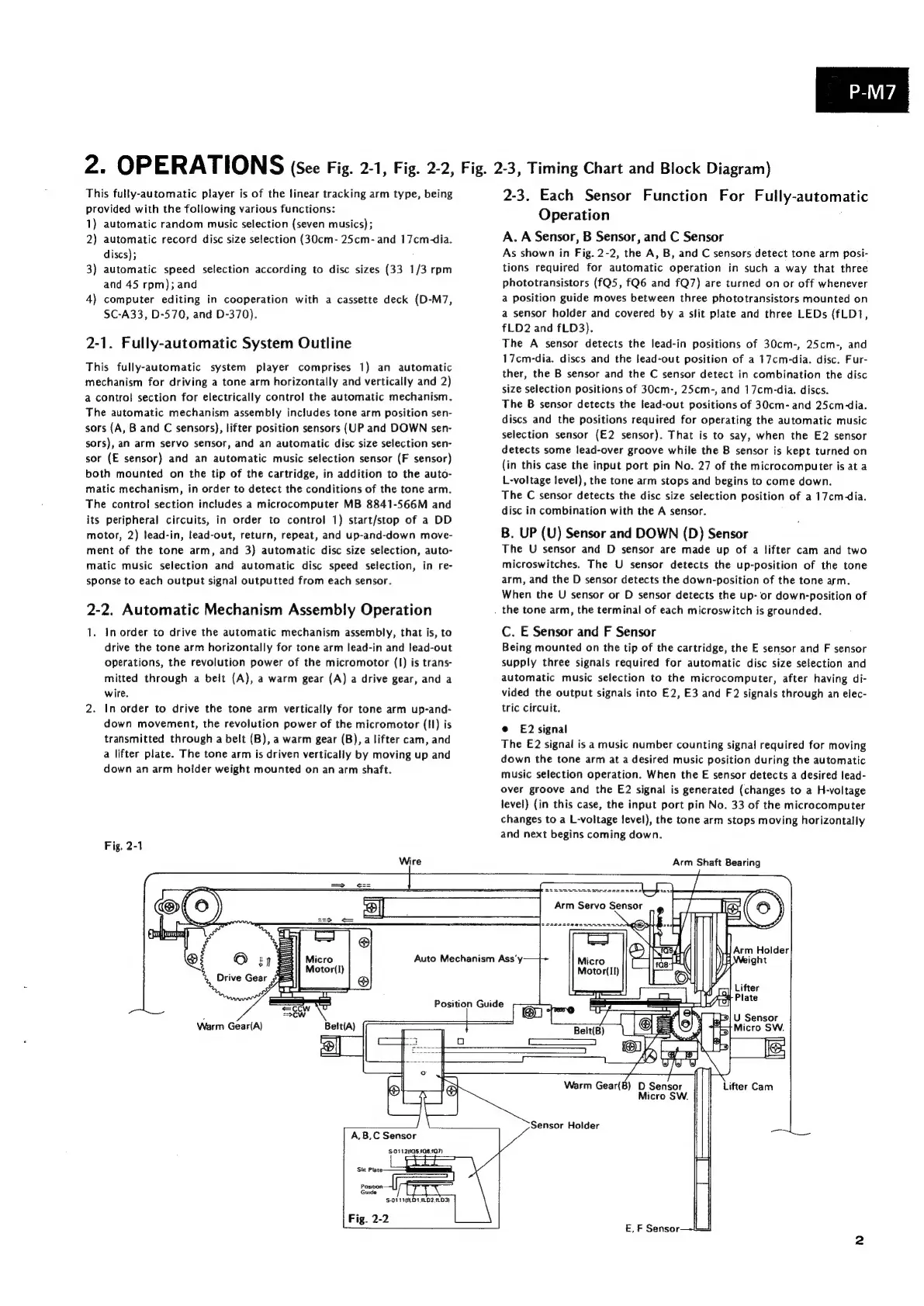
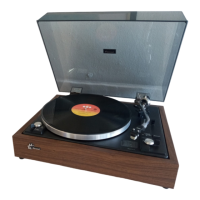
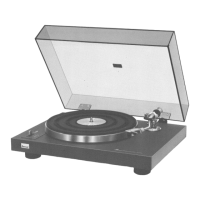
Sansui P-M7 - Operating the Turntable; Fully-automatic System Overview; Automatic Mechanism Operation Details; Sensor Functions for Automatic Operation

Sansui P-M7
15 pages
Print Icon
To Next Page IconTo Next Page
To Previous Page IconTo Previous Page
Loading...
P-M7
2.
OPERATIONS
(see
Fig.
2-1,
Fig.
2-2,
Fig.
2-3,
Timing
Chart
and
Block
Diagram)
This
fully-automatic
player
is
of
the
linear
tracking
arm
type,
being
provided
with
the
following
various
functions:
1)
automatic
random
music
selection
(seven
musics);
2)
automatic
record
disc
size
selection
(30cm-
25cm-and
17cm-dia.
discs);
3)
automatic
speed
selection
according
to
disc
sizes
(33
1/3
rpm
and
45
rpm);
and
4)
computer
editing
in
cooperation
with
a
cassette
deck
(D-M7,
SC-A33,
D-570,
and
D-370).
2-1.
Fully-automatic
System
Outline
This
fully-automatic
system
player
comprises
1)
an
automatic
mechanism
for
driving
a
tone
arm
horizontally
and
vertically
and
2)
a
control
section
for
electrically
contro!
the
automatic
mechanism.
The
automatic
mechanism
assembly
includes
tone
arm
position
sen-
sors
(A,
B
and
C
sensors),
lifter
position
sensors
(UP
and
DOWN
sen-
sors),
an
arm
servo
sensor,
and
an
automatic
disc
size
selection
sen-
sor
(E
sensor)
and
an
automatic
music
selection
sensor
(F
sensor)
both
mounted
on
the
tip
of
the
cartridge,
in
addition
to
the
auto-
matic
mechanism,
in
order
to
detect
the
conditions
of
the
tone
arm.
The
control
section
includes
a
microcomputer
MB
8841-566M
and
its
peripheral
circuits,
in
order
to
control
1)
start/stop
of
a
DD
motor,
2)
lead-in,
lead-out,
return, repeat,
and
up-and-down
move-
ment
of
the
tone
arm,
and
3)
automatic
disc
size
selection,
auto-
matic
music
selection
and
automatic
disc
speed
selection,
in
re-
sponse
to
each
output
signal
outputted
from
each
sensor.
2-2.
Automatic
Mechanism
Assembly
Operation
1.
Inorder
to
drive
the
automatic
mechanism
assembly,
that
is,
to
drive
the
tone
arm
horizontally
for
tone
arm
lead-in
and
lead-out
operations,
the
revolution
power
of
the
micromotor
(I)
is
trans-
mitted
through
a
belt
(A),
a
warm
gear
(A)
a
drive
gear,
and
a
wire.
2.
In
order
to
drive
the
tone
arm
vertically
for
tone
arm
up-and-
down
movement,
the
revolution
power
of
the
micromotor
(Il)
is
transmitted
through
a
belt
(B),
a
warm
gear
(B),
a
lifter
cam,
and
a
lifter
plate.
The
tone
arm
is
driven
vertically
by
moving
up
and
down
an
arm
holder
weight
mounted
on
an
arm
shaft.
2-3.
Each
Sensor
Function
For
Fully-automatic
Operation
:
A.
A
Sensor,
B
Sensor,
and
C
Sensor
As
shown
in
Fig.
2-2,
the
A,
B,
and
C
sensors
detect
tone
arm
posi-
tions
required
for
automatic
operation
in
such
a
way
that
three
phototransistors
(fQ5,
fQ6
and
fQ7)
are
turned
on
or
off
whenever
a
position
guide
moves
between
three
phototransistors
mounted
on
a
sensor
holder
and
covered
by
a
slit
plate
and
three
LEDs
(fLD1,
fLD2
and
fLD3).
The
A
sensor
detects
the
lead-in
positions
of
30cm-,
25cm-,
and
17cm-dia.
discs
and
the
lead-out
position
of
a
17cm-dia.
disc.
Fur-
ther,
the
B
sensor
and
the
C
sensor
detect
in
combination
the
disc
size
selection
positions
of
30cm-,
25cm-,
and
17cm-dia.
discs.
The
B
sensor
detects
the
lead-out
positions
of
30cm-
and
25cm-dia.
discs
and
the
positions
required
for
operating
the
automatic
music
selection
sensor
(E2
sensor).
That
is
to
say,
when
the
E2
sensor
detects
some
lead-over
groove
while
the
B
sensor
is
kept
turned
on
(in
this
case
the
input
port
pin
No.
27
of
the
microcomputer
is
at
a
L-voltage
level),
the
tone
arm
stops
and
begins
to
come
down.
The
C
sensor
detects
the
disc
size
selection
position
of
a
17cm-dia.
disc
in
combination
with
the
A
sensor.
B.
UP
(U)
Sensor
and
DOWN
(D)
Sensor
The
U
sensor
and
D
sensor
are
made
up
of
a
lifter
cam
and
two
microswitches.
The
U
sensor
detects
the
up-position
of
the
tone
arm,
and
the
D
sensor
detects
the
down-position
of
the
tone
arm.
When
the
U
sensor
or
D
sensor
detects
the
up-
or
down-position
of
the
tone
arm,
the
terminal
of
each
microswitch
is
grounded.
C.
E
Sensor
and
F
Sensor
Being
mounted
on
the
tip
of
the
cartridge,
the
E
sensor
and
F
sensor
supply
three
signals
required
for
automatic
disc
size
selection
and
automatic
music
selection
to
the
microcomputer,
after
having
di-
vided
the
output
signals
into
E2,
E3
and
F2
signals
through
an
elec-
tric
circuit.
@
£2
signal
The
E2
signal
is
a
music
number
counting
signal
required
for
moving
down
the
tone
arm
at
a
desired
music
position
during
the
automatic
music
selection
operation.
When
the
E
sensor
detects
a
desired
lead-
over
groove
and
the
E2
signal
is
generated
(changes
to
a
H-voltage
level)
(in
this
case,
the
input
port
pin
No.
33
of
the
microcomputer
changes
to
a
L-voltage
level),
the
tone
arm
stops
moving
horizontally
and
next
begins
coming
down.
Arm
Shaft
Bearing
Fig.
2-1
Wire
=>
¢z=
yr
y
se
=
7
@
©
in}
Drive
Gear
$2
Auto
Mechanism
Ass‘y
Position
Guide
Warm
GearlA)
Belt(A)
a]
|
[
A,B,C
Sensor
$-01
12105106
07)
Sht
Plate
Asia)
|
Guide
$-011
11101
.f102.1103)
Fig.
2-2
Warm
Gear(8)
D
Sensor
Micro
SW.
Lifter
Cam
Sensor
Holder
E,
F
Sensor
LI

Related product manuals