EasyManua.ls Logo

Scheppach HS110 - User Manual

Scheppach HS110
40 pages
Print Icon
To Next Page IconTo Next Page
Loading...
IAN 331557_1907
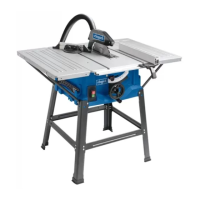
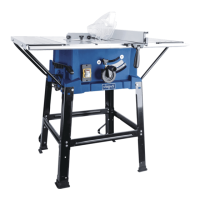
TABLE SAW HS110
CHAT
TISCHKREISSÄGE
Bedienungs- und Sicherheitshinweise
Originalbetriebsanleitung
DEIE NI
TABLE SAW
Operating and Safety Instructions
Translation of Original Operating Manual
GB
NIIEGB

Other manuals for Scheppach HS110

Questions and Answers

  • M
    Matthew OlsonSep 9, 2025
    How to fix a Scheppach Saw when the blade dissolves after switching off the engine?
    • F
      fbondSep 9, 2025
      If the blade dissolves after switching off the Scheppach Saw engine, it is likely due to a slightly tightened fastening nut. Tighten the right hand thread nut to resolve this issue.
  • S
    Sarah CastilloAug 22, 2025
    Why won't my Scheppach HS110 Saw engine start?
    • C
      collinslindaAug 23, 2025
      There are several reasons why your Scheppach Saw engine might not be starting. It could be due to a failure in the mains fuse, in which case you should check the fuse. Alternatively, a defective extension cable could be the cause, requiring you to replace the extension cord. It is also possible that the connections on the motor or switch are not in order, or that the motor or switch itself is faulty, both of which require repair by an electrical specialist.
  • C
    Christopher OrrAug 25, 2025
    What to do if my Scheppach Saw motor won't work but the fuse is active?
    • C
      Carrie MiddletonAug 25, 2025
      If your Scheppach Saw motor isn't working but the fuse is still active, this could be because the cross section of the extension cable is not sufficient, refer to „Electrical connection“. Another potential cause is overload by a blunt saw blade, in which case you should change the saw blade.
  • R
    Robert WhiteAug 26, 2025
    How to fix a Scheppach HS110 blade that dissolves after switching off the engine?
    • T
      tdunnAug 26, 2025
      If the blade of your Scheppach Saw dissolves after switching off the engine, it may be due to a slightly tightened fastening nut. To resolve this, tighten the right hand thread nut.
  • X
    xlamAug 27, 2025
    What to do if my Scheppach Saw engine will not start?
    • L
      Lisa ScottAug 27, 2025
      If your Scheppach Saw's engine won't start, begin by checking the mains fuse. If the fuse is fine, the extension cable might be defective, requiring a replacement. In case the connections on the motor or switch are not in order, or the motor or switch itself is faulty, it's best to have it repaired by an electrical specialist.
  • T
    Tyler TaylorAug 29, 2025
    Why are there fire marks on the cutting surface of my Scheppach HS110?
    • M
      Maria DavisAug 29, 2025
      If you notice fire marks on the cutting surface when using your Scheppach Saw, it's likely due to a blunt or wrong saw blade. You should sharpen the saw blade (only by an authorised sharpening specialist) or change it to resolve this issue.
  • D
    David RichardSep 18, 2025
    What to do if there are fire marks on the cutting surface of my Scheppach HS110?
    • M
      Matthew ClarkSep 18, 2025
      Fire marks on the cutting surface of your Scheppach Saw can be due to a blunt or wrong saw blade. You should sharpen the saw blade (only by an authorised sharpening specialist) or change it. Try changing the saw blade to resolve the issue.
  • R
    Regina MartinSep 18, 2025
    What to do if Scheppach Saw motor will not work, but the fuse is active?
    • V
      Victoria McdanielSep 22, 2025
      If the Scheppach Saw motor doesn't work but the fuse is active, it might be due to an insufficient cross-section of the extension cable; refer to the 'Electrical connection' section. Alternatively, it could be an overload caused by a blunt saw blade, so try changing the saw blade.
  • C
    catherinebrownSep 7, 2025
    Why is the Scheppach Saw motor rotating in the wrong direction?
    • K
      Kathy FritzSep 7, 2025
      If the Scheppach Saw motor has the wrong direction of rotation, the capacitor may be faulty, requiring repair by an electrical specialist. Another potential cause is a wrong connection, in which case you should exchange polarity of outlet by a qualified electrician.
  • J
    John GuerreroSep 4, 2025
    What to do if Scheppach Saw motor won't work but the fuse is active?
    • N
      Nicholas WiseSep 4, 2025
      If the Scheppach Saw motor won't work and the fuse is active, it could be due to an insufficient cross section of the extension cable. Refer to the 'Electrical connection' section for guidance. Alternatively, it might be overloaded by a blunt saw blade, in which case you should change the saw blade.

Summary

Explanation of Symbols

Introduction

Device Description

Scope of Delivery

Intended Use

Safety Information

General Power Tool Safety Warnings

Fundamental safety guidelines applicable to all power tools.

Work Area Safety

Precautions for maintaining a safe and hazard-free work environment.

Electrical Safety

Essential safety measures related to the electrical aspects of the tool.

Safety Information

Personal Safety

Guidelines for operator safety, including PPE and alertness.

Power Tool Use and Care

Proper usage, maintenance, and handling of the power tool.

Service

Recommendations for professional servicing and part replacement.

Safety Instructions for Table Saws

Guarding Related Warnings

Critical safety advice concerning the use and function of protective guards.

Safety Instructions for Table Saws

Safety Information for Sawing

Specific safety precautions to be taken while performing sawing operations.

Kickback Causes and Safety Instructions

Explains kickback phenomena and measures to prevent it.

Safety Instructions for Table Saws

Safety Instructions for the Operation of Circular Table Saws

General safety rules for operating the circular table saw.

Safety Instructions for Handling Saw Blades

Precautions and best practices for safely handling saw blades.

Technical Data

Noise

Noise emission levels and recommendation to wear hearing protection.

Residual Risks

Before Starting the Equipment

Assembly

Assembling the Frame and Table Width Extension

Step-by-step guide for assembling the main structure and extensions.

Fitting the Guide Rail

Instructions on how to attach the guide rail to the work table.

Aligning the Guide Rail

Ensuring the guide rail is correctly positioned and parallel.

Assembly

Fitting;Removing the Saw Blade Guard

Procedures for installing and detaching the saw blade guard.

Adjusting the Riving Knife

How to set the riving knife correctly for safe sawing.

Connecting an Extraction Device

Guide for attaching a dust collection system.

Handling the Equipment

On;Off Switch

Explanation of the power switch operation.

Setting the Cutting Depth

Adjusting the depth of cut using the hand wheel.

Setting the Angle

How to tilt the saw blade for angled cuts.

Handling the Equipment

Using the Parallel Stop

Comprehensive guide to using the parallel stop for various cuts.

Setting the Stop Height

Adjusting the parallel stop's height for different material thicknesses.

Turning the Stop Rail

How to orient the stop rail for optimal use.

Setting the Cutting Width

Adjusting the parallel stop to set the desired cut width.

Setting the Stop Length

Adjusting the stop rail's length to prevent workpiece jamming.

Calibrating the Parallel Stop

Ensuring accurate alignment of the parallel stop with the saw blade.

Using the Transverse Stop

Instructions for making cross cuts using the transverse stop.

Setting the Scale of the Parallel Stop

Calibrating the parallel stop's measurement scale.

Using the Equipment

Working Instructions

General operational guidelines and best practices.

Suitability of the Saw Blades

Information on selecting the correct saw blades for different materials.

Making Longitudinal Cuts

Step-by-step guide for performing cuts along the wood grain.

Using the Equipment

Cutting Narrow Workpieces

Safe handling of narrow workpieces using a push stick.

Cutting Very Narrow Workpieces

Using a push block for extremely narrow workpieces.

Making Angular Cuts

How to perform cuts at various angles.

Making Transverse Cuts

Step-by-step guide for cutting across the wood grain.

Cutting Particle Boards

Specific advice for cutting particle boards to prevent edge chipping.

After Sawing

Procedures to follow after completing sawing operations.

Removing Trapped Material

Safety measures for dealing with jammed workpieces or blades.

Fitting;Replacing the Saw Blade

Transporting the Equipment

Maintaining the Equipment

General Maintenance Measures

Routine cleaning and upkeep of the machine.

Replacing the Table Insert

Procedure for replacing worn or damaged table inserts.

Carbon Brushes

Information regarding carbon brushes and professional servicing.

Service Information

Details on parts subject to normal wear and tear.

Storing the Equipment

Electrical Connection

Important Information

Key notes on motor overload and restart procedures.

Damaged Electrical Connection Cable

Warnings about the dangers of using damaged power cords.

AC Motor

Technical specifications for the AC motor and connection requirements.

Electrical Connection

Disposal and Recycling

Instructions for the environmentally sound disposal of the product.

Troubleshooting

Warranty Certificate

Scheppach HS110 Specifications

General IconGeneral
Power2000 W
Blade Diameter254 mm
Max Cutting Height at 90°85 mm
Table Size640 x 487 mm
Weight23 kg
Saw blade bore30 mm
MotorInduction motor
Input230 V
Motor Power2000 W

Related product manuals