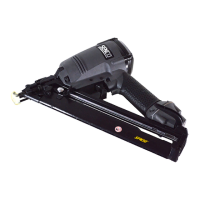
What to do if my Senco SFN1 Nail Gun is not feeding properly?
- RRandy MillerAug 12, 2025
If your Senco Nail Gun has a poor feed, try cleaning the tool and lubricating the magazine. As another option, consider installing Parts Kit D.
What to do if my Senco SFN1 Nail Gun is not feeding properly?
If your Senco Nail Gun has a poor feed, try cleaning the tool and lubricating the magazine. As another option, consider installing Parts Kit D.
What to do if my Senco SFN1 has a weak drive?
If your Senco Nail Gun exhibits a weak drive, ensure you have an adequate air supply. If the issue persists, consider installing Parts Kit C.
What to do if my Senco SFN1 is operating sluggishly?
If your Senco Nail Gun is operating sluggishly, consider installing Parts Kit A.
What to do if my Senco SFN1 has an air leak near the bottom?
If you notice an air leak near the bottom of your Senco Nail Gun, try tightening the screws. If the leak persists, install Parts Kit B.
How to fix poor return on Senco SFN1?
To fix poor return on your Senco Nail Gun, begin by cleaning the tool. If the issue continues, consider installing Parts Kit B.
What to do if my Senco SFN1 Nail Gun is leaking air near the top?
If your Senco Nail Gun is leaking air near the top, try tightening the screws. If the leak continues, install Parts Kit A.
What to do if my Senco SFN1 driver is broken or worn?
If the driver on your Senco Nail Gun is broken or worn, install Parts Kit C.
What to do if my Senco SFN1 Nail Gun does nothing?
If your Senco Nail Gun isn't working, first verify the air supply. If the issue persists, consider installing Parts Kit A.
Explains the two modes of operation for the dual-action trigger.
Describes the single-mode operation of the restrictive trigger.
Details the process for adjusting the fastener depth using the control wheel.
Provides steps for disconnecting air and removing jammed fasteners.
Emphasizes keeping all screws tight for safe operation and preventing part breakage.
Guides on daily checks of safety element and trigger for free movement.
States that routine lubrication is not necessary for the tool.
Instructions for daily cleaning and inspecting the tool for wear.
Lists available driver sizes and corresponding countersink depths with part numbers.
Explains the two modes of operation for the dual-action trigger.
Describes the single-mode operation of the restrictive trigger.
Details the process for adjusting the fastener depth using the control wheel.
Provides steps for disconnecting air and removing jammed fasteners.
Emphasizes keeping all screws tight for safe operation and preventing part breakage.
Guides on daily checks of safety element and trigger for free movement.
States that routine lubrication is not necessary for the tool.
Instructions for daily cleaning and inspecting the tool for wear.
Lists available driver sizes and corresponding countersink depths with part numbers.
Loading...