EN
EN – 21EN – 21
SUITABLE OVENWARE
1. The ideal material for a microwave utensil is transparent to microwave, it allows energy to pass through the
container and heat the food.
2. Microwave cannot penetrate metal, so metal utensils or dishes with metallic trim should not be used.
3. Do not use recycled paper products when microwave cooking, as they may contain small metal fragments which
may cause sparks and/or fi res.
4. Round /oval dishes rather than square/oblong ones are recommend, as food in corners tends to overcook.
5. Narrow strips of aluminum foil may be used to prevent overcooking of exposed areas. But be careful don’t use too
much and keep a distance of 2.54 cm between foil and cavity
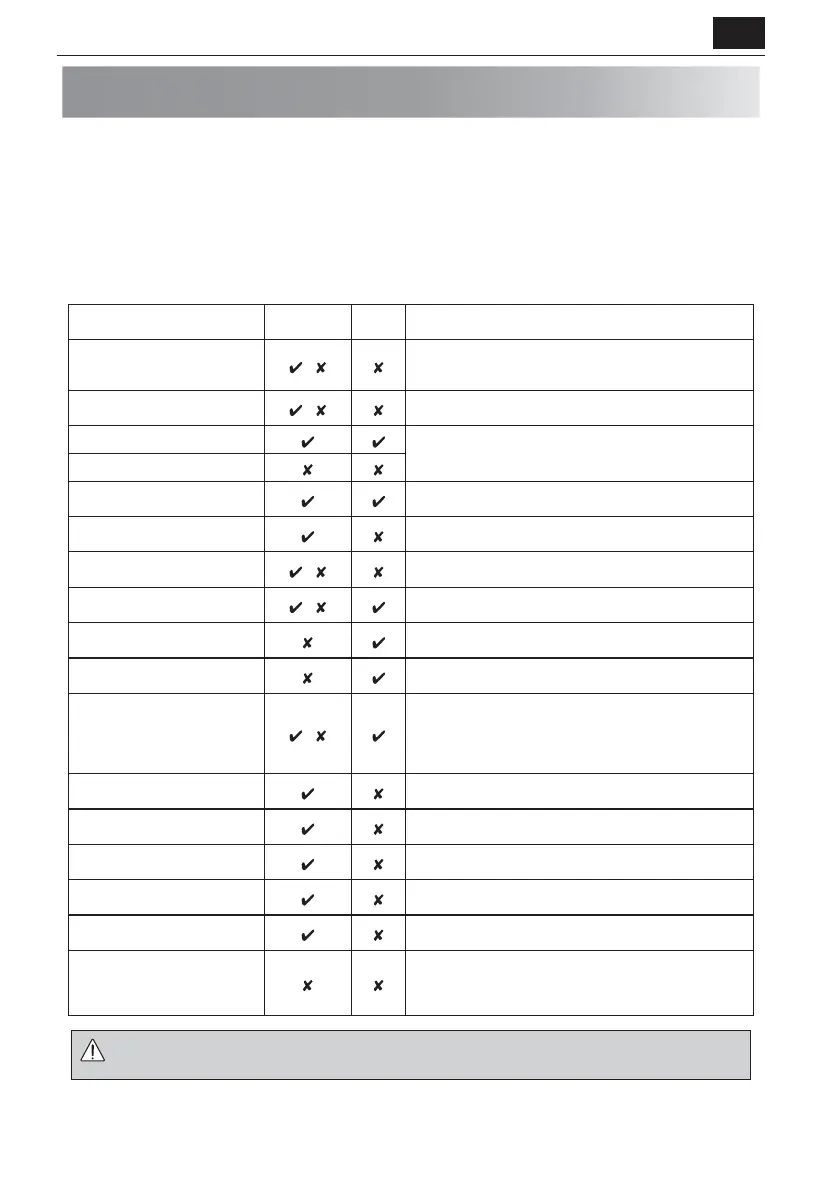
The list below is a general guide to help you select the correct utensils.
Cookware
Microwave
Safe
Grill Comment
Browning dishes
/
Always follow the manufacturers instructions.
Do not exceed heating times given. Be very careful as these dishes
become very hot.
China and ceramics
/
Porcelain, pottery, glazed earthenware and bone china are usually
suitable, except for those with metallic decoration.
Heat–Resistant Glass
Care should be taken to ensure that any glass cook ware is suitable
for use in a microwave oven.
Non Heat–Resistant Glass
Heat–Resistant Ceramics
Ensure that any ceramic material is not too thick or in high in
mineral content.
Microwave–Safe Plastic Dish
Always check that the plastic cook ware is suitable to be used in a
microwave oven.
Kitchen Paper
/
Only use kitchen paper which is recommended for use in
microwave ovens.
Glassware e.g. Pyrex®
/
Care should be taken if using fi ne glassware as it can break or
crack if heated suddenly.
Metal Tray
It is not recommended to use metal cookware as it will arc, which
can lead to fi re.
Metal Rack
It is not recommended to use metal cookware as it will arc, which
can lead to fi re.
Aluminium foil
Foil Containers
/
Small pieces of aluminium foil can be used to shield food from
overheating. Keep foil at least 2.54 cm from the oven walls, as
arcing may occur.
Foil containers are not recommended unless specifi ed by the
manufacturer, e.g. Microfoil®, follow instructions carefully.
Cling fi lm
It should not touch the food and must be pierced to let the steam
escape.
Plastic/Polystyrene e.g fast food
containers
Care must be taken as some containers warp, melt or discolour at
high temperatures.
Freezer/Roasting bags
Must be pierced to let steam escape. Ensure bags are suitable for
microwave use.
Paper - Plates, cups and kitchen
paper
Do not use plastic or metal ties, as they may melt or catch fi re due
to the metal ‘arcing’.
Straw and wooden Containers
Only use for warming or to absorb moisture.
Care must be taken as overheating may cause fi re.
Recycled paper and newspaper
Always attend the oven when using these materials as
overheating may cause fi re.
May contain extracts of metal which will cause ‘arcing’ and may
lead to fi re.
WARNING: When heating food in plastic or paper containers, monitor the oven due to the possibility of
ignition.
NOTE: Do not leave your oven unattended while in use.


 To Next Page
 Loading...