SECTION 3 – LUBRICATION AND MAINTENANCE
3-21
BATTERY
The tractor is equipped with a BCI group 51,
12-volt battery, with a minimum cold cranking
ability of 450 amps at -18ºC.
Make sure the battery connections are tight and
free of corrosion. A solution of backing soda and
water may be used to clean the outside surface
and terminals of the battery when necessary.
However, ensure that the none of the solution
gets inside the battery. After cleaning, rinse the
battery with clean water, then apply a small
amount of petroleum jelly to the terminals to
prevent corrosion.
In freezing temperatures, a good battery charge
must be maintained. If the battery becomes
discharged or run down, the electrolyte becomes
weak and may freeze, causing damage to the
case. If you must add water, use distilled water.
Add the water just before using the tractor so
that the water will mix with the electrolyte during
the charging process, thus preventing the water
from freezing.
To determine the battery charge, check the
specific gravity of the electrolyte.
Checking the Electrolyte Level
NOTE: Check the battery electrolyte level after
every 50 hours of operation.
WARNING
Always check the electrolyte level with the
tractor engine off, as an explosive gas is
produced inside the battery when the
alternator is charging. Do not use an exposed
flame and do not smoke when checking the
battery electrolyte level.
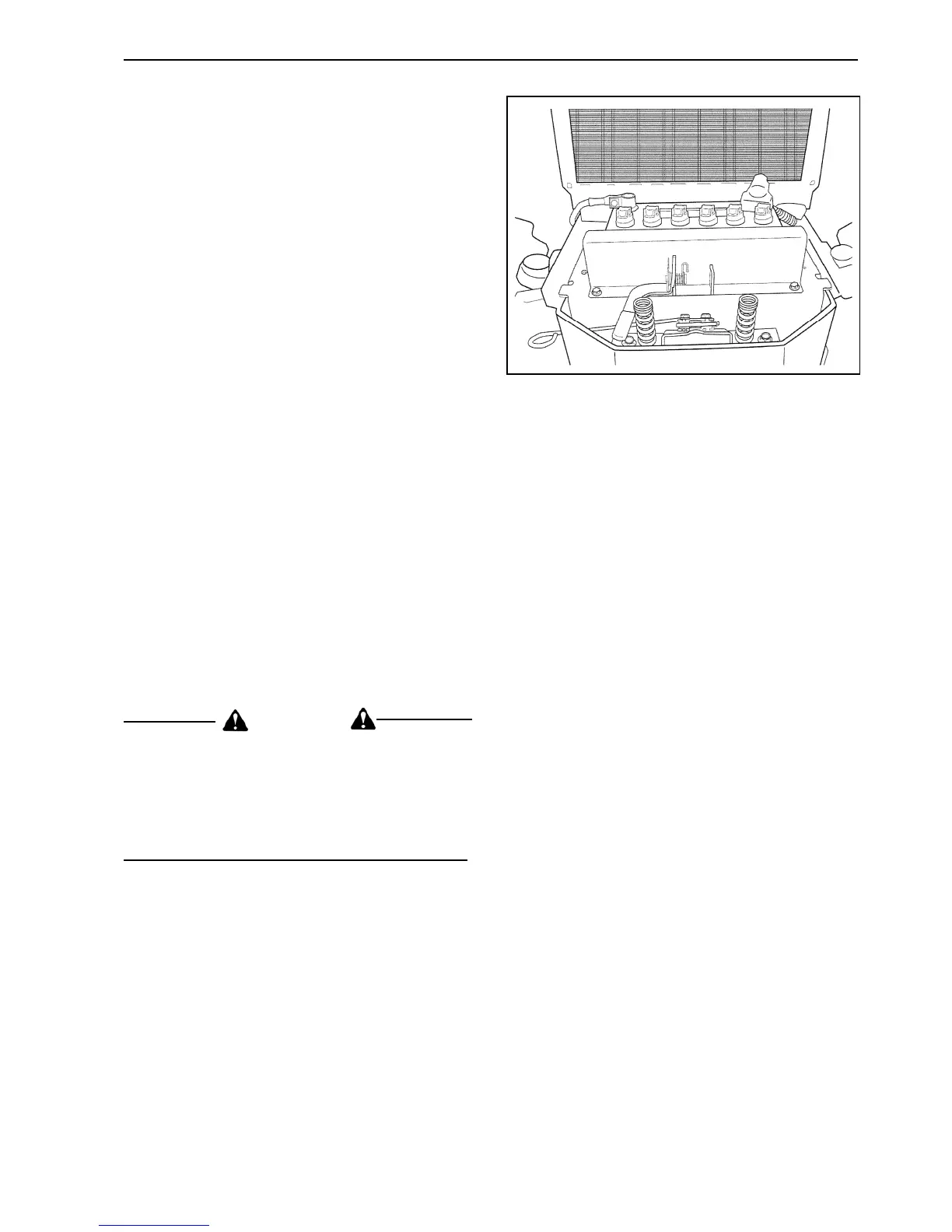
To check the battery electrolyte level:
1. Clean the top of the battery, then remove the
vent plugs.
2. Add distilled water if the electrolyte level is
low. The level is correct when the liquid is
6.35 mm above the plates.
NOTE: Keep distilled water in a nonmetallic
container that is clean and well-covered.
3. Install the vent plug after making sure the
vent holes are not blocked. At below freezing
temperatures, run the engine for a period of
time after adding water, allowing the battery
to charge, which prevents the water from
freezing.


 To Next Page