EasyManua.ls Logo

Shimano RD-7800 - User Manual

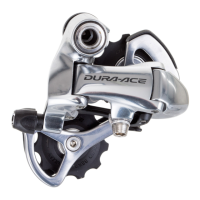
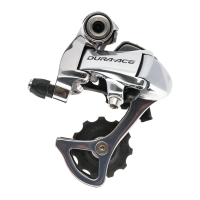
Shimano RD-7800
4 pages
Print Icon
To Next Page IconTo Next Page
Loading...
4. How to use the B-tension adjustment screw
Mount the chain on the smallest chainring and the largest
sprocket, and turn the crank arm backward. Then turn the B-
tension adjustment screw to adjust the guide pulley as close
to the sprocket as possible but not so close that it touches.
Next, set the chain to the smallest sprocket and repeat the
above to make sure that the pulley does not touch the
sprocket.
1. Top adjustment
Turn the top adjustment
screw to adjust so that the
guide pulley is below the
outer line of the smallest
sprocket when looking
from the rear.
5. SIS Adjustment
Operate the shifting lever several times to move the
chain to the 2nd sprocket. Then, while pressing the
lever just enough to take up the play in the lever, turn
the crank arm.
Technical Service Instructions SI-5V50D
Rear Derailleur
General Safety Information
WARNING
Use neutral detergent to clean the chain. Do not use alkali-based or
acid based detergent such as rust cleaners as it may result in
damage and/or failure of the chain.
Use the reinforced connecting pin only for connecting the narrow
type of chain.
If connecting pins other than reinforced connecting pins are used, or
if a reinforced connecting pin or tool which is not suitable for the
type of chain is used, sufficient connection force may not be
obtained, which could cause the chain to break or fall off.
The end of the outer casing which has the aluminum cap
should be at the derailleur side.
Parts are not guaranteed against natural wear or deterioration
resulting from normal use.
For maximum performance we highly recommend Shimano
lubricants and maintenance products.
For any questions regarding methods of installation, adjustment,
maintenance or operation, please contact a professional bicycle
dealer.
If it is necessary to adjust the
length of the chain due to a
change in the number of sprocket
teeth, make the cut at some other
place than the place where the
chain has been joined using a reinforced connecting pin. The chain
will be damaged if it is cut at a place where it has been joined with a
reinforced connecting pin.
Be sure to check that the
connecting pin protrudes
uniformly from the link surfaces
at both ends after the chain has
been joined.
Check that the tension of the chain is correct and that the chain is
not damaged. If the tension is too weak or the chain is damaged,
the chain should be replaced. If this is not done, the chain may
break and cause serious injury.
Obtain and read the service instructions carefully prior to installing
the parts. Loose, worn, or damaged parts may cause injury to the
rider. We strongly recommend only using genuine Shimano
replacement parts.
Read these Technical Service Instructions carefully, and keep them
in a safe place for later reference.
Note
If gear shifting operations cannot be carried out smoothly, clean the
derailleur and lubricate all moving parts.
If the amount of looseness in the links is so great that adjustment is
not possible, you should replace the derailleur.
You should periodically clean the derailleur and lubricate all moving
parts (mechanism and pulleys).
If gear shifting adjustment cannot be carried out, check the degree
of parallelism at the rear end of the bicycle. Also check if the cable is
lubricated and if the outer casing is too long or too short.
If you hear abnormal noise as a result of looseness in a pulley, you
should replace the pulley.
For smooth operation, use the specified outer casing and the bottom
bracket cable guide.
Grease the inner cable and the inside of the outer casing before use
to ensure that they slide properly.
Use a frame with internal cable routing is strongly discouraged as it
has tendencies to impair the SIS shifting function due to its high
cable resistance.
The tension pulley has a mark which indicates the direction of
rotation. The side with the arrow is the front side.
Chain toolChain
10-speed super narrow
chain such as
CN-7801 / 6600
Reinforced
connecting pin
TL-CN32 / TL-CN23
with groove (3)
1
1 2
2
Link Pin
Reinforced
Connecting Pin
Aluminum cap
Dropout tab
5 mm Allen key
B-tension adjustment screw
Smallest
sprocket
Largest
chainring
Chain
90°
Guide pulley
Tension pulley
Right angle to the ground
Derailleur side
4-mm cap
Plastic cap or 4-mm cap
Guide pulley
Outer line of
smallest sprocket
Top adjustment
screw
Link Pin
1
1 2
2
1
2
2
1
1 2
Largest sprocket
Guide pulley
Largest sprocket Smallest sprocket
Low adjustment
screw
B-tension
adjustment screw
2. Connection and securing of the cable
Connect the cable to the rear derailleur and,
after taking up the initial slack in the cable,
re-secure to the rear derailleur as shown in
the illustration.
Pull
Series
Type
Total capacity
Largest sprocket
Smallest sprocket
Front chainwheel
tooth difference
Double
Triple
Shifting lever
Gears
Outer casing
Rear derailleur
Type
Freehub
Cassette sprocket
Chain
Bottom bracket cable guide
DURA-ACE
ST-7801
ST-7803
10
SIS-SP41
RD-7800
SS / GS
FH-7800
CS-7800
CN-7801
SM-SP17
GS
37 teeth or less
27T
11T
22 teeth or less
SS
29 teeth or less
27T
11T
14 teeth or less
In order to realize the best performance, we recommend
that the following combination be used.
Specifications
Installation of the rear derailleur
Chain length
Stroke adjustment and cable securing
Bracket spindle
tightening torque:
8 - 10 N·m
{70 - 86 in. lbs.}
When installing, be careful that deformation is not caused by the
B-tension adjustment screw
coming into contact with
the dropout tab.
In case of a triple
front chainwheel
RD-7800
Tightening torque:
5 - 7 N·m {44 - 60 in. lbs.}
Note:
Be sure that the
cable is securely in
the groove.
Groove
3. Low adjustment
Turn the low adjustment screw so that the guide pulley
moves to a position directly in line with the largest sprocket.
Add 2 links (with the chain on
both the largest sprocket and
the largest chainring)
Largest
sprocket
Largest
chainring
2
3
Chain
+2 links
Lever (A)
When shifting to 3rd
Tighten the outer cable
adjusting barrel until the
chain returns to the 2nd
sprocket. (clockwise)
Best setting
The best setting is when the
shifting lever is operated just
enough to take up the play and
the chain touches the 3rd
sprocket and makes noise.
* Return the lever to its original position (the position
where the lever is at the 2nd sprocket setting and it
has been released) and then turn the crank arm
clockwise. If the chain is touching the 3rd sprocket
and making noise, turn the outer casing adjustment
barrel clockwise slightly to tighten it until the noise
stops and the chain runs smoothly.
Operate lever to change gears, and check that no
noise occurs in any of the gear positions.
For the best SIS performance, periodically lubricate all
power-transmission parts.
These service instructions are
printed on recycled paper.
Loosen the outer casing
adjustment barrel until
the chain touches the
3rd sprocket and makes
noise. (counter
clockwise)
When no sound at all
is heard
Outer casing
adjustment barrel
Outer casing
adjustment barrel
Please note: specifications are subject to change for improvement without notice.
(English)
© Jan. 2005 by Shimano Inc. XBC SZK Printed in Japan

One Holland, Irvine, California 92618, U.S.A. Phone: +1-949-951-5003
Industrieweg 24, 8071 CT Nunspeet, The Netherlands Phone: +31-341-272222
3-77 Oimatsu-cho, Sakai, Osaka 590-8577, Japan
Not OK OK
Play
If the smallest sprocket is
15T or 16T
Question and Answer IconNeed help?

Do you have a question about the Shimano RD-7800 and is the answer not in the manual?

Summary

General Safety Information

Safety Warnings

Use neutral detergent for cleaning. Avoid alkali/acid detergents. Use reinforced pins only for specific chain types.

Important Notes

Notes on gear shifting, derailleur maintenance, cable routing, and pulley tension.

Specifications

Installation of Rear Derailleur

Chain Length

Stroke Adjustment and Cable Securing

Top Adjustment

Adjust the top adjustment screw so the guide pulley is below the smallest sprocket's outer line.

Connection and Securing of Cable

Connect cable to derailleur, take up slack, and secure in groove with specified torque.

Low Adjustment

Turn the low adjustment screw to align guide pulley with the largest sprocket.

B-Tension Adjustment

Adjust B-tension screw for guide pulley clearance to sprockets without touching.

SIS Adjustment

Summary

General Safety Information

Safety Warnings

Use neutral detergent for cleaning. Avoid alkali/acid detergents. Use reinforced pins only for specific chain types.

Important Notes

Notes on gear shifting, derailleur maintenance, cable routing, and pulley tension.

Specifications

Installation of Rear Derailleur

Chain Length

Stroke Adjustment and Cable Securing

Top Adjustment

Adjust the top adjustment screw so the guide pulley is below the smallest sprocket's outer line.

Connection and Securing of Cable

Connect cable to derailleur, take up slack, and secure in groove with specified torque.

Low Adjustment

Turn the low adjustment screw to align guide pulley with the largest sprocket.

B-Tension Adjustment

Adjust B-tension screw for guide pulley clearance to sprockets without touching.

SIS Adjustment

Overview

The Shimano RD-7800 Rear Derailleur is a high-performance component designed for smooth and reliable gear shifting on bicycles. It is part of the DURA-ACE series, indicating its premium quality and intended use in competitive cycling or high-end road bikes.

Function Description:

The RD-7800 rear derailleur is responsible for moving the bicycle chain across the cassette sprockets, allowing the rider to select different gear ratios. It works in conjunction with a shifting lever, outer casing, and chain to provide precise and efficient gear changes. The derailleur's design incorporates SIS (Shimano Index System) shifting functionality, which ensures accurate and consistent shifts with a distinct click at each gear position. The B-tension adjustment screw allows for fine-tuning the guide pulley's proximity to the sprockets, optimizing shifting performance and preventing the pulley from touching the sprockets.

Important Technical Specifications:

  • Series: DURA-ACE
  • Model Number: RD-7800
  • Compatible Shifting Levers: ST-7801 (Double), ST-7803 (Triple)
  • Compatible Gears: 10-speed
  • Compatible Outer Casing: SIS-SP41
  • Compatible Freehub: FH-7800
  • Compatible Cassette Sprocket: CS-7800
  • Compatible Chain: CN-7801 (10-speed super narrow chain)
  • Compatible Bottom Bracket Cable Guide: SM-SP17

Type Specifications:

  • SS (Short Cage):
    • Total capacity: 29 teeth or less
    • Largest sprocket: 27T
    • Smallest sprocket: 11T
    • Front chainwheel tooth difference: 14 teeth or less
  • GS (Medium Cage):
    • Total capacity: 37 teeth or less
    • Largest sprocket: 27T
    • Smallest sprocket: 11T
    • Front chainwheel tooth difference: 22 teeth or less

Installation Specifications:

  • Bracket spindle tightening torque: 8 - 10 N·m {70 - 86 in. lbs.}
  • Cable securing tightening torque: 5 - 7 N·m {44 - 60 in. lbs.}

Usage Features:

  • Reinforced Connecting Pin: For connecting the narrow type of chain (CN-7801/6600), only the reinforced connecting pin with a groove (3) should be used. Using other pins or unsuitable tools may lead to insufficient connection force, potentially causing the chain to break or fall off.
  • Chain Length Adjustment: When adjusting chain length due to a change in sprocket teeth, cuts should be made at a place other than where the chain was previously joined with a reinforced connecting pin to prevent damage. After joining, ensure the connecting pin protrudes uniformly from both ends of the link surfaces.
  • B-Tension Adjustment: This screw allows for precise adjustment of the guide pulley's position relative to the largest sprocket. To use, mount the chain on the smallest chainring and largest sprocket, turn the crank arm backward, and adjust the screw until the guide pulley is as close as possible to the sprocket without touching. Repeat this process with the chain on the smallest sprocket to ensure no contact.
  • Top Adjustment (H-screw): This screw adjusts the guide pulley's position relative to the smallest sprocket. It should be adjusted so the guide pulley is directly below the outer line of the smallest sprocket when viewed from the rear.
  • Low Adjustment (L-screw): This screw adjusts the guide pulley's position relative to the largest sprocket. It should be adjusted so the guide pulley is directly in line with the largest sprocket.
  • Cable Connection: The cable should be securely connected to the derailleur and seated properly in its groove. After initial slack is taken up, re-secure the cable with the specified torque.
  • SIS Adjustment: This fine-tuning process involves operating the shifting lever to move the chain to the 2nd sprocket. While pressing the lever just enough to take up play, turn the crank arm. If the chain shifts to the 3rd sprocket or makes noise, the outer casing adjustment barrel needs to be adjusted. Tighten the barrel (clockwise) if the chain doesn't return to the 2nd sprocket. Loosen the barrel (counter-clockwise) if the chain touches the 3rd sprocket and makes noise. The "best setting" is achieved when the shifting lever is operated just enough to take up the play, and the chain touches the 3rd sprocket and makes noise. After this, return the lever to its original 2nd sprocket position, turn the crank arm clockwise, and if the chain is still touching the 3rd sprocket and making noise, slightly tighten the outer casing adjustment barrel clockwise until the noise stops and the chain runs smoothly. Finally, operate the lever through all gears to ensure no noise occurs.
  • Outer Casing Orientation: The end of the outer casing with the aluminum cap should be at the derailleur side.

Maintenance Features:

  • Cleaning and Lubrication: To ensure smooth gear shifting, the derailleur and all its moving parts (mechanism and pulleys) should be periodically cleaned and lubricated.
  • Chain Inspection: Regularly check the chain tension and for any damage. A chain that is too weak or damaged should be replaced immediately to prevent serious injury.
  • Derailleur Replacement: If the amount of looseness in the links is so great that adjustment is no longer possible, the derailleur should be replaced.
  • Pulley Inspection: If abnormal noise occurs due to looseness in a pulley, the pulley should be replaced. The tension pulley has an arrow mark indicating the direction of rotation, with the arrow side being the front.
  • Cable and Casing Maintenance: Ensure the inner cable and the inside of the outer casing are greased before use to ensure proper sliding. Check if the cable is lubricated and if the outer casing is too long or too short if gear shifting adjustment cannot be carried out.
  • Derailleur Hanger Parallelism: If gear shifting adjustment cannot be carried out, check the degree of parallelism at the rear end of the bicycle.
  • Genuine Parts: Shimano strongly recommends using only genuine Shimano replacement parts for optimal performance and safety.
  • Professional Assistance: For any questions regarding installation, adjustment, maintenance, or operation, it is advised to contact a professional bicycle dealer.
  • Lubrication for SIS Performance: For the best SIS performance, all power-transmission parts should be periodically lubricated.
  • Avoid Internal Cable Routing: Using a frame with internal cable routing is strongly discouraged as it tends to impair SIS shifting function due to high cable resistance.
  • Neutral Detergent for Chain: Only use neutral detergent to clean the chain. Alkali-based or acid-based detergents, such as rust cleaners, can damage or cause failure of the chain.

Shimano RD-7800 Specifications

General IconGeneral
BrandShimano
ModelRD-7800
CategoryBicycle Accessories
LanguageEnglish

Related product manuals